
Introduction
Global plastic pollution has emerged as one of the most pressing environmental challenges. Recent data indicates that global annual plastic production has surpassed 360 million tonnes, but only approximately 7% is effectively recycled and reused.1 Among these pollutants, microplastics (MPs, <5 millimeters) and nanoplastics (NPs, <1 micrometre) have become critical environmental threats due to their ubiquity, bioavailability, and resistance to degradation.2,3
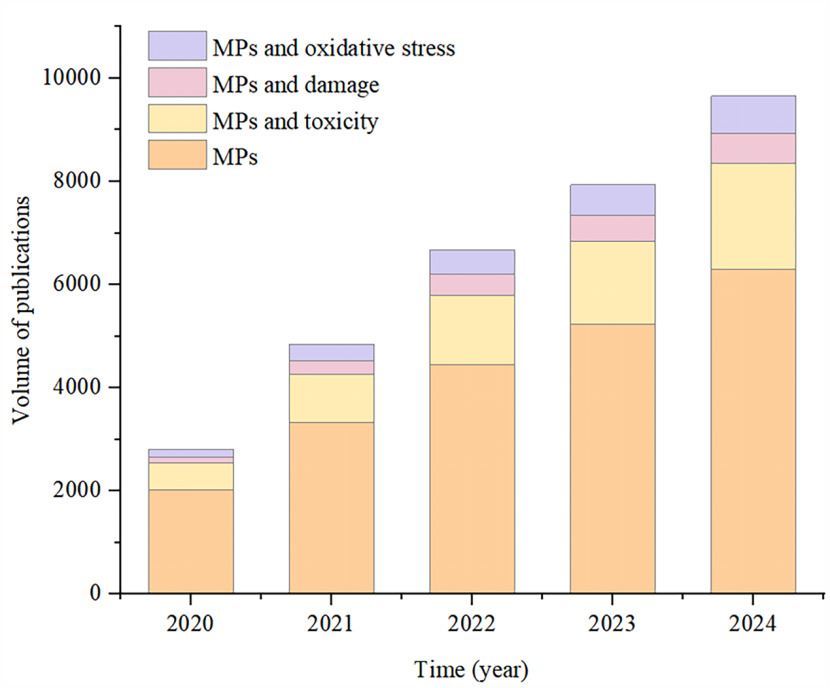
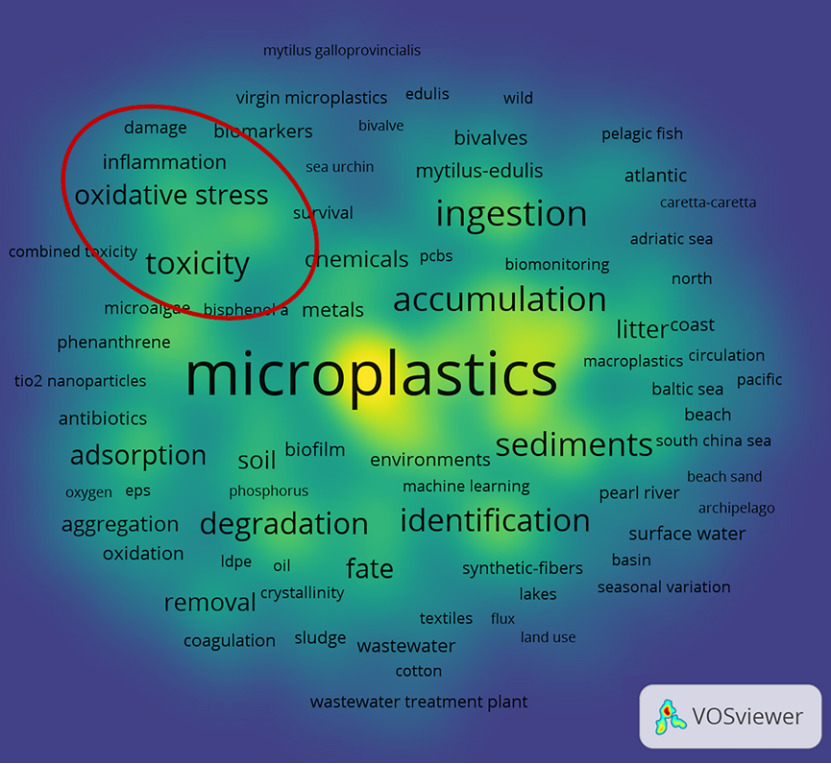
Although research on microplastics and nanoplastics has grown exponentially in recent years (Figure 1), existing research still has three key limitations. First, regarding experimental design, most studies use short-term and high-concentration exposure conditions,4,5 which differ substantially from the chronic, low-dose exposures in the actual environment. Second, in toxicity assessment, only a few species have established specific toxicity thresholds.6–8 Notably, most studies have analyzed the effects of microplastics and nanoplastics on aquatic organisms from specific perspectives, but there is a lack of comprehensive understanding of the effects of these particles on aquatic organisms and ecosystems from the microscopic to the macroscopic scale. Based on the above research gaps, this study used VOSviewer software to conduct a bibliometric analysis of research hotspots and trends in the field of microplastics in recent years (Figure 2). The results showed that although “oxidative stress” and “intestinal damage” are current research hotspots (data sourced from Web of Science), due to methodological differences (such as particle characterization technology and exposure schemes), most research results are difficult to compare directly.


Microplastics and nanoplastics threaten the health of aquatic ecosystems in two main ways: on the one hand, their direct toxicity can affect the normal expression and regulation of their genes, leading to tissue damage and physiological dysfunction in aquaculture organisms.9 On the other hand, microplastics, as carriers of pollutants, may lead to a decrease in species richness and have a significant impact on the structure of the food web.10 It is particularly noteworthy that in aquaculture systems, microplastics can change the local concentration, environmental persistence, environmental behavior, and ecological risks of coexisting heavy metals and organic pollutants through adsorption and desorption.11 For example, microplastics can increase the bioavailability and toxicity of lead in Mytilus coruscus through adsorption.12 The adsorption of polystyrene (PS) nanoparticles can increase the concentration of bisphenol A in the head and viscera of zebrafish by 2 times and 2.6 times, respectively, and aggravate the neurotoxicity of bisphenol A in the central nervous system and dopaminergic system.13 Therefore, conducting multi-scale studies (from molecular to ecosystem level) to clarify the environmental behavior and ecological effects of microplastics in natural ecosystems and aquaculture systems is of great scientific value for a comprehensive assessment of their risks.
Based on a multi-scale perspective, this review summarizes the latest research results in freshwater and marine environments and systematically explores the three core issues of microplastic pollution. (1) It clarifies the characteristics and distribution of microplastics in aquatic environments, focusing on the migration characteristics and driving factors of microplastics, (2) It analyzes the current status of microplastic pollution in aquatic organisms and their response mechanisms. Based on biological, histological and toxicological evidence, it comprehensively evaluates the microplastic exposure characteristics and health risks of aquatic organisms at different trophic levels, (3) It systematically expounds on the multi-scale impacts of microplastics on aquatic ecosystems and comprehensively analyzes their ecological effects from the microscopic (molecular and cellular levels) to the macroscopic (ecosystem) level. Finally, the review proposes standardized recommendations for risk assessment of microplastics in aquaculture, providing theoretical support for the formulation of ecological management strategies, especially for the scientific basis for the control of microplastics in high-risk aquaculture systems
.
Characteristics and distribution of microplastics in aquatic environment
Sources and formation of microplastics
In modern society, plastic products are produced and used in large quantities, and with the increasing global plastic production, many plastics are discarded at will because they cannot be recycled.14 These discarded plastics finally enter the water environment through natural forces such as wind, rivers, and precipitation. Microplastics have become one of the new pollutants in the world, such as polystyrene (PS), polytetrafluoroethylene (PTFE), polyvinyl chloride (PVC), polyamide (PA), polyethylene (PE), and polypropylene (PP).14 Microplastics have been ubiquitous in the environment, and their sources are quite diverse. Microplastics can be divided into primary microplastics and secondary microplastics according to their sources: primary microplastics are directly discharged from land to the aquatic environment, such as tiny plastic particles added in detergents and cosmetics.15 Secondary microplastics are mainly microplastics produced by the division and degradation of larger plastics in the environment through physical, chemical, and biological processes,16 including microplastics formed by the decomposition of large plastic articles in the ocean due to weathering, water currents, microbial action, and ultraviolet radiation.17
The characteristics of microplastics
Microplastics are composed of different polymers. Plastic fragments have different shapes, sizes, and colors, while different polymers possess distinct physicochemical properties and aquatic distribution patterns. These characteristics collectively determine microplastic bioavailability to organisms and habitats. Plastic fragments such as polystyrene, polyethylene, and polypropylene will float on the surface of water due to buoyancy, while plastics with higher density, such as polyvinyl chloride and nylon, can easily sink into water, so these microplastics are dispersed in water columns at different depths.18 Because of their minuscule size, microplastics can spread widely in the environment, can be ingested by aquatic organisms, and may eventually affect human health through the food chain.
Microplastics have high surface areas and porous structures and can adsorb many organic and inorganic substances in the environment, which makes microplastics act as carriers and combine harmful substances to exist in the water environment. Microplastics in the aquatic environment can migrate and transform through the food chain and accumulate in organisms. Microplastics accumulated in aquatic organisms of different trophic levels will be transmitted throughout the food chain along with the predation relationship. Trophic level transfer represents a pivotal process of microplastics movement and distribution in the marine ecosystem.19 There are various ways to migrate and transform microplastics through trophic levels in the food chain.
Microplastics entering the aquatic environment can adsorb bacteria and other microorganisms, become carriers of these microorganisms, and form a biofilm on the surface of microplastics, which may enhance pollutant transfer.20 Concurrently, microplastics have the capacity to absorb significant quantities of heavy metals, including cadmium (Cd), chromium (Cr), copper (Cu), iron (Fe), and lead (Pb).21 A significant positive correlation was found between the content of PVC and PS and the presence of heavy metals (Pb, Cu, and Zn) in marine sediments. This is primarily due to the higher density of PS and PVC, which favors their deposition in sediments.22 Similarly, the interaction between copper ions and small organic molecules or surfactant groups on the surface of polystyrene enhanced the adsorption capacity of PS particles.23 Furthermore, microplastics act as carriers, transporting pollutants such as heavy metals to organisms. The accumulation of microplastics will lead to an increase in the levels of pollutants. The presence of heavy metals will aggravate their toxicity.8 At the same time, microplastics in the environment will undergo different degrees of aging. After aging, the surface of microplastics is rough, the specific surface area increases, and their adsorption capacity for heavy metals increases proportionally. After entering the food chain, microplastics enriched with heavy metals cause greater harm to the food chain and harm aquatic organisms to varying degrees.
However, the adsorption capacity of microplastics for heavy metals varies across different aquatic environments (e.g., pH and salinity).24 Liu et al.25 reported that pH exerts a significant influence on the adsorption behaviour of microplastics by modulating their surface charge and the configuration of metal ions.25 In the context of elevated pH levels, the decline in free ions facilitates the adsorption of metal cations, including Pb²⁺, Cd²⁺, Ni²⁺, and Co²⁺, on the surface of microplastics. Moreover, other studies have demonstrated that within the pH range of 5-9, the adsorption of Cd²⁺ on microplastic surfaces exhibits a tendency to first increase and then decrease.26,27 In a similar manner, water salinity is also a pivotal environmental parameter influencing the capacity of microplastics to adsorb metals. Holmes et al.28 found that increased salinity significantly reduced the adsorption rates of Co, Ni, and Cd by microplastics, but simultaneously promoted the adsorption of Cr28Consequently, when comparing the adsorption efficiency of microplastics for different heavy metals and their differences in biological toxicity, variations in water environmental conditions must be considered. Furthermore, the question of whether microplastics that adsorb heavy metals augment the genotoxicity of these metals to fish is a matter of significant concern.
Distribution characteristics and analytical techniques for microplastics in aquatic environments
Microplastic pollution exhibits a global distribution trend. Research indicates that microplastics are present in nearly all marine regions worldwide,29 including critical aquaculture zones. Eriksen et al.30 documented diverse microplastic morphotypes (size, shape, texture) and polymer compositions across 21 sampling sites in the South Pacific Subtropical Gyre.30 Notably, microplastic abundance varies significantly across marine regions, with pollution levels particularly elevated near industrial hubs and urban centers—areas that concurrently serve as major aquaculture zones. This pattern is also evident in China’s nearshore waters. Zhao et al.31 conducted a systematic survey across 72 stations in the Bohai and Yellow Seas, confirming widespread microplastic distribution in these vital aquaculture regions and highlighting their potential threat to shellfish and finfish aquaculture.31
Further research indicates that the distribution patterns of microplastics are driven by multiple factors, with natural hydrodynamic processes such as tides and ocean currents playing a key regulatory role. Wessel et al.32 confirmed that areas directly influenced by hydrodynamic forces exhibit higher microplastic abundance and diversity.32 Conversely, freshwater ecosystems are more susceptible to human activity interference. Yusuf et al.33 noted that urban development, population density, and industrial activities within a watershed are the primary influencing factors.33 Taking the Yangtze River Estuary as an example, the concentration of microplastics (primarily fibres, particles, and films) in its surface waters is significantly higher than in adjacent seas. These areas are important aquaculture bases, and microplastic pollution may affect the health of farmed organisms through the food chain.34
In order to accurately assess these complex distribution characteristics and their impact on aquaculture, it is necessary to establish a reliable detection method system. Currently, three primary techniques are employed: (1) Pyrolysis gas chromatography–mass spectrometry (Py-GC/MS) is suitable for quantitative polymer analysis in aquaculture waters, but it cannot determine particle count or size35; (2) Micro-Fourier transform infrared spectroscopy (μ-FTIR) can simultaneously acquire morphological and chemical information on microplastics, but its resolution is limited for particles <10 μm36; (3) Raman spectroscopy effectively detects small particles, but is highly susceptible to fluorescence interference from organic matter in aquaculture water.37 Therefore, method selection should integrate considerations of target particle size, sample matrix, data requirements, and interference resistance to ensure analytical reliability in aquaculture environments.
Impacts of microplastics on aquatic organisms and ecological systems
The impact of microplastics on the health of aquatic organisms
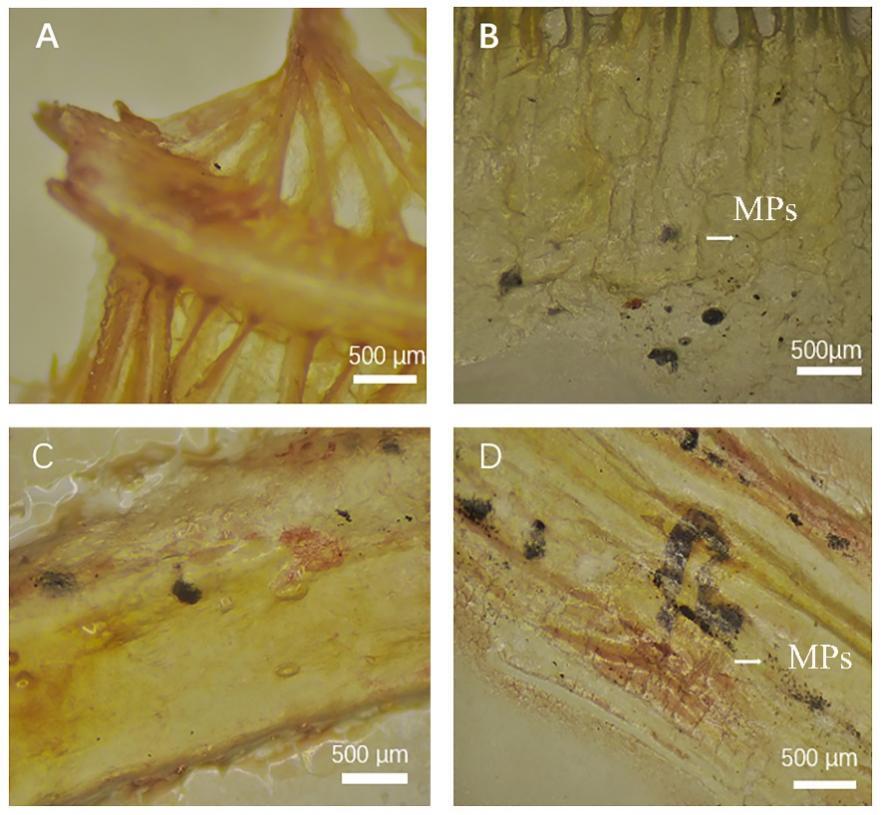
Feeding constitutes the fundamental behavior for aquatic organisms to obtain energy. Numerous aquatic species inadvertently ingest microplastics during feeding processes,38 leading to progressive accumulation within organisms (e.g., zooplankton and fish). This bioaccumulation can induce mechanical damage, gastrointestinal obstruction, and reproductive impairment in affected organisms, with severe cases causing mortality.39 Studies indicate that after three days of exposure to microplastics, fish exhibited significantly higher concentrations of microplastics in their gill and intestinal tissues compared to control groups (Figure 3).
_tissues._(a__b)_intes.jpeg)
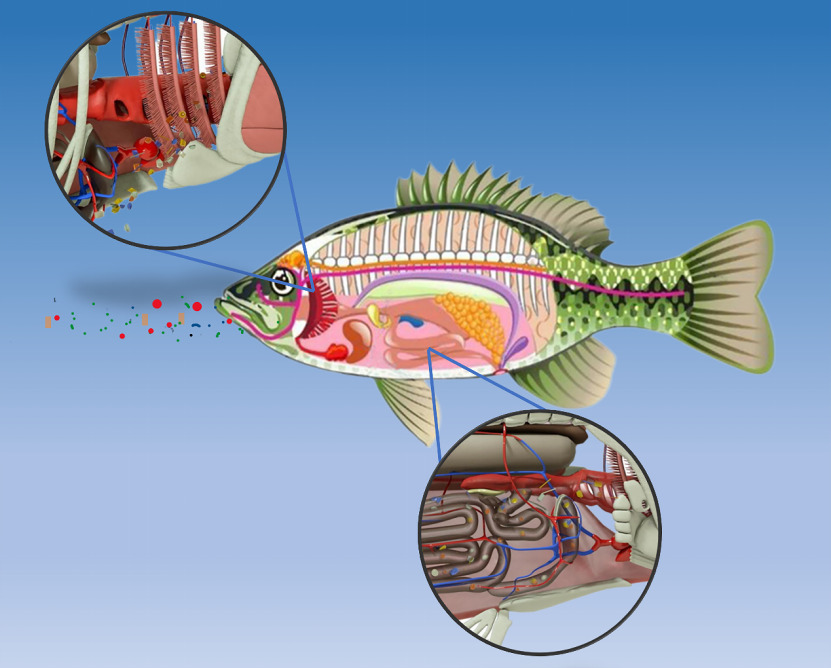
The effects of microplastics on aquatic organisms arise from complex interactions between exposure parameters (concentration, duration) and particle characteristics (size), resulting in multifaceted impacts. The existing experimental evidence indicates that long-term low-dose exposure (3% body weight daily for 114 days) induced oxidative stress in brown sea bream (Sparus aurata) without altering feeding behavior or triggering inflammation40; Short-term high-concentration exposure (10 mg/L for 14 days) caused significant tissue damage in zebrafish (Danio rerio), including cellular swelling, mucosal necrosis, and intestinal vacuolization41; Moderate-concentration exposure (500 μg/L for 14 days) significantly inhibited the growth rate of the grass carp (Ctenopharyngodon idella).42 These results not only corroborate the concentration effect but also underscore the limitations of studies on species sensitivity differences. With regard to the effects of particle size, larger microplastics (15 μm) primarily resulted in mechanical intestinal damage and growth inhibition, while smaller particles (0.5 μm) primarily induced liver damage and oxidative stress.43,44 The multi-scale visualization research system elucidates the underlying mechanism (Figure 4). At the macro level, the system demonstrates the spatial distribution of microplastics within the gills and gastrointestinal tract. At the micro level, it reveals the process by which particles are retained by the gill filtration structure and dynamically interact with the intestinal epithelium. Concurrently, the figure distinctly differentiates between two exposure pathways: direct contact through the gills and ingestion through feeding (Figure 4). This finding can facilitate a more profound comprehension of the organ-specific accumulation mechanism of microplastics.

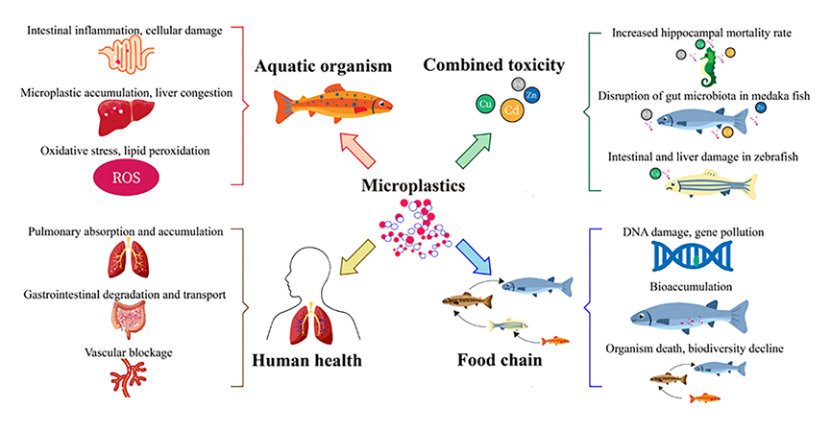
Microplastics significantly disrupt molecular-level physiological functions in aquatic organisms through three primary mechanisms: oxidative stress, reproductive endocrine disruption, and intestinal barrier damage. Oxidative stress mechanisms are evidenced by zebrafish studies where 3-μm polystyrene microplastics (PS-MPs) induce reactive oxygen species (ROS) overproduction, concurrently upregulating ROS-responsive genes (e.g., sod1, cat) and antioxidant enzyme transcription.45 In terms of reproductive health: (1) Endocrine disruption: Exposure to microplastics resulted in significant reductions in follicle-stimulating hormone (FSH), luteinizing hormone (LH), and sex steroid hormone levels in loggerhead turtles.46 (2) HPG axis disruption: Exposure to PS-MPs resulted in abnormal expression of key genes in the hypothalamic-pituitary-gonadal (HPG) axis in mudskippers.47 (3) Increased apoptosis: Pathological damage and apoptosis were observed in gonadal tissues. (4) Gamete development disorders: Manifested as reduced sperm parameters and decreased egg hatching rates.48 In terms of intestinal health, PS-MPs disrupt the physical barrier function of the intestinal tract in Leuciscus waleckii, activate the pro-inflammatory NF-κB signalling pathway while inhibiting the antioxidant Nrf2 pathway, and induce intestinal inflammation.49 It is worth noting that while current laboratory high-concentration exposure experiments can elucidate toxic mechanisms, they may overestimate actual risks. Future research should focus on low-concentration, long-term, and multi-pollutant exposure scenarios to more accurately assess the ecological health risks of microplastics.
Effect of microplastics on the food chain
Due to their durability and resistance to degradation,50 microplastics are gradually enriched in the food chain. For example, small fish ingest zooplankton containing microplastics, and microplastics will accumulate in large fish through the trophic transfer of food chain.51 In this way, microplastics may accumulate among advanced consumers in the food chain.52 It is found that both microplastics and macroplastics will cause potential obstacles to the physiological function of beaked whales and can lead to a decrease in the number of individuals and destroy the stability of the nutrient chains in the ocean.53
The impact of microplastics on aquatic ecosystems exhibits multi-scale cascading effects, with their mechanisms of action following a transfer pathway from individuals to communities to ecosystems. At the individual level, the impact of microplastics on aquatic organisms is size-dependent: larger microplastics (1-5 mm) cause mechanical damage through surface retention,54 while ingested microplastics can damage the digestive tract mucosa and impair nutrient absorption.55 Even nanoplastics can penetrate cell membranes and significantly alter gene expression by disrupting cellular metabolic homeostasis, inducing oxidative stress, and altering epigenetic regulation.45 These multi-layered physiological disturbances ultimately lead to phenotypic abnormalities in aquatic organisms, such as reduced growth and reproductive rates. Damage at the individual level can have cumulative effects at the community level, significantly reducing the abundance of pollution-sensitive species, altering interspecific competition, and ultimately decreasing community diversity.10 At the ecosystem level, microplastics exert their impacts through two pathways: first, by directly inhibiting the photosynthetic efficiency of primary producers by changing the optical properties of water bodies (e.g., reducing transparency)56; second, by interfering with energy flow pathways through trophic cascade effects, manifested as:(1) changes in the population dynamics of key species,53 (2) disruption of trophic cascading relationships,10 and (3) reduced energy transfer efficiency.57 These mechanisms interact, ultimately leading to the degradation of ecosystem functions. This cross-scale cascade effect is amplified step by step through bioaccumulation, habitat changes, and the reshaping of interspecies relationships, fully revealing the complex transmission process of microplastics from the microscopic to the macroscopic level,55 thus fully revealing the complex transmission process of microplastics from the microscopic to the macroscopic level. However, its specific action thresholds and long-term ecological risks still require further quantitative research.
Impact of microplastics on human health
As consumers at the top of the food chain, humans are the ultimate accumulators of microplastic pollution. Numerous studies have confirmed that microplastics can enter the human body through various pathways, including diet and respiration, and are widely distributed in various tissues, disrupting physiological balance and triggering a chain reaction of pathological reactions, ultimately posing a significant threat to health.58 Recent data show that microplastics are most abundant in human feces (33 particles/g), indicating that the digestive tract is the primary route of excretion. Detection in breast milk (10 particles/g), placenta (5.2 particles/g), and lung tissue (0.63 particles/g) confirm their potential accumulation in the body.59 More concerningly, a survey of over 200 surgical patients revealed that nearly 60% had microplastics, or even smaller nanoscale particles, in their aortas.60 Microplastic particles of varying forms have also been found in human placental tissue.61 Critically, clinical studies further found that among nearly 300 subjects, individuals whose arterial plaque fatty deposits contained microplastics had significantly increased incidence and mortality of cardiovascular disease.62
The harm microplastics pose to human health is primarily achieved through the following mechanisms: firstly, microplastics can be absorbed by special epithelial cells in the intestine, enter the bloodstream via the lymphatic system, and then enter the liver and gallbladder via the lymphatic system,63 Secondly, microplastics have the ability to break through physiological barriers and can penetrate the placental barrier and blood-brain barrier.64 Finally, within the vascular system, microplastics have been demonstrated to induce oxidative stress, activate inflammatory pathways, and lead to endothelial dysfunction and the instability of atherosclerotic plaques.65 Collectively, these mechanisms elucidate the transition of microplastics from environmental pollutants to pathogenic factors that pose a threat to human health. This scientific understanding provides a foundation for the development of preventive and control measures.
Integrated Effects and Mitigation Strategies for Microplastic and Heavy Metal Co-Pollution
Different polymers exhibit significant differences in their adsorption capacity for heavy metals. Studies have shown that polylactic acid (PLA) has a significantly higher adsorption capacity for Cu than polyethylene (PE), polystyrene (PS), and polyethylene terephthalate (PET), and its adsorption capacity for Pb²⁺ is also superior to other heavy metals.12 In contrast, polyvinyl chloride (PVC) particles exhibit a stronger affinity for Cu and Zn, with aged PVC fragments adsorbing more Cu than PS particles. This may be due to the increased specific surface area during pyrolysis, which leads to a relative increase in heavy metal adsorption capacity.66 Notably, environmental factors such as pH, humic acid, temperature, and SO₄²⁻ concentration significantly influence the adsorption of Pb²⁺ and Cu²⁺ by PP and PS microplastics.67 Furthermore, microplastics such as PP and PVC have good adsorption properties for heavy metals such as Mn and Pb, and the differences in adsorption of Pb, Cu, and Cd by PP microplastic particles are closely related to adsorption time and metal ion concentration.68 It is important to emphasize that the adsorption capacity of microplastics for metal ions decreases with increasing particle size, and as microplastic concentration increases, the combined effect of microplastics and heavy metals shifts from antagonism to a synergistic effect.69
Heavy metals adsorbed on microplastics, when ingested by aquatic organisms, can lead to increased potential toxicity.70 Once entering the food chain, heavy metals pose a threat to aquatic life and human health. Multiple studies have confirmed the synergistic toxicity of this combined pollution. Jinhui et al.71 found that heavy metals such as Cu, Cd, and Pd attached to microplastics can cause oxidative damage, such as lipid peroxidation, in the hippocampus, and confirmed that these effects are primarily due to heavy metal accumulation rather than the microplastics themselves.71 Similarly, Yan et al.72 demonstrated that the combination of microplastics with Cd, Pb, and Zn reduced gut microbial diversity in medaka and increased the pollutant load in their gut.72 Qiao et al.73 found that Cu exacerbated the toxic effects of microplastics in zebrafish, leading to oxidative damage and inflammatory responses in the intestine and liver. These findings are supported by multiple studies, including one demonstrating that the coexistence of heavy metals (Cu and Pb) with microplastics can severely disrupt the gut microbiome of zebrafish larvae.74 Furthermore, studies on marine mussels (Mytilus coruscus) have shown that simultaneous exposure to microplastics and Pb significantly increases oxidative damage, placing greater strain on their immune systems.12 However, other studies have found that the adsorption of Cd²⁺ by poly-PS and PE can reduce its toxicity to Chlorella vulgaris by reducing its bioavailability.75
Although some experiments have proved that microplastics can cause harm to aquatic organisms (Figure 5; Table 1), significant knowledge gaps persist regarding the direct impact of microplastics on human health. In order to address this environmental challenge, researchers have identified microorganisms capable of breaking down microplastics and accelerating their biodegradation. This is of critical importance for both biological and environmental protection.76 Therefore, developing biodegradable polymer alternatives is a key strategy to control microplastic pollution at its source. Furthermore, it is imperative to establish food safety regulations and revise standardized protocols for the collection and detection of microplastics, providing strong support for long-term research on the accumulation patterns of microplastics in organisms and their pathogenic thresholds.

Summary and Future Perspectives
Currently, promoting the construction of a standardized system for microplastic research should focus on the following three core areas: (1) establishing a standardized sampling technology system, including standardization of key parameters such as mesh aperture, trawl length, speed, sampling time and depth; (2) developing a unified pretreatment methodology, by precisely controlling digestion time and temperature, and optimizing the oxidation-acid-base hydrolysis-enzymatic hydrolysis protocols for different matrix samples; (3) instituting a data sharing mechanism, mandating the disclosure of core metadata such as particle size distribution and polymer type to ensure the comparability and reproducibility of research results. These approaches will provide a reliable scientific basis for the ecotoxicological assessment of microplastics and thus support the improvement of the ecological environment and the aquaculture risk prevention and control system.
Future research should focus on: (1) developing standardized sampling equipment suitable for different water types; (2) establishing a standard for rapid identification of microplastics based on artificial intelligence; and (3) promoting the construction of a global unified microplastic database. Through cross-disciplinary and international cooperation, a standardized research framework covering the entire continuum of “sampling-analysis-assessment-management” will eventually be formed.
Acknowledgments
This work was financially supported by the Natural Science Foundation of Hebei Province of China (No. C2023204059), the Science and Technology Project of Hebei Education Department (QN2024221). The authors are grateful for the financial support provided.
Authors’ Contribution
Conceptualization: Yan Zuo; Methodology: Yan Zuo, Jia Yu; Formal analysis and investigation: Longfei Ma, Zipu Liu; Writing - original draft preparation: Yan Zuo; Writing - review and editing: Yan Zuo; Funding acquisition: Jia Yu; Resources: Jia Yu; Supervision: Sheng Li, Zipu Liu, Zichao Zhang; Visualization: Sheng Li, Zichao Zhang.
Competing of Interest – COPE
No competing interests were disclosed.
Ethical Conduct Approval – IACUC
No animal sampling was performed in this research.
Informed Consent Statement
All authors and institutions have confirmed this manuscript for publication.
Data Availability Statement
All are available upon reasonable request.