
Introduction
Xiangshan County is located in the center of the eastern coast of Zhejiang Province, China, comprising a peninsula surrounded by the sea on three sides1. The county is rich in marine resources, including diverse marine life and scenic islands, abundant fishery resources, and densely distributed fishing villages. Notable attractions include Shipu Fishing Port Ancient Town, Dongmen Fishing Village, and China Fishing Village along with other tourist attractions. Xiangshan has a long and vibrant marine fishing cultural tradition, featuring the Chinese Fishing Festival, fishing songs, and the March of Three Sands, which have been effectively preserved and promoted. This long history of fishery production and cultural heritage provides unique conditions for the development of recreational fisheries.
At present, recreational fisheries are widely welcomed by consumers.1 However, the rapid pace of development has exposed both sustainability controversies and research gaps. Overexploitation of specific resources underscores the tension between utilization and ecological protection, while tourists’ limited environmental awareness further exacerbates this contradiction. Existing studies have not adequately examined how to balance leisure experiences with ecological conservation. Additional challenges—such as limited project innovation, inadequate infrastructure, and insufficient supporting attractions—reveal weaknesses in management mechanisms. Moreover, the literature has yet to clarify which management models are best suited to recreational fisheries. These issues in Xiangshan County reflect the convergence of key controversies and unresolved research questions. Exploring sustainable development pathways is therefore of practical importance, offering both theoretical and policy value.
The China Recreational Fishery Development Monitoring Report (2024) highlights that China’s recreational fishery sector has expanded rapidly in scale and diversified in business models. At the same time, it faces intensified market competition and growing resource and environmental constraints.2 Chen et al.3 further found that the sustainability of coastal recreational fisheries is shaped not only by local factors but also by broader policy, economic, social, cultural, and ecological dimensions. As such, the sustainable development of recreational fisheries constitutes a complex system involving multi-dimensional and multi-stakeholder interactions.
This study constructs a “ecological - social - cultural” multi-dimensional framework to identify the key influencing factors in Zhejiang Province. The social-ecological system (SES) model,4 which emphasizes the interactive relationship between “resource system - resource unit - governance system - user”. By integrating this model with the realities of Zhejiang’s fisheries resources, operators, tourists, and management bodies, the study explores both synergy and conflict within subsystems to improve the accuracy of factor identification. Ultimately, effective policy and management measures must be developed based on these findings to strengthen the long-term sustainability of recreational fisheries.5
Wang et al.6 pointed out that inheriting and promoting marine fishing culture can empower the revitalization of village fishing industries, and that recreational fishing provides an important starting point for such a trend. Liu et al.7 analyzed the current state of marine ranching-based recreational fisheries in China and proposed that they have broad development prospects, while also noting several challenges, including inadequate infrastructure and low service quality. Song et al.8 discussed the development model of recreational fishery tourism in the context of marine ranching, a and put forward the idea of integrated “fishery + tourism” development. Chen et al.9 examined the characteristics and development trends of coastal China’s recreational fisheries from the perspective of spatial layout, providing a reference when planning the recreational fishery infrastructure.10 In Taiwan, the sustainable development of recreational fisheries has been promoted through ecological fishery concepts, such as the Fishery Resources Enhancement and Stocking Plan, and through industrial integration strategies.11
Researchers around the world have also studied recreational fisheries. Norway ensures the long-term stability of its fishery resources through strict ecological fishery standards and a network of marine protected areas.12 Inspired by such practices, Zhejiang Province could strengthen the development of ecological fisheries, promote environmentally friendly fishing tools (e.g., stationary lift nets), and reduce the impact of human activities on the marine ecosystem. In addition, Japan enhances the cultural value of recreational fisheries through fishing village festivals and demonstrations of traditional fishing skills. Similarly, in Taiwan, the sustainable development of recreational fisheries has been promoted through ecological fishery concepts, such as the Fishery Resources Enhancement and Stocking Plan, and industrial integration strategies, including the Recreational Fisheries Development Regulations. The market appeal of recreational fisheries has also been strengthened through community engagement and brand building, exemplified by events such as the East Coast Sea Fishing Festival.13
Existing research outcomes have laid a foundation in theory and practice; however, a critical synthesis reveals both clear consensus and divergences. At the consensus level, scholars generally adopt the “ecology-economy-society” three-dimensional framework as the core, and agreed that the balance between resource utilization and ecological protection is the key to achieving sustainable development. Article 102 of the Modernized Recreational Fisheries Management Act (Modern Fisheries Act) amended the Magnuson-Stevens Fishery Conservation and Management Act (MSA) in 2018 to explicitly grant regional fishery management committees (councils) the power to adopt management measures for recreational fisheries,12 to ensure the long-term stability of fishery resources. Zhejiang Province can leverage this authority to strengthen the development of ecological fisheries, promote environmentally friendly fishing gears (such as stationary lift nets), and reduce the impact of human activities on the marine ecological environment.
Xiangshan County, China is a traditional fishing county with a long history. Its Shipu Fishing Port boasts centuries of fishing heritage, and its fishing techniques and culture have been well preserved and developed. With the development of China’s modern social economy and leisure tourism, recreational fisheries have become an important industry driving economy in the fishing port. This article explores nineteen influencing factors from five perspectives: resources, infrastructure, service quality, fishing culture, and recreational14fishing activities through field research, data analysis, and questionnaire surveys, and finds that infrastructure and the natural environment have the most significant impact on the development of local recreational fishing. Based on this, a series of suggestions are proposed: In terms of the environmental dimension, it is necessary to adhere to rational infrastructure planning, accelerate ecological protection and restoration, implement water ecological protection plans, strengthen water quality monitoring and pollution control, protect the aquatic ecological environment, and at the same time create characteristic fishing landscapes, such as fishing port wharves and ancient fishing port cities; In terms of facilities and services, improve the infrastructure for recreational fishing, including fishing areas, sightseeing platforms, catering and accommodation facilities, to enhance the tourist experience, and at the same time improve the service quality of recreational fishing at the industrial level, strengthen the training of employees, and improve service levels and tourist satisfaction; In addition, attention should be paid to the protection of fishing resources, the development of diversified recreational fishing products, the strengthening of the integration of recreational fishing with tourism, culture and other industries, the creation of characteristic fishing tourism routes and products, and the construction of recreational fishing demonstration zones.
Materials and Methods
Study area
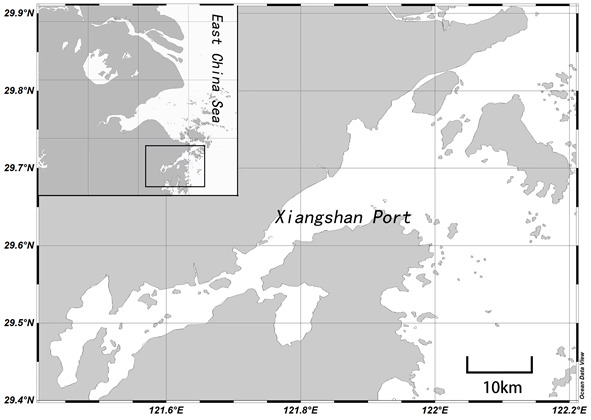
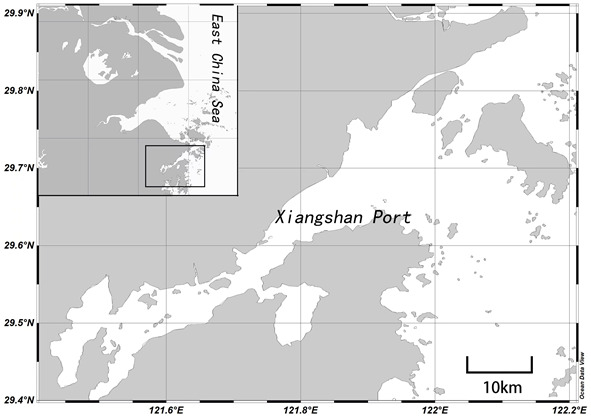
Xiangshan County is located in the eastern part of Zhejiang Province and the central coastal area of China (Figure 1) and is a peninsula county-level administrative region. The sea surrounds it on three sides and has a vast coastal area consisting of the Xianghan Peninsula and 593 islands and reefs.15 The Xishanghai Port in the north, the Songlanshan Tourist Resort and Xitong Port in the east, the Shipu Fishing Port Ancient Town, the Chinese Fishing Village, Huaao Island, Yushan Islands, and Tantoushan Island are all high-quality tourist areas.16Xiangshan County is particularly suitable for the development of recreational fisheries.
Data acquisition
After using the China National Knowledge Infrastructure (CNKI https://www.cnki.net/) to sort the literature on sustainable development in recent years, the development and sustainable use of recreational fisheries in Xiangshan County were analyzed regarding the following five aspects: natural resource protection, recreational fishery infrastructure, recreational fishery activities, fishing culture, and recreational fishery service quality. The sustainable development of recreational fisheries must prioritize human needs, with government involvement, stakeholder collaboration, and cultural preservation to establish a balanced development model integrating economic, ecological, and social benefits.
Four main aspects of natural resource conservation in recreational fisheries are considered, including: N1 The degree of industrialization around the recreation area is controlled; N2Ecological protection areas are set up in the course of recreational fishing activities;N3 Control of fishing and industrial wastewater discharge during recreational fishing activities;N4 Management of natural resources (e.g., islands, beaches, tidal flats, forests, seascapes, etc.) during recreational fishing activities.17
For the construction of recreational fishing infrastructure, four main aspects were taken into consideration: N5 The infrastructure (roads, docks, hotels, etc.) during recreational fishing activities is well planned; N6 The recreational fishing boat pier is combined with the fishing marina; N7 Ease of booking and use of the recreational fishing marina; N8 The number of beds in hotels and B&Bs has increased in the course of recreational fishing activities.18
In addition, for recreational fishing activities, the primary considerations: N9 Smart city launch during recreational fishing activities (online observation of road conditions, booking and cancellation of activities, display of specific charges); N10 Recreational fishing activities, sea fishing events, and other activities are set up; N11 Increase new types of recreational fisheries; N12 In the process of recreational fishery activities, increase the leisure wrench (a kind of net laying in the water, waiting for the fish to swim to the top of the net, lifting the net in time, and then using the net to catch the catch) on the tidal flat (catching mud snails, catching razor clams, etc.).19
When focusing on fishing culture, two main issues: N13 When participating in recreational fishing activities, students learn about fishing and fishing culture; N14 When participating in recreational fishing activities, you can participate in festivals such as the “Open Fishing Festival”.20
In view of the quality of recreational fishery services, five primary considerations were drawn up: N15 The information and consultation information obtained before participating in recreational fishing activities (e.g., activity content, cost, etc.) is clear and accurate; N16 The efficiency and professionalism of the staff in recreational fishing activities; N17 Professional training and service quality improvement of service personnel in recreational fishery activities; N18 Safety and security in recreational fishing activities; N19 The abundance of food and beverages in recreational fishing activities.21
In total, 19 factors were selected to cover relevant dimensions, including ecological protection, infrastructure development, activity diversity, cultural experiences, and service quality. These factors directly affect the economic benefits and tourist experience of recreational fisheries, and they are closely related to ecological environmental protection and local cultural inheritance.
From August 12th to September 1st, 2024, a questionnaire was administered via “Wenjuanxing,” and data were collected via WeChat (a free instant messaging application launched by Tencent). A total of 108 questionnaires were collected (the majority of which targeted individuals who had participated in or were familiar with Xiangshan’s recreational fisheries). The respondents were selected through stratified random sampling, covering three major industries: fisheries, services, and tourism. The sample size (n=108) was determined using GPower 3.1, with an estimated effect size derived from sustainable behavior questionnaires, a significance level (α=0.05), and a statistical power (1-β=0.80). An additional 15% buffer was reserved to account for potential invalid responses. For the planned multiple regression analysis (based on the 5 variables in this study), the minimum required sample size, calculated with GPower 3.1, was 92. The final sample size was increased to 108 to ensure robustness. Each factor was rated in the survey as “very important”, “important”, “fair”, “acceptable”, or “not important”, as shown in Table 1.
Data analysis
SPSSAU Online Analysis (https://spssau.com/index.html) was used to assess the credibility and validity, and to perform a principal component analysis of the above data.
Statistical analysis of basic information
Among the 108 respondents, 70 were males (64.81%) and 38 were females (35.19%) (Table 2). This shows that more males than females participated in the survey. The questionnaire was distributed via WeChat forwarding and sharing, and surveyed respondents’ understanding of leisure fisheries in Yangshan. This article is particularly focused on recreational fishing, which attracted more male than female respondents.
There were 50 respondents in both the 18–30 and 31–50 age groups, each accounting for 46.3% of the sample, and eight respondents were over 51 years old, accounting for 7.41%. These gender and age groups were considered when analyzing respondents’ views on the development of recreational fisheries in Xiangshan County, and they helped us target when formulating strategies. There were nine students (8.33% of the sample), 91 office workers (84.26%), four freelancers (3.7%), three retirees (2.78%), and three other personnel (2.78%). Among them, office workers accounted for the largest share of the sample, leading us to recommend that more activities be scheduled on weekends to showcase Xiangshan County’s recreational fisheries effectively.
There were eight students with junior high school education and below, accounting for 7.41% of the sample, 12 students from high school/technical secondary school, accounting for 11.11%, 36 students with junior college education, accounting for 33.33%, 34 people with undergraduate degrees, accounting for 31.48%, and 18 people with a master’s degree or above, accounting for 16.67%. Overall, the proportion of respondents who completed junior college was relatively high at 33.33%, followed by those with undergraduate degrees at 31.48%, indicating that respondents’ overall education was high. Nonetheless, all educational backgrounds were represented, confirming the questionnaire’s reliability.
Cronbach’s reliability analysis
A credibility analysis of the questionnaire was conducted to ensure that responses accurately reflected respondents’ views, attitudes, or behaviors related to the sustainable development of recreational fisheries. This study used Cronbach’s alpha coefficient for reliability analysis. The sample size was 108, and the questionnaire contained 23 items: 4 for basic information and 19 for specific survey content.
Firstly, the alpha coefficient was analyzed: if it is above 0.8, the reliability is high; between 0.7 and 0.8, it is good; between 0.6 and 0.7, it is acceptable; and below 0.6, it is not good. If the CITC (corrected item-total correlation) is below 0.3, the item can be deleted. If the value of a deleted α coefficient is significantly higher than the α factor, the item can be deleted, and the remaining items re-analyzed.
The analysis showed that Cronbach’s alpha was 0.927. According to Nunnally’s (1978) criteria, a Cronbach’s alpha coefficient of 0.70 or above indicates good internal consistency, while 0.90 or above indicates high reliability in the questionnaire, which was the case here. Furthermore, the reliability coefficient was 0.948, which was greater than 0.9, indicating that the research data had high reliability.22
Through the credibility analysis, we confirmed that the Xiangshan County Recreational Fishery Sustainable Development and Utilization Questionnaire was a high-confidence tool and that the research results obtained with it were reliable.
Validity analysis
Through exploratory factor analysis, we evaluated the degree of support for the sustainable development of recreational fisheries, focusing on natural resource protection, recreational fishery infrastructure, recreational fishery activities, fishing culture, and recreational fishery service quality.
These factors were extracted via principal component analysis (Table 3) and placed in a factor-loading matrix.
Factor 1 (facilities and management of recreational fishing activities) explained 35.90% of the variance, focusing mainly on the convenience of making reservations at recreational fishing wharves, the number of hotel rooms, and the rationality of the infrastructure. Factor 2 (ecological conservation and resource management) explained 18.10% of the variance, including the views on the importance of ecological protection areas and the rigor of natural resource management. Factor 3 (activity diversity and cultural heritage) explained 7.78% of the variance, reflecting the diversity of leisure activities and the learning of fishery culture. Factor 4 (information services and problem-solving) explained 6.67% of the variance, focusing primarily on the clarity of information consulting services and the professionalism of staff in problem-solving. Factor 5 (safety and service quality) explained 5.52% of the variance, emphasizing the professional training of safety and security and service personnel.
Overall, the development of recreational fisheries in Xiangshan County scored highly across resources and the environment, infrastructure, social culture, safety, and services. However, our findings revealed that it is still necessary to maintain a balance within the system.23
Factor analysis
We analyzed the impacts of various factors on respondents’ experiences (Table 4). Factor loadings of 0.8 or higher were found for N3, N4, N8, and N10–12, among others. Examples of specific items with these high loadings are fishing and industrial wastewater discharge control (0.84), the importance of natural resource management (0.85), the number of beds in hotels and B&Bs (0.81), the setting of sea fishing events and other activities (0.84), new recreational fishery activities (0.81), and recreational wrenching and tidal flat activities (0.87). These results indicated that respondents generally believed in adding new recreational fishery activities first, paying attention to the protection and sustainable management of the ecological environment, and subsequently managing fishing and industrial wastewater discharge control and launching sea fishing competitions; finally, adding hotel beds and even more new recreational fishery activities.
Data normalization and factor testing
Data standardization and factor testing helped ensure data accuracy and reliability. The magnitudes of different indicators varied widely, and direct analysis may have led to biased results in favor of the larger indicators. We used “Descriptive Statistics” -> “Normalized Variables” (Z-scores) to normalize the data. This eliminated differences in dimensionality and range across variables by giving them equal weights, thereby improving the accuracy of factor analysis results 25. Factor testing was then used to explore the underlying structure of the data, i.e., explaining the correlations among multiple variables with just a few factors,24 in this case, the key factors affecting the sustainable development of recreational fisheries.
The factor analysis process starts with selecting extraction factors. Here, the principal component analysis method was selected, and we set the number of factors to be extracted based on the criterion that each eigenvalue be greater than 1. To provide a more explanatory factor structure, researchers may choose to perform factor rotation, such as an orthogonal rotation (e.g., Varimax). The rotated factor loading matrix will improve the ease of interpreting the combination of variables that each factor represents. If the Kaiser–Meyer–Olkin (KMO) value is greater than 0.8, the data are highly suitable for extracting information (i.e., the validity is excellent). The correspondence between the items and the factors is then analyzed. If the correspondence is mainly consistent with the psychological expectation, this indicates that the validity is good. We analyzed the development and sustainable use of recreational fisheries in Xiangshan County, including the environmental conditions for recreational fishing, infrastructure development, the display of recreational fishing activities and fishing culture, and the training and safety of recreational fishing-related personnel. According to Table 5, the KMO value was 0.894, exceeding 0.8, indicating that the study data were suitable for extracting information and that the questionnaire data were valid. Moreover, Bartlett’s test statistic x was almost equal to 0, indicating that the data were not independent of one another. Hence, the data from the Xiangshan County Recreational Fishery Sustainable Development Questionnaire were suitable for factor analysis, and the questionnaire data were presented in a correlation matrix.
Results and discussion
The 19 indicators studied cover key aspects of the sustainable development and use of recreational fisheries. These relate not only to the conservation of natural resources, infrastructural development, and the diversity of activities, but also to cultural heritage, service quality, and environmental protection. Through the study of these aspects, the sustainable development potential of recreational fisheries was comprehensively assessed, and a scientific basis for recommendations on policy development and practice was established.
PCA score
For a comprehensive evaluation using the principal component score, it is necessary to establish an equation for the relationship between the principal component and the study item in the “linear combination coefficient matrix” (based on the standardized data) (Table 6).
In principal component analysis (PCA), the linear relationship between the original variable (analysis term) and the principal component is described. We had 19 primitive variables (N1–19) and five principal components (PC1–5), and the mathematical formula relationship was expressed as follows:
\[PC_{i} = \sum_{j = 1}\mspace{2mu} pa_{ij}X_{j}\tag{1}\]
When using factor analysis for information enrichment, the Component Score Coefficient Matrix table is ignored. (When performing factor analysis for weight calculation, it is used to establish an equation for the relationship between the factor and the study item (based on the normalized data).)
The composite score is calculated by multiplying the variance-explained rate (normalization) by the factor score after rotation. The formula for our data was as follows:
\[\scriptsize \begin{aligned} (31.227*PC1+17.914*PC2 +11.466*PC 3 +11.161*PC 4 \\ + 8.850*PC 5)/80.619 =0.387*PC1 + 0.222*PC2 \\ + 0.142*PC3 + 0.138*PC4 + 0.110*PC5\end{aligned} \tag{2}\]
This produced the principal component scores for each sample, reflecting each sample’s projection onto each principal component. Table 7, compiled according to Equation 1, shows that the recreational fishery activities of influencing factor 3 received the highest comprehensive score. This leads us to propose adding more activities to the development of Xiangshan’s recreational fisheries, such as setting up wrench points, working on tidal flats (catching mud snails, clams, etc.), providing characteristic fishing-family entertainment, and offering marine cultural experiences. PC4 fishing culture and PC5 service quality and safety management should also be valued when developing recreational fishery activities, and relevant management policies should be introduced.
Analysis of recreational fishery development and sustainable use in Xiangshan County
According to the results in (Table 8)of the factor load matrix, the following factors were key: Factor 1 focuses on ecological protection and environmental management, emphasizing the respondents’ concerns about ecological protection area setting and industrial wastewater discharge control. Factor 2 involves the rational planning of infrastructure, including the construction of hardware facilities such as roads and docks. Factor 3 mainly relates to the design of recreational fishing activities, including the convenience of recreational fishing boat docks, the accuracy of information and advice, etc., which reflects the respondents’ attention to the quality of activity management. Factor 4 mainly demonstrates the diversity and experience of the fishing culture, such as participation in fisheries-related knowledge learning and festival activities. Factor 5 concerns the service and safety management of leisure activities delivered by recreational fisheries in Xiangshan County, which respondents in this study recognized as important.
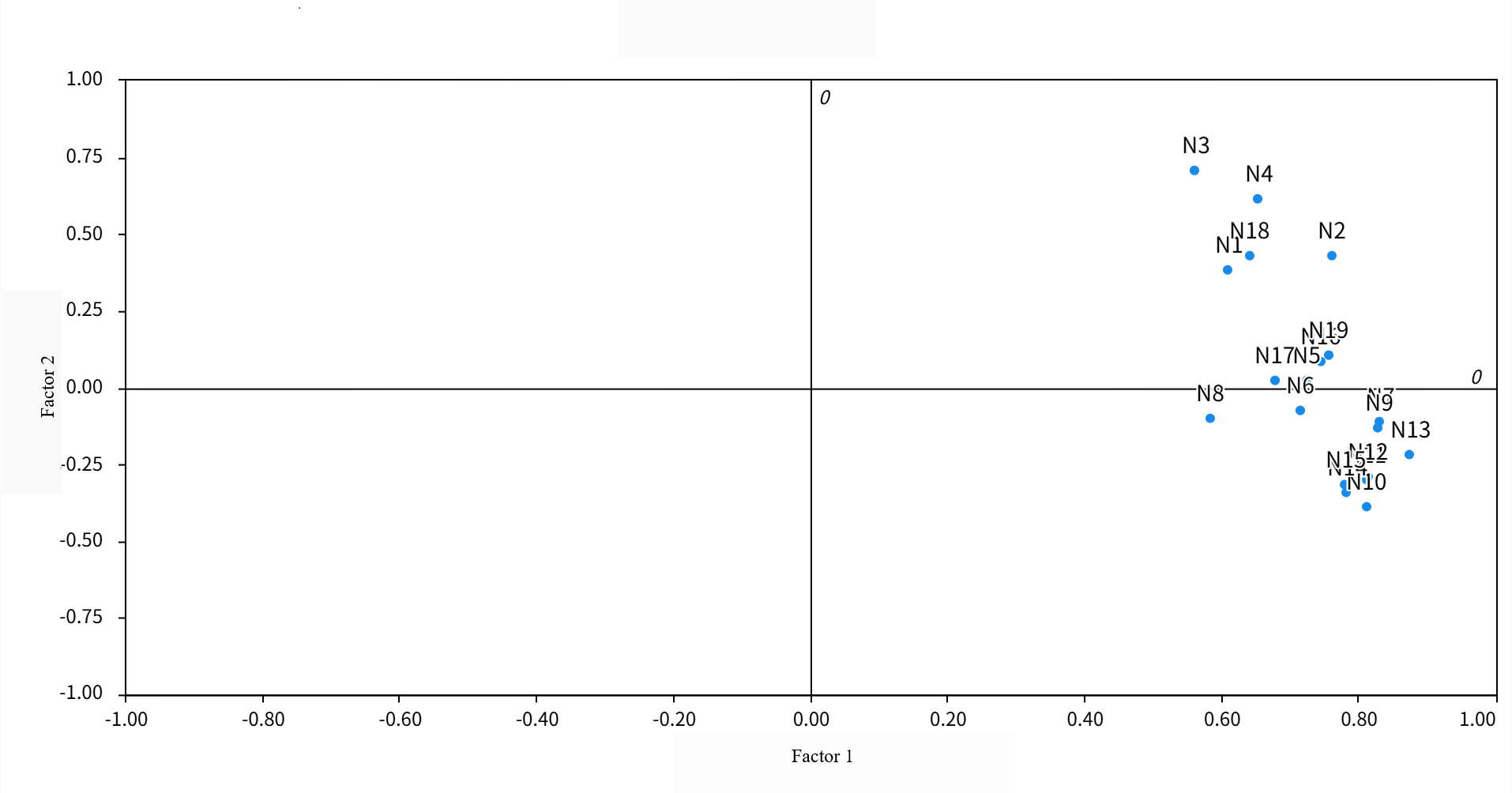
The larger the load in the factor-loading matrix, the stronger the relationship between the variable and the factor. This is a visual method of representing the load (i.e., correlation or weight) of the original variable (also known as an observed variable or metric) on each factor. Table 9, after Varimax rotation, shows the factor loadings for the matrix developed in Figure 2. Here, all variables are shown to be relevant to the development process of Xiangshan’s recreational fisheries, and several can be actively developed at the same time.
The five factors in the questionnaire were found to impact the development and sustainable use of recreational fisheries in Xiangshan County, as shown in Table 8. In particular, the sum of marine environmental protection, infrastructure construction, and the diversity of recreational fishing activities accounted for 59.652%, indicating that these three factors significantly influence the industrial development of recreational fisheries in Xiangshan County. This finding can be used to promote their future growth.
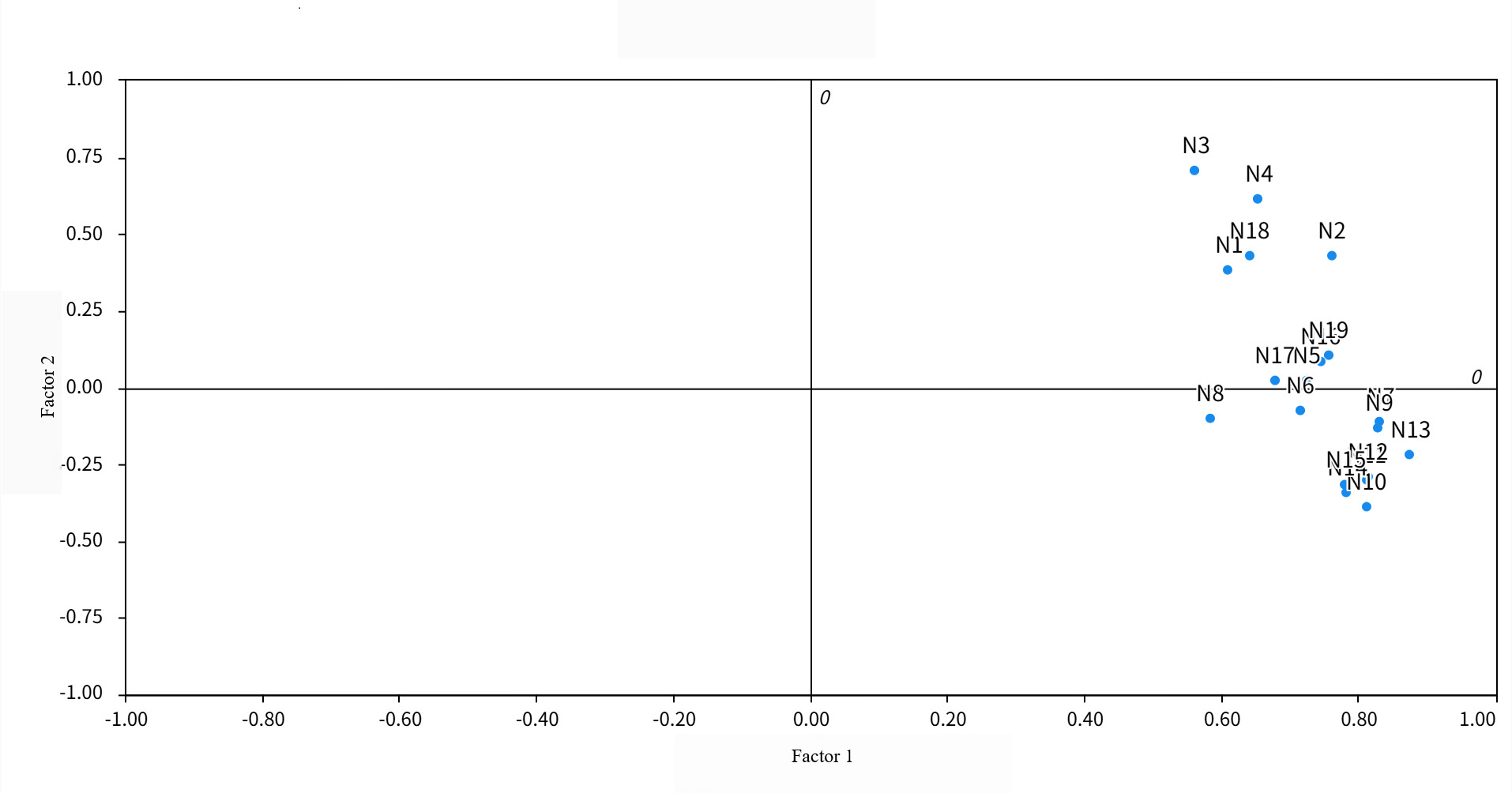
In Figure 2, which shows the load maps that were produced, we can see that when developing recreational fisheries in Xiangshan, in addition to improving the traditional infrastructure, such as waterways, transportation, and ports, it is also necessary to build new infrastructure that is ecological, civilized, convenient, green, and humanistic. In recent years, Xiangshan County has seen the construction of several new recreational fishing facilities, including boat docks, marine parks, and hotels, which provide tourists with a high-quality recreational fishing experience.
In summary, based on our PCA results, the factors involved in Xiangshan recreational fishery activities can be summarized into five main dimensions. First, the facilities and management factors show that respondents attach great importance to infrastructure and information serviceability, with a high value of 0.947 indicating the importance of efficient information transfer and problem-solving in improving respondent satisfaction. This aligns with the demand for modern leisure activities. Secondly, the results for the ecological protection and resource management factors were 0.779 and 0.762, respectively, indicating that the respondents paid more attention to environmental protection, reflecting the importance of sustainable development in current society. In addition, the results on the diversity of activities and the factors contributing to cultural inheritance also emphasize the value of rich leisure activities and the importance of artistic education. Finally, the results on the importance of convenience, problem-solving, and safety in delivering quality services demonstrate respondents’ basic need for safety and security when attending events.
Development Strategies and Recommendations
China’s recreational fishing in fishing villages has undergone a significant transformation, supported by government policies.24 The construction of a recreational fishery demonstration area is an important measure to promote environmentally friendly fishery production. SDG 14.2 states that we should, “By 2020, sustainably manage marine and coastal ecosystems to maintain the health and abundance of oceans, including by strengthening resilience to disasters”.25 By promoting sustainable fishing methods, the negative environmental impact can be effectively reduced. At the same time, establishing nature reserves for rare aquatic organisms can provide additional protection for specific fishery resources and ensure their long-term survival. In addition, the prevention and control of water and marine environmental pollution, and the stabilization of water quality and quantity are key measures to protect the living environment of aquatic organisms. These measures not only help maintain ecological balance but also lay the foundation for the sustainable development of recreational fisheries.26
When developing recreational fisheries in Xiangshan, we can also learn from the experiences of developed countries in Europe and the United States, such as by improving relevant laws and regulations and systematically obtaining resource management regulations. This may help address the problems of resource overexploitation and inadequate infrastructure in Southeast Asian countries. Planning should also consider environmental protection and ecological balance to ensure that the development of recreational fisheries will not damage the marine ecosystem. Additionally, the type, scale, and layout of recreational fishery infrastructure should be planned according to the market demand and tourist preferences.27 Moreover, the coordinated development of recreational fisheries and other industries may be achieved by considering local fishery resources, natural landscapes, and cultural characteristics.
Publicizing the fishing culture through festivals, clubs, etc., will enhance the public’s understanding and interest in it, thereby strengthening its inheritance.28 Interventions could go so far as to establish a foundation for a fishing culture inheritance system and an inheritor system, and cultivate a new generation of inheritors of fishery culture. Furthermore, interventions in this area may strengthen cultural innovation and development. For instance, they may promote the integration and innovation of fishing culture with modern science and technology, art, and other elements, and create fishery cultural products that are suited to the times. In this regard, efforts may be made to develop fishery cultural derivatives, such as fishery cultural souvenirs and themed hotels (based on the traditional fishing village, but with a modern design, to create a natural and rustic vacation experience close to the sea or a lake), and a new industry may result.
Furthermore, efforts should be made to enhance recreational fishery practitioners’ attention to safe production, affirming that safety is the foundation of fishery development. Practitioners must fully understand the laws and regulations, operating procedures, and emergency practices that will ensure safe fishery production.29 Through practical exercises, employees’ self-rescue, mutual rescue, and emergency response capabilities can be improved, enabling them to cope well in emergencies.
Xiangshan County has abundant marine fishery resources, which provide a solid foundation for recreational fisheries. Structural adjustment of the fishery industry is now needed to develop recreational fishing in the county, requiring that local fishermen change production to increase their income, increase employment in fishing villages, and promote the villages’ economic development and transformation. In the process, the impact on the ecological environment must be considered. Maintaining the marine ecological environment and achieving sustainable development while rapidly developing recreational fisheries is an essential challenge for Xiangshan County. Yet, its unique fishery resources and marine culture offer opportunities to create novel recreational fishing activities, such as setting wrench points, working on tidal flats (catching mud snails, clams, etc.), enjoying characteristic fishing family entertainment, and embarking on marine cultural experiences. Development efforts must meet the diverse and personalized needs of tourists, strengthen the service culture, optimize service processes, and ensure that tourists enjoy an intimate and efficient service experience during recreational fishing activities through word of mouth and repeat customers.
This is the only way to ensure the active, ecological, sustainable development of recreational fisheries, protect the natural landscape and natural resources, uphold the fishing culture in Xiangshan, and educate recreational fishery tourists. Moreover, formulating relevant policies may help providers guide tourists to the sea appropriately, strengthen marine environmental protection and related education, and protect the ecological environment of recreational fishing areas.
Beyond that, we advise launching interventions to strengthen pre-employment and ongoing training for recreational fishery practitioners and to increase knowledge training on the marine environment, fish species, and marine protection. This may improve service levels and enable providers to deliver more professional, considerate services.
Another recommendation is that improving transportation may allow for greater ecological coverage. Beyond that, it will benefit the county to continue improving its recreational fishery infrastructure. Moreover, its fishing culture should be showcased throughout the county to strengthen its association with recreational fishing. Finally, efforts may be undertaken to build a characteristic brand in the region and improve the quality of recreational fishery services; for instance, practitioners in Xiangshan County may learn from event calendars in other locations, where many festivals are held each year to enrich recreational fishery tourism. In recent years, smart fishery, as an emerging model of fishery development, has also emerged as a strategy. Therefore, recent fishery innovations have shifted towards promoting sustainable practices that significantly reduce ecological and environmental impacts.
Conclusions
This paper explores 19 influencing factors across five perspectives —resources, infrastructure, service quality, fishery culture, and recreational fishery activities — through field research, data analysis, and questionnaire surveys. Infrastructure and the natural environment have the most significant impact on the development of local recreational fishing. Based on this, some suggestions were put forward, including adhering to sound infrastructure planning, strengthening ecological protection, prioritizing the conservation of fishery resources, and establishing recreational fishery demonstration areas.
Accordingly, we make the following recommendations:
-
In the environmental dimension, accelerate ecological protection and restoration, implement water ecological protection plans, strengthen water quality monitoring and pollution control, and protect the fishery ecological environment.
-
Create a distinctive fishery landscape, such as a fishing port wharf, an ancient fishing port city, etc. To that end, improve the infrastructure for recreational fisheries, including fishing areas, viewing platforms, catering, and accommodation, to enhance the tourist experience.
-
Develop a diverse range of recreational fishery products, strengthen the integration of recreational fishery with tourism, culture, and other industries, and create characteristic fishery tourism routes and products. Alongside that, improve the service quality of recreational fisheries in the industrial dimension, strengthen practitioner training, and enhance service levels and tourist satisfaction.
-
Establish and improve the inheritance and protection of fishing culture in the cultural dimension.
-
Perform in-depth excavation and sorting of fishing cultural resources, including fishing songs, dances, customs, and gear.
There is a noticeable demographic distribution bias in the survey sample of this study, which limits the overall generalizability of the findings. The underlying causes of this bias have been identified. To address this issue in future research, measures such as expanding the geographic scope of the study, arranging the data collection period more strategically, and incorporating multiple research methodologies will be implemented. These improvements aim to broaden the sample base, reduce sampling bias, and enhance the representativeness and reliability of the research outcomes.
Acknowledgments
Thanks go to Professor WeiGuo Qian for helping with topic selection and financial support for this thesis; we would also like to thank Professor Ta-Jen Chu for reviewing the paper. Both authors would also like to thank the reviewers for their constructive criticism and improvement of this manuscript.
Authors’ Contribution
Conceptualization: Wei-Guo Qian; Data curation: Jiao-Long Li; Formal Analysis: Wei-Guo Qian; Funding acquisition: Wei-Guo Qian; Investigation: Jiao-Long Li; Methodology: Wei-Guo Qian; Project administration: Wei-Guo Qian; Writing – original draft: Jiao-Long Li; Writing – review & editing: Wei-Guo Qian
Competing of Interest – COPE
No competing interests were disclosed’.
Ethical Conduct Approval – IACUC
For the design of animal and plant research
Informed Consent Statement
All authors and institutions have confirmed this manuscript for publication.
Data Availability Statement
All are available upon reasonable request.