
1. Introduction
Recreational fisheries is a new concept that combines tourism with fisheries, also known as fishing tourism.1 Italy was the first country to implement it in the early 1990s. According to the Food and Agriculture Organization (FAO), recreational fishing involves catching aquatic animals that are not the primary source of nutrition for the fisher and are not sold or traded on any market.2–4 In China, recreational fisheries play a vital role in promoting the development of modern Fisheries, which serves as a pathway for fishermen to transition into new professions, increase their income, accelerate the transformation and upgrade of the fisheries industry structure, and support the high-quality development of the Fisheries industry. Moreover, recreational fisheries represent an important initiative for China to implement the rural revitalization strategy and contribute to building a robust marine economy. The Ministry of Agriculture and Rural Development of China defines recreational fisheries as utilizing various forms of Fisheries resources for tourism-related activities, including fishing villages, Fisheries production resources, fishing techniques and tools, aquatic products and their derivatives, natural Fisheries organisms, and cultural elements. Recreational fishing encompasses a range of activities, including sightseeing, hands-on experiences, and labor education.5 This is achieved by optimizing resource allocation and actively integrating Fisheries with leisure, entertainment, sightseeing, ecological construction, cultural heritage, science education, catering, and gastronomy, as well as other tourism-focused elements. Integration aims to provide society with products and services that meet the growing demand for leisure activities and to achieve a form of the fisheries industry that integrates primary, secondary, and tertiary sectors.
Recreational fisheries have three basic characteristics: (1) Utilization of various forms of Fisheries resources to carry out tourism activities; (2) Provision of leisure products and services to satisfy people’s leisure needs; (3) Incorporation elements of “Fisheries” such as fishing villages, Fisheries culture, fishing technology and tools, Fisheries products.5–7 For an activity to be officially classified as recreational fisheries by the Ministry, it must simultaneously encompass all of these three basic characteristics, and only one or two of them cannot be recognized as a recreational fishery. For example, water sports and marine yacht services that primarily utilize the water surface for entertainment and leisure might meet the first two criteria but lack Fisheries-related elements. These activities fall under maritime tourism,8 which encompasses sea-based activities such as cruising, yachting, boating, and nautical sports, along with their respective land-based services and infrastructure. However, without the “fishing” component, they do not qualify as recreational fisheries. In contrast, if marine yachts are used for activities like sea fishing or experiential fishing, these activities meet all three basic characteristics, making them part of recreational fisheries. This distinction highlights the importance of incorporating Fisheries-related components to differentiate the recreational fisheries from other maritime and leisure activities.
The embryonic form of recreational fishing first appeared in the Caribbean in the 1960s, followed by the emergence of recreational fishing activities in Europe, Australia, and Japan.9 Today, recreational fishing has developed into a relatively mature segment of the tourism industry in many developed countries. In countries where recreational fisheries are more established, studies often focus on the recreational and sportive aspects of these activities,9 which is abundant, covering topics like recreational fisheries economics,10 ecosystem,11 management,12,13 and sustainable approach.14,15 At the end of the 20th century, recreational fisheries emerged in China. The demand for upgrading the Fisheries industry has increased after entering the 21st century with the increasing pace of implementation of China’s industrial restructuring strategy. This created an opportunity for the rapid development of recreational fisheries, which has gradually gained recognition and emphasis. Despite this progress, China’s recreational fisheries industry is still in its growth phase. Research on recreational fisheries in China mainly focuses on the development cases of domestic and foreign regions,16,17 development modes,18–20 and influencing factors.21–23Lan(2020)studied the relationship between pescatoursim and tourism in three provinces of China’s eastern, central, and western regions through the Panel-VAR model. Ding24 applied a methodological approach with a series of techniques, including Kernel density estimates, Gini coefficients, and Theil indexes, to comprehensively analyze the dynamic distribution and evolution of pescatouism in China.
This paper examines the current status and models of recreational fisheries in China, with a focus on Shanghai Jinshanzui Fishing Village as a case study of success. Through government interviews and field research, it analyzes the village’s unique development experiences and lessons learned. The paper aims to propose a common development model and strategies for recreational fisheries, offering insights for both China and international practices. It also contributes to academic research and provides a scientific basis for government decision-making on management regulations, as well as guidance for capital, equipment, and human resources, to optimize resource allocation and elevate the industry’s overall development.
2. Current Status of Recreational Fisheries Development in China
This paper adopts the classification criteria from China’s 2021 Annual Report on the Statistical Monitoring Survey of Recreational Fisheries,25 dividing recreational fisheries into two main types based on their activity area: marine recreational fisheries and freshwater (inland) recreational fisheries. Additionally, based on the type of activities involved, recreational fisheries are categorized into five major categories:(1) Tourism-oriented recreational fisheries, (2) Recreational Angling and Gathering Industry, (3) Ornamental Fish Industry, (4) Fishing Tackle, Fishing Bait, Fishing Medicine, Aquarium Equipment, (5) Others. The development of recreational fisheries in China is characterized by rapid expansion in scale and overall growth, but with significant regional disparities (CFLE, 2021). From a structural perspective, the output values of tourism-oriented recreational fisheries, recreational angling, and the gathering industry, including fishing tackle and bait, ornamental fish, fishing medicine, and aquarium equipment, have demonstrated consistent year-on-year growth, particularly in marine recreational fisheries.
2.1. Rapid Development
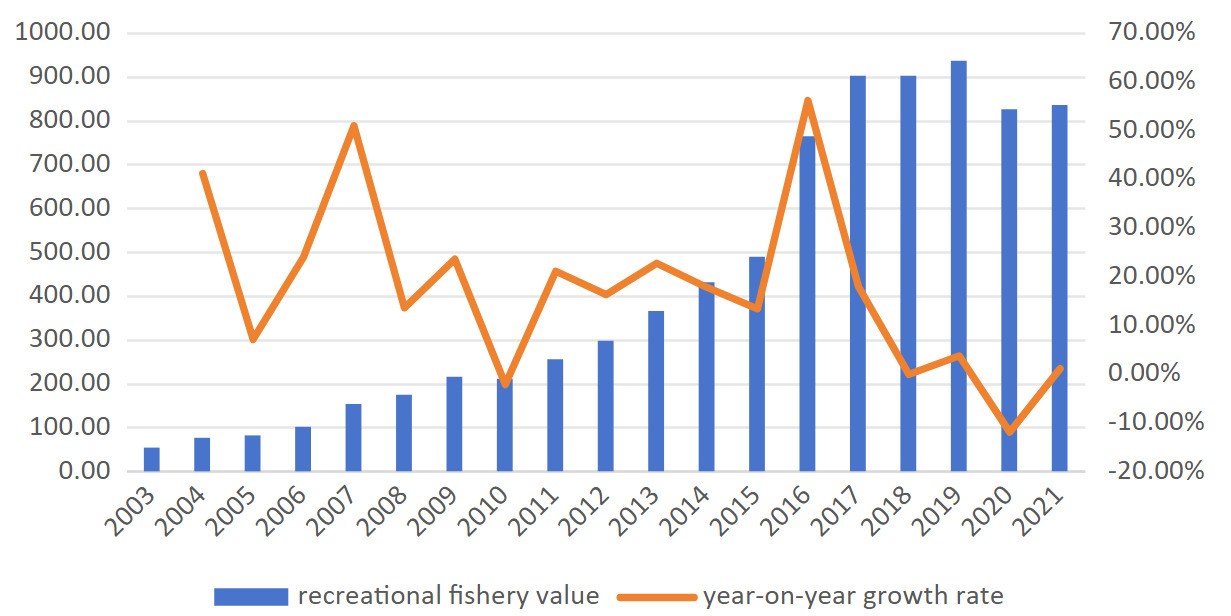
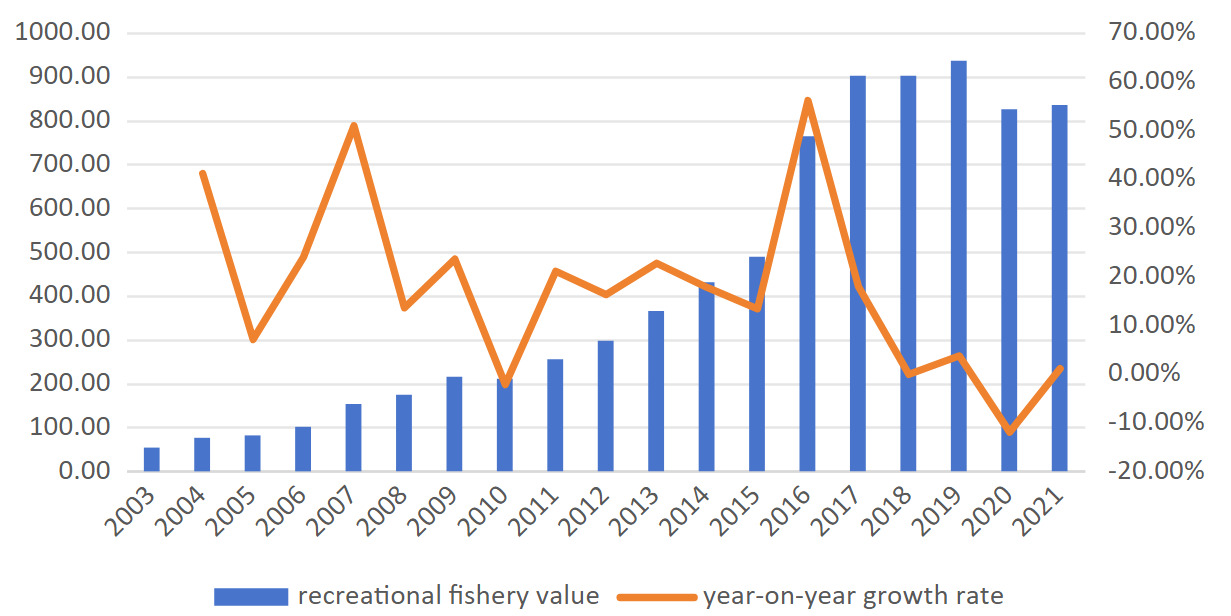
According to the World Tourism Organization,26 China became the world’s largest spender on outbound tourism in 2019, with an expenditure of US$255 billion. Consequently, in recent years (before the COVID-19 pandemic in 2020), China’s substantial tourism trade deficit has served as a testament to this trend. China’s recreational fisheries has also shown an overall steady growth trend over the past 18 years, from 2003 to 2021. In 2003, the output value of China’s recreational fisheries stood at a modest 5.41 billion yuan. By 2019, this figure had surged to an impressive 96.37 billion yuan. Despite slight decreases in output value in 2020 and 2021 due to the COVID-19 pandemic, the sector maintained an average annual growth rate of 16.42% (Fig 1).
2.2. High Industry Concentration
Recreational fisheries is dominated by recreational angling and gathering and the tourism-oriented one. As shown in Table 1, the output value of tourism-oriented recreational fisheries and recreational angling and gathering industry in 2021 were 32.55 billion yuan and 25.22 billion yuan respectively, and the sum of the two sectors accounts for 71.72% of the national total recreational fisheries output value. On the other hand, the output value of recreational fishing tackle, bait, fishing medicine, aquarium equipment, and the ornamental fish industry was 12.88 billion yuan and 9.49 billion yuan, respectively, together representing less than 30% of the total output value. Regarding growth rate, tourism-oriented recreational fisheries, which make up the largest share, also experienced the fastest growth.
2.3. Uneven Regional Distribution
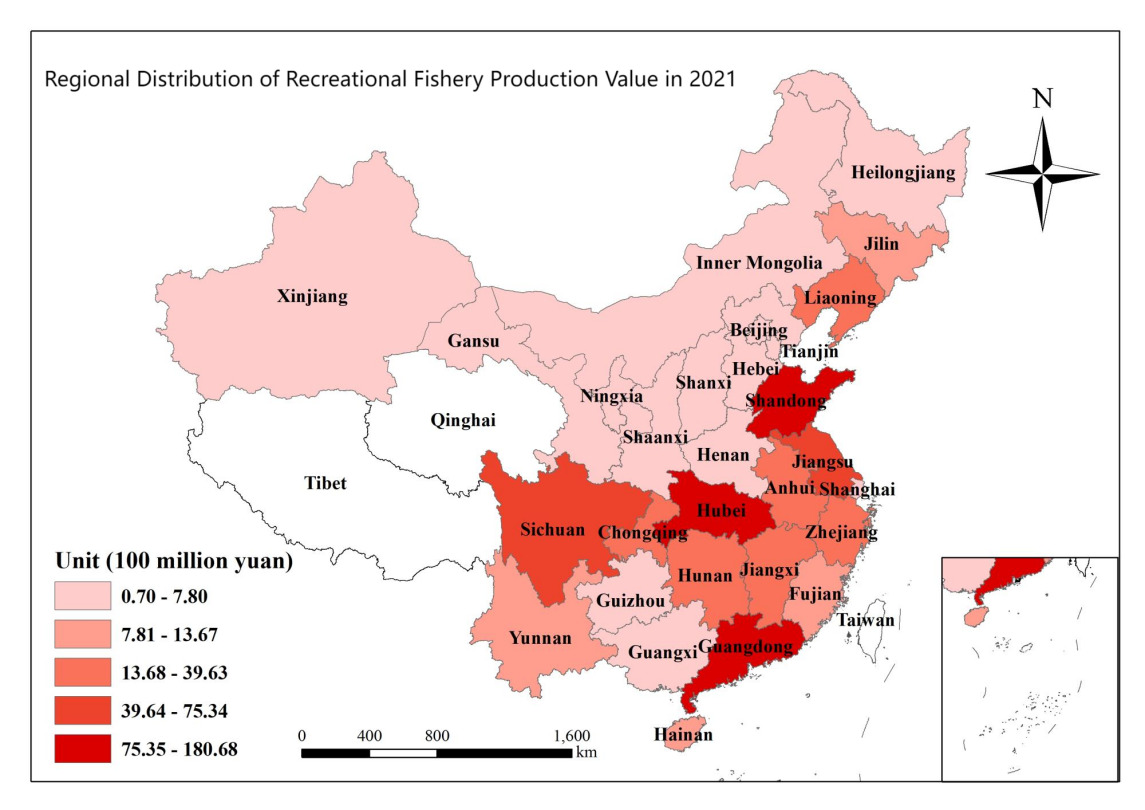
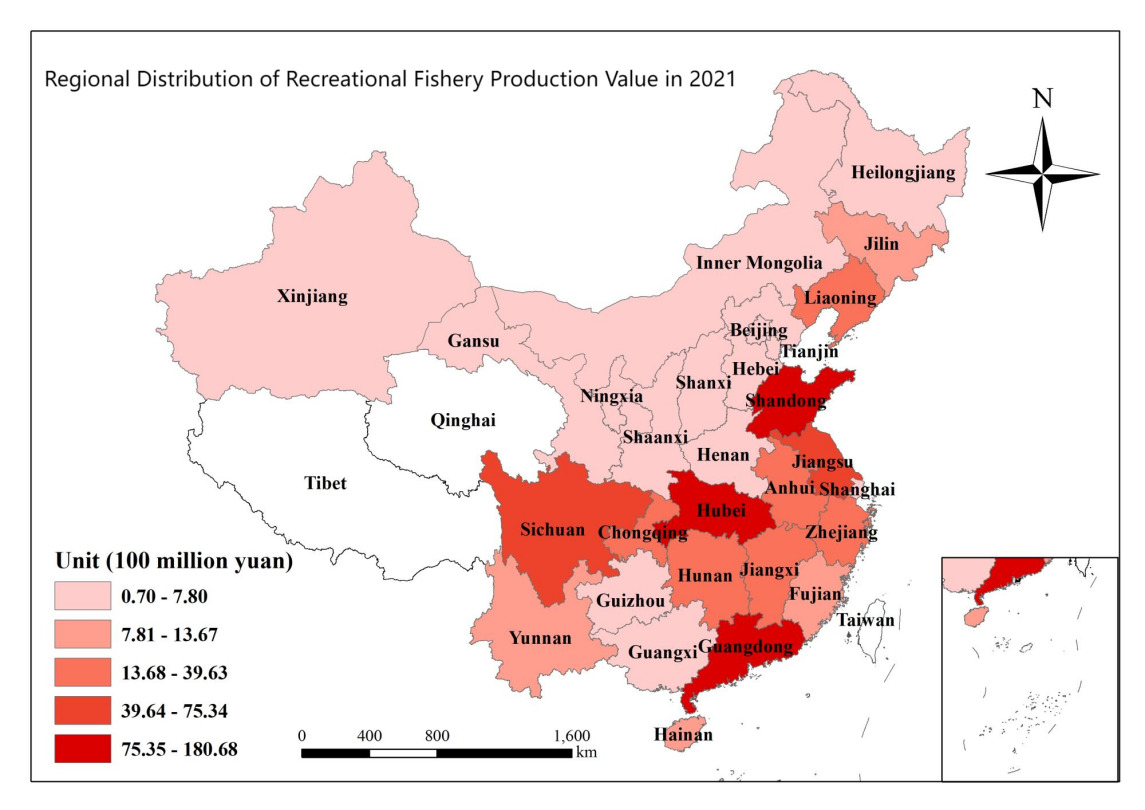
From a geographical perspective (Fig 2), China’s coastal areas and the Yangtze River Basin are the primary regions for pescatoursim development. In 2021, the top ten provinces in terms of actual output value of pescatoursim in China were Shandong (18.07 billion yuan), Hubei (12.60 billion yuan), Guangdong (12.14 billion yuan), Jiangsu (7.53 billion yuan), Sichuan (5.23 billion yuan), Anhui (3.96 billion yuan), Liaoning (3.04 billion yuan), Zhejiang (2.97 billion yuan), Jiangxi (2.75billion yuan) and Hunan (2.74 billion yuan). These ten provinces accounted for 85.00% of the total actual output value of the recreational fisheries industry in China. In comparison, the bottom ten provinces (three coastal provinces and seven inland provinces) are Shaanxi (0.50 billion yuan), Guizhou (0.46 billion yuan), Guangxi (0.45 billion yuan), Inner Mongolia (0.26 billion yuan), Tianjin (0.24 billion yuan), Ningxia (0.17 billion yuan), Xinjiang (0.10 billion yuan), Gansu (0.10 billion yuan), Shanghai (0.09 billion yuan) and Shanxi (0.07 billion yuan). Their combined actual total output value of recreational fisheries accounted for only 2.91% of the total output value of recreational fisheries in China.
2.4. Business Situation
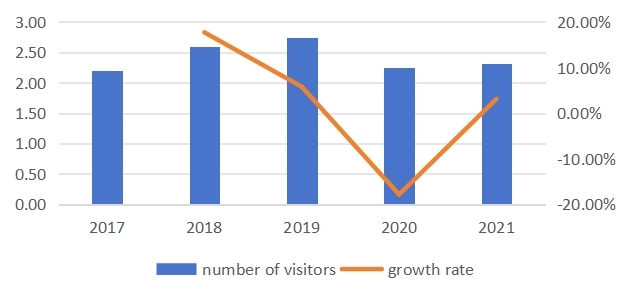
Reception and Consumption: With the rapid expansion of recreational fisheries, participation in various recreational fisheries activities in China has increased year by year. As shown in Fig 3, the number of participants increased from 220 million in 2017 to 274 million in 2019. In 2020, due to the impact of the COVID-19 pandemic, the number of participants dropped to 225 million, representing a 17.73% decrease compared to 2019. In 2021, the number of participants rebounded slightly.
.jpeg)
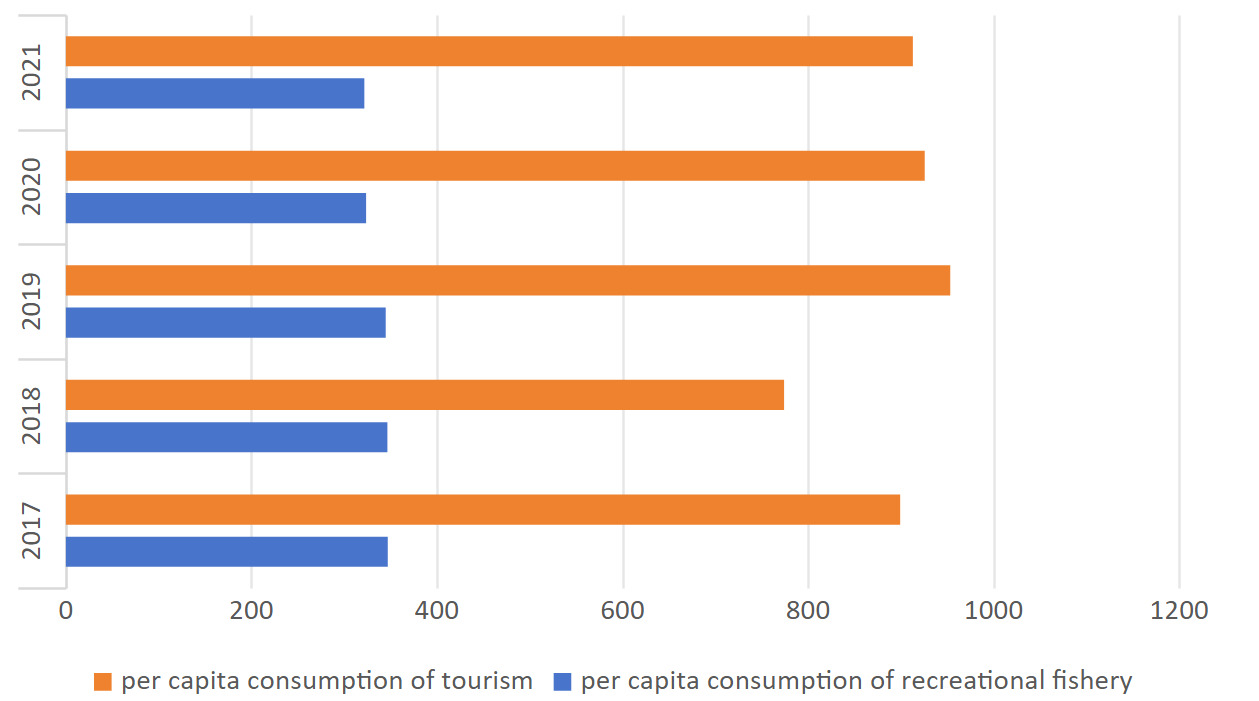
Tourism overall in 2020 and 2021 was greatly affected by the COVID-19 pandemic. However, the per capita consumption of pescatoursim increased rather than decreased, mainly attributed to the resilience of demand for equipment such as fishing tackle, which remained relatively unaffected. Additionally, the burgeoning short video industry also contributed to the growth of short-distance tours and the demand for activities such as fishing with higher consumer engagement. The per capita spending on recreational fisheries in 2021 reached 347.04 yuan, roughly comparable to 2020 and surpassed pre-pandemic levels in 2019 (Fig 4).
.png)
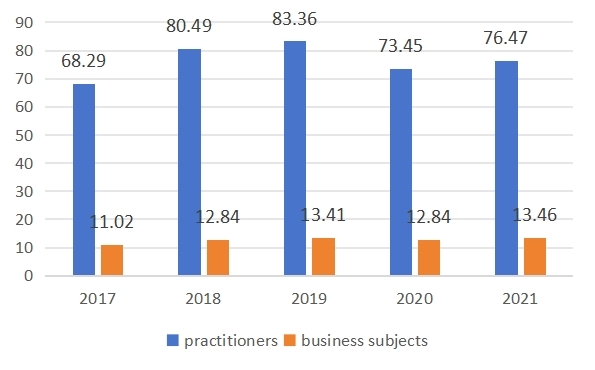
Business Subjects and Practitioners: With recreational fisheries gradually becoming a “necessity” for urban and rural residents,27 the number of business subjects and practitioners in China’s recreational fisheries witnessed steady growth from 2017 to 2019. However, as shown in Fig. 5, the pandemic had a noticeable impact, resulting in a decline in both categories in 2020. In 2020, the total number of recreational fisheries business subjects in China decreased to 128,400, representing a 4.4% decrease compared to 2019. The number of practitioners in the industry was 734,500, a decrease of 99,100 compared with 2019. In 2021, both the number of business subjects and practitioners increased, but still did not reach the pre-pandemic level.
_and_employees_(in_10_000)_in_china_recreational_f.jpeg)
3. Different Models of Recreational fisheries Development in China
3.1. Coastal Recreational fisheries Development Models
The unique marine resources of coastal regions offer significant advantages for the diversified development of recreational fisheries. However, not all coastal provinces and cities have been able to fully utilize these resources. The development drivers of recreational fisheries vary by region, and the actual conditions of local cultures, fisheries, and tourism industries are closely tied to the development of recreational fisheries. As a result, different regions have gradually formed their own distinct development models during the exploration process.
3.1.1. Shandong Province: Full Utilization of Water Resources and Tourism-Driven Recreational fisheries
Shandong Province is one of the earliest regions in China to develop recreational fisheries. Geographically, Shandong is located along the coast and benefits from both freshwater and seawater resources. The distribution of recreational fisheries operators is more concentrated in coastal cities compared to inland ones. The development of recreational fisheries in Shandong largely depends on the region’s rich Fisheries and tourism resources.
From a policy perspective, as early as 2000, the Shandong Provincial Fisheries Bureau proposed adapting to the changing consumer market and supporting suitable regions to develop recreational fisheries. Subsequently, the province introduced several policies to encourage the sector, such as the 2005 “Provincial Recreational fisheries Demonstration Site Evaluation Method” and the 2012 “Shandong Provincial Modern Fisheries Park Construction Plan.” Additionally, financial subsidies and support policies were implemented, including special funds for the construction of recreational fisheries demonstration zones, sea fishing bases, and the development of leisure fishing boats, all of which have promoted the rapid and high-quality development of recreational fisheries.
The diversification of recreational fisheries has also been a key initiative for Shandong’s fisheries department in recent years. Coastal cities, leveraging rich Fisheries resources, tourism, and coastline advantages—such as Qingdao’s developed ornamental fish industry and Weihai’s cultural tourism festivals—have further developed sea fishing and recreational boat tours with financial and policy support. Inland cities, such as Jining, with abundant freshwater resources, and Zaozhuang, with its historical ties to Mozi, have diversified recreational fisheries by utilizing local freshwater advantages and cultural heritage, thereby avoiding industry homogeneity and promoting the branding of recreational fisheries.
3.1.2. Zhejiang Province: Expanding from Coastal to Inland Areas, Leveraging Fisheries to Develop Tourism
The development of recreational fisheries in Zhejiang Province was driven by the signing of Fisheries agreements between China and Japan, as well as between China and South Korea. The reduction of fishing zones and restrictions on Fisheries resources forced the Zhejiang provincial government to initiate a transformation of the fisheries industry in coastal cities. As a result, Zhejiang’s recreational fisheries have gradually expanded from coastal areas to inland cities, with a primary focus on utilizing marine resources.
Unlike Shandong, which directly promotes recreational fisheries through fiscal subsidies, Zhejiang has supported the industry with a more “long-term” and “stable” approach. The support mainly focuses on cultural image building and infrastructure development. The province places significant emphasis on promoting fishing village culture, using tourism projects and festivals to attract visitors, thereby creating a brand image for its recreational fisheries.
Infrastructure support includes government funding for upgrading fishing ports, the planned placement of artificial reefs, and mandatory annual projects for the elimination of outdated fishing boats.In terms of resource utilization, Zhejiang’s recreational fisheries development primarily relies on labor and water resources, with the industry leaning more toward sports and entertainment. Coastal regions, leveraging their island advantages, have driven tourism development through the fishing industry. Activities like sea fishing competitions have helped raise the visibility of local recreational fisheries brands, attracting tourists to experience fishing activities and enjoy sightseeing.
3.1.3. Jiangsu Province: Focusing on “Leisure” Culture to Promote Recreational Fisheries Brand Building
With the support of abundant agricultural resources and favorable economic conditions, Jiangsu Province has maintained a leading position in recreational fisheries development among China’s coastal provinces. The primary drivers for this development are market demand and the national rural revitalization strategy.
The development model in Jiangsu combines leisure fishing with local culinary culture, using aquatic product branding to promote the recreational fisheries industry.
The industry is characterized by three main types: fishing-focused, leisure dining, and tourism sightseeing. In terms of resource utilization, Jiangsu is the only coastal province where the use of freshwater Fisheries resources exceeds that of marine resources. The province’s rich freshwater resources enable operators to establish recreational fisheries in suburban areas with convenient transportation, allowing citizens to enjoy leisure fishing opportunities easily.
From the perspective of industry operators, Jiangsu has developed a standardized scale for fishing-focused recreational fisheries, and these businesses are well-established. According to policy documents from the Jiangsu Provincial Fisheries Bureau, expanding the scale of recreational fisheries operators and enhancing marketing efforts by promoting distinctive Fisheries culture and specialized Fisheries projects will be key development directions in the near future. Additionally, special funding will be allocated, with an emphasis on incorporating recreational fisheries skills training into the professional development of fishermen, thereby promoting the rapid and sustainable growth of recreational fisheries in the province.
3.2. Inland Recreational Fisheries Development Models
Compared to coastal areas, inland regions have limited access to freshwater Fisheries resources. Still, their rich folk culture, unique natural landscapes, and distinct climate conditions offer a different perspective on the development of recreational fisheries. These factors contribute to the creation of diverse recreational fisheries experiences that blend natural resources with cultural heritage, fostering a distinct development model for inland regions.
3.2.1. Hubei Province: Aquaculture Driving Recreational fisheries with a Focus on Green Development
Hubei is the strongest province in China in terms of freshwater fisheries and also leads inland areas in recreational fisheries development. The province’s recreational fisheries are primarily divided into fishing, ornamental fish farming, eco-tourism, and fish culture tourism.
Fishing activities in Hubei encompass both commercial fishing and recreational fishing. In traditional aquaculture parks, adding fishing opportunities has become one of the most cost-effective and quickly profitable ways to develop recreational fisheries. Leisure fishing has further extended the industry chain by integrating services such as entertainment, dining, and accommodation, thereby enhancing the added value of the fisheries sector and stimulating the growth of related service industries. With the high economic benefits of ornamental fish farming compared to traditional fish farming, Hubei has begun to develop ornamental fish breeding. The Baichuan Aquaculture Base in Wuhan is the only tropical ornamental fish farming facility in Central China. The largest ornamental fish farming base in Hubei, the Bailu Lake Farm, has successfully bred Japanese koi, quickly and efficiently creating a local fisheries brand.
3.2.2. Xinjiang: Rural Revitalization Driving Fisheries Transformation: Achieving Distinctive Development Through Local Resources
The development of recreational fisheries in Xinjiang is primarily driven by efforts to alleviate poverty. Due to the region’s harsh soil and water conditions, Xinjiang faces a lack of labor resources, making large-scale industrial development difficult. However, these challenges also help protect the region from air and water pollution, making it an attractive destination for both domestic and international tourists. The advantages of its tourism industry, along with abundant freshwater fish resources, have spurred the growth of recreational fisheries in Xinjiang.
From a policy perspective, 2020 marked the year China achieved its goal of building a moderately prosperous society. To improve the income levels of Xinjiang’s population, the government introduced several policies and financial support measures for poverty alleviation. With the support of modern technological equipment, the Fisheries industry has worked to improve and transform the natural environment. By utilizing large water bodies such as lakes and reservoirs, Xinjiang’s recreational fisheries have developed on a large scale, although the number of such projects remains relatively limited.
4. Analysis of a Case Study of Recreational fisheries Development in China
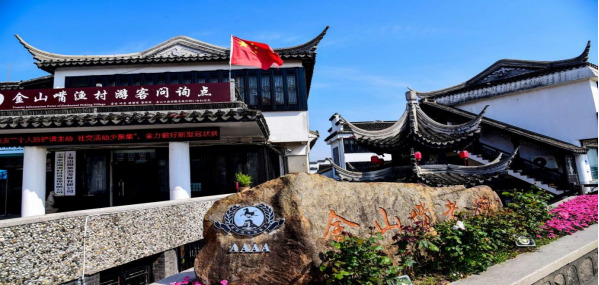
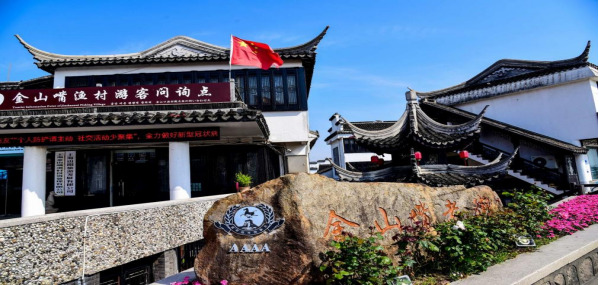
Jinshanzui Fishing Village is the oldest fishing village on Shanghai’s coastal land and the last remaining one. It is situated along the coast of Hangzhou Bay, north side of the Shanghai-Hangzhou Highway, with a total area of 0.44 square kilometres, which is one of the national AAAA-level1 tourist attractions and is currently a five-star demonstration base for leisure agriculture and rural tourism in China (Fig 6).
4.1. Methods
The research, on the one hand, is to understand the policy supply of recreational fisheries and the industrial development overview of the Shanghai Municipal Government. On the other hand, the aim is to understand the operation status quo, development intention, problems faced and future expectations of Jinshanzui Fishing Village. The research methodology included literature research, in-depth interviews, and field visits. From August 18 to September 23 in 2022, in-depth interviews were conducted with the Shanghai Municipal Commission of Agriculture and Rural Development, the Bureau of Planning and Natural Resources, and the Municipal Association of Agricultural Tourism Economics, etc., with the main contents including: the overall positioning of the city’s recreational fisheries industry, strategic planning, developmental characteristics, current policies and major issues, and future development priorities. On-site visits were made to Shanghai Jinshanzui Fishing Village and related investment management enterprises, and in-depth interviews were conducted with the persons-in-charge, which mainly included: development characteristics, core advantages, main practices, existing problems, and policy needs, etc.
4.2. Main Measures to Promote the Development of Recreational fisheries in Jinshanzui Fishing Village
4.2.1. Well-established Infrastructures and Supporting Facilities as Prerequisites for Industry Development
The Jinshan Railway (Line 22) plays a pivotal role in linking Jinshan with central Shanghai, offering easy access to Jinshanzui Fishing Village. With around 40 round trips daily, the 40-minute journey and six intermediate stops ensure high accessibility, attracting both local and external visitors to the recreational fisheries sector.
The renovation of Jinshanzui Fishing Village has supported the development of recreational fisheries. The Shanghai Municipal Government launched a comprehensive renovation program to address infrastructure issues, such as interconnected houses and winding roads that hindered rainwater and sewage management. Starting in 2010, over 30 million yuan was allocated for three-tiered investment in road repairs, wall whitewashing, and landscaping. These improvements transformed the village, eliminating muddy roads and enhancing its appeal for both residents and visitors. Moreover, traditional methods were used to restore the village’s roofs, walls, and doors, thereby preserving its charm. These efforts significantly improved the village’s infrastructure and appearance, thereby enhancing its overall appeal. The nearby Jinshan City Beach, a popular cultural landmark, also enhances the village’s attractiveness. Located just 4 kilometers away, the beach generates a spillover effect, drawing more visitors to the fishing village.
4.2.2. Policy Support for Recreational Fisheries Development
The development of Jinshanzui Fishing Village has been heavily supported by government policies. In the early stages, fishermen were granted a special privilege to have a second child during the strict enforcement of China’s “one-child” policy, highlighting the government’s early support for the fishing industry. However, as Fisheries resources began to deplete, it became clear that relying solely on the primary industry would not suffice for long-term development or increased income for the fishermen.
In 2011, the Shanyang Town government established the Shanghai Jinshanzui Fishing Village Investment Management Co. Ltd., tasked with planning the development of key projects, including Jinshanzui Old Street, the Marine Culture Creative Pioneer Park, and the Fisherman’s Tea Room. The company also led the creation of cultural institutions, including the Sea and Fishing Culture Museum, the Fishing Gear Hall, the Sampan Boat Museum, and the Fishermen’s Old Houses. These projects, along with cultural events like the Sea and Fishing Culture Festival, have helped promote the village both locally and online.
In response to the impact of COVID-19, the government provided rent subsidies to businesses in 2022. Additionally, the company developed six pavilions showcasing local history, with exhibits contributed by villagers. The Fishing Gear Museum and Fishermen’s Old Houses provide valuable insights into fishing heritage, while media campaigns and culinary promotions have attracted tourists to the area. The “Taste Jinshanzui” book further promotes the village’s unique seafood cuisine, contributing to the area’s cultural and economic growth.
4.2.3. A Favorable Business Environment Facilitates the Delivery of High-Quality Services
Villagers have always prioritized economic benefits in the development of recreational fisheries. Initially, investors signed short-term rental agreements with villagers. Over time, villagers recognized the significant economic potential of land ownership and began demanding higher rents, refusing to renew leases unless they were paid. However, the cyclical return on investment in homestays and unrecoverable renovation costs posed challenges for investors. To address this, the government-affiliated company adopts a comprehensive approach, balancing stakeholders’ demands, costs, and risks, and resolving disputes by drafting contracts. The company may also take a commission from the rent to fund its operations and development.
The market-oriented approach has increased villagers’ participation and benefits, addressing labor issues and providing a stable income through employment. It also creates opportunities for foreign investment in fishing villages. Additionally, original fishermen can lease their homes, earning income. Five-star homestays generate income for local villagers and stimulate nearby businesses, fostering a vibrant environment and boosting the popularity of homestays.
4.2.4. Local Demand for Leisure Lifestyle in Shanghai
Shanghai, a megacity in China, boasts a resident population of approximately 24.75 million, covering an area of only 6,340 square kilometers. With a per capita GDP of 179,900 yuan, Shanghai is also a bustling economic hub and vibrant tourist destination in its own right. In 2019 alone, Shanghai attracted 171.87 million domestic visits from provinces and cities within China, as well as 189.54 million local excursions by Shanghai residents themselves. Despite its allure as a tourist hotspot, Shanghai struggles with a substantial tourism trade deficit, which reached a staggering $68.58 billion in 2019, before the pandemic. Even during the COVID-19 pandemic, from 2020 to 2022, when population movement was restricted, Jinshanzui fishing village relied solely on robust local consumption from Shanghai residents, allowing many business subjects to weather the difficult times. Jinshanzui Fishing Village is a blend of traditional heritage and modern amenities, offering visitors the chance to enjoy the comforts of contemporary living while immersing themselves in the rich tapestry of traditional culture, thereby establishing a vital link to Shanghai’s cultural roots, known as Hu Yuan.
5. A Common Development Model for Recreational fisheries
China has traditionally focused on the primary Fisheries industry. Still, with resource depletion, surplus labor, and increasing emphasis on environmental sustainability, recreational fisheries have gained significant attention from all levels of government. Over the past three decades, China’s recreational fisheries have experienced substantial growth, providing a pathway for transitioning fishermen to new professions, enhancing incomes, contributing to carbon reduction goals, and supporting rural revitalization. It also provides valuable lessons for other countries pursuing similar sustainable practices.
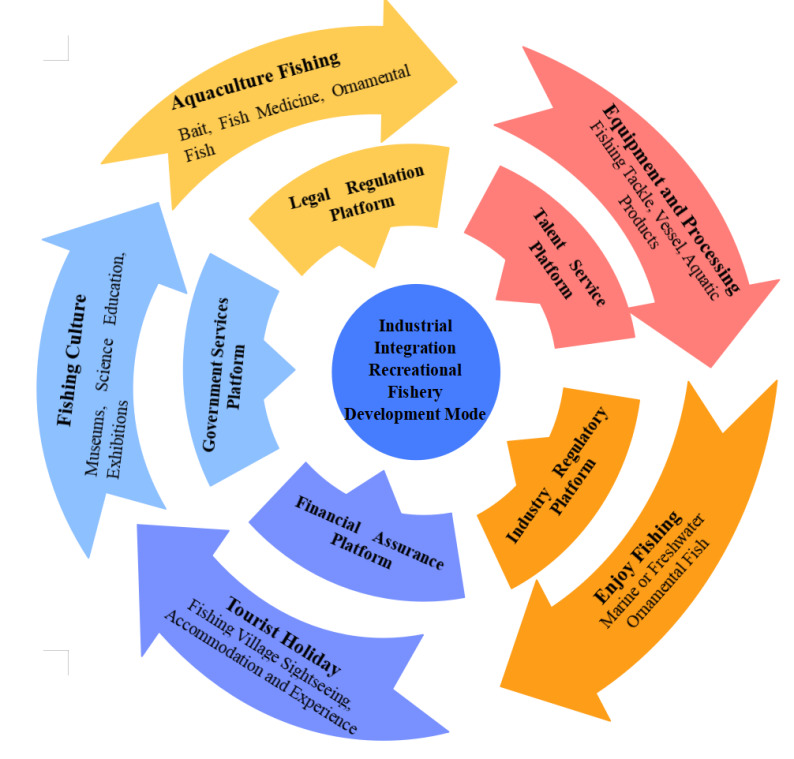
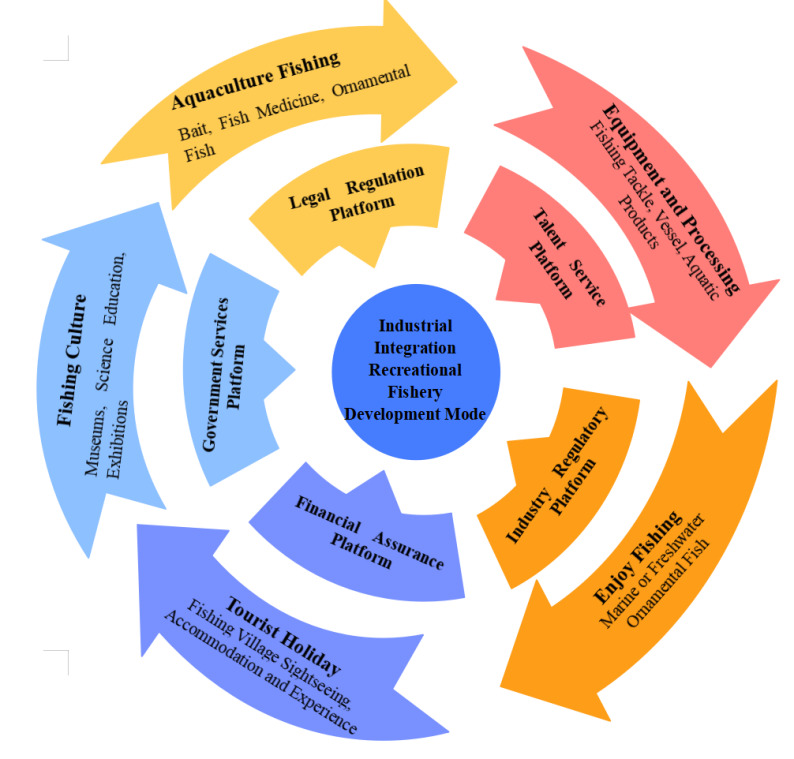
Looking ahead, the recreational fisheries industry is expected to shift toward high-quality development, with a focus on industrial integration as a key priority. Based on the case study, this paper proposes a development model that promotes both vertical industry chain extension and horizontal service chain cultivation. This approach aims to integrate recreational fisheries with culture, technology, ecotourism, and public science, expanding the industry and value chains. The result will be new economic growth drivers and multi-industry integration, encompassing food, housing, tourism, education, and retail, as illustrated in Figure 7.
5.1. Vertical Industry Chain Extension of Recreational Fisheries
To effectively develop and protect limited Fisheries resources, restore their renewable capacity, and avoid depletion, ecological priority and green development should be prioritized. The recreational fisheries industry chain must be extended through an open-source and cut-back strategy, addressing weaknesses in the secondary and tertiary sectors, short industry chains, and a lack of convergence. Key measures include: (1) Cultivating new aquatic products with ornamental value and integrating the fisheries and leisure industries. (2) Strengthening recreational fisheries infrastructure, focusing on Fisheries wharves, ships, and sightseeing yachts, while applying smart technologies where necessary. (3) Using modern technology and business models to enhance the fisheries brand and foster new consumption hotspots. (4) Supporting recreational fisheries organizations with growth potential, such as ecological sightseeing parks and fisheries culture parks, to integrate the Fisheries industry with catering, tourism, science, culture, and ecology, forming a multi-industry chain in food, accommodation, travel, and education.
5.2. Cultivation of Horizontal Service Chains for Recreational Fisheries
To maximize the potential of the fishing village’s space, human environment, and natural resources, a new chain of modern service industries should be developed to ensure the sustainable growth of the Fisheries industry, fishermen, and the village. This includes: (1) Developing a cold chain logistics industry to support production, processing, and sales in the recreational fisheries sector, promoting the flow of goods within the industry chain. (2) Combining Fisheries leisure, tourism, ecological safety, and culture to foster project financing, investment, mergers, and insurance services for the industry. (3) Supporting service industries such as planning, exhibitions, and management training, along with organizing tournaments and events. (4) Enhancing comfort, fun, and brand identity to increase the popularity of recreational fisheries. (5) Strengthening research and technical promotion, focusing on equipment like radar, lifeboats, fishing gear, and ornamental fish breeding to support the development of secondary and tertiary industries. These efforts will drive the transition from aquaculture to recreational angling, tourism, and exhibitions, facilitating further industry development.
5.3. Construction of Public Service System for Recreational fisheries
To promote recreational fisheries as a key driver of Fisheries modernization, local governments and relevant departments should enhance public service support and create a favorable development environment. (1) Establish a government platform to strengthen statistical analysis and planning for recreational fisheries. A special leading group should be formed to analyze regional resources and market potential, ensuring recreational fisheries development is integrated into local economic and social plans. (2) Develop legal standards and regulations to standardize the industry’s growth and service quality. (3) Increase financial support for land use, financing policies, risk investment, and start-up subsidies to attract venture capital and promote diversified risk investment. (4) Establish talent training systems focused on senior, IT, financial, legal, and technical experts to build a skilled workforce. (5) Support industry associations in their self-regulatory role, promoting industry evaluation systems and creating platforms for technical exchanges, seminars, and forums to connect supply and demand, enhance industry knowledge, and facilitate timely access to information. This will help improve technology, talent, and management within the recreational fisheries industry.
6. Conclusions
The future of recreational fisheries post-pandemic will be influenced by evolving tourism trends and technological advancements. With international travel still limited, domestic tourism will rise, and recreational fisheries, offering nature-based, wellness-focused experiences, are well-positioned to meet the demand for eco-tourism and experiential travel. Technological innovations like AI and AR will enhance resource management, improve visitor experiences, and expand global reach through virtual fishing experiences. Digital platforms will also streamline bookings and promotions while providing valuable consumer insights. As sustainability becomes a higher priority, recreational fisheries will need to adopt eco-friendly practices to meet growing consumer demand for responsible tourism, with government regulations ensuring the protection of resources. Moreover, the integration of the recreational fisheries industry with tourism, hospitality, and agriculture sectors, along with greater involvement of local communities, will drive economic growth and create a more resilient, sustainable industry that can adapt to future challenges.
Recreational fisheries have presented an excellent historical opportunity by gradually becoming the mainstay of modern fisheries, with advantages in resource allocation, industrial integration, leisure and recreation, economic development, ecological conservation, and cultural heritage. In some regions where recreational fisheries have thrived, they have adhered to the development of customization, low-carbonization, specialization, and professionalization, which have successfully created a branding strategy for recreational fisheries. The development of China’s recreational fisheries carries many expectations of the Fisheries industry: it serves as an essential employment destination for fishermen who have changed their jobs, a hope for fishermen to raise their incomes, a crucial contributor to the Fisheries industry to achieve the goal of dual-carbonization, and a critical means of realizing the national strategy of rural revitalization. While government support and guidance are indispensable, the impetus for the development of recreational fisheries ultimately lies with the market and enterprises. The development of China’s recreational fisheries does not exist in isolation and cannot be separated from the public facilities, services, and infrastructure support provided by local governments. This collaborative approach underscores the interconnectedness of various stakeholders in fostering the sustainable growth of recreational fisheries.
Acknowledgments
The authors would like to express their gratitude for the financial support from the Food and Agriculture Organization of the United Nations (FAO)(Grant No:D-8005-22-015).
Author contribution statement
Yang Wei: Conceptualization; Resources; Supervision; Writing – review & editing
Zhu Zhouyue: Conceptualization; Formal analysis; Investigation; Writing – original draft
Financial Support
This work was supported by the Food and Agriculture Organization of the United Nations (FAO) on "Pescatourism in China: Current Status, Success Cases and Experiences" (Grant No:D-8005-22-015)
Conflicts of Interest Disclosure
The authors declare no competing interests.
Data Availability Statement
Data are available upon request by contacting the authors. Moreover, it is declared that Artificial Intelligence has not been used in this paper.