
Introduction
Since the 21st century, marine ecosystems have faced increasingly severe pressures from the dual stressors of climate change and human activities. The Sixth Assessment Report (AR6) of the Intergovernmental Panel on Climate Change (IPCC) indicates that under the context of global warming, rising ocean temperatures have triggered shifts in fish habitats and declines in population sizes, with tropical and subtropical fisheries expected to be the most adversely affected. As the world’s largest producer and consumer of aquatic products, China is highly dependent on fishery resources. According to the 2024 National Fishery Economic Statistical Bulletin, China’s fishery-related population totals 15.8247 million, including 11.7417 million individuals engaged in fishery practices. Climate change-driven phenomena such as seawater warming, and sea-level rise have already altered the distribution of offshore fishery resources in China. Functional degradation has been observed in traditional spawning grounds like Haizho Bay, while the habitats of economically important species have shifted northward.1 Meanwhile, anthropogenic factors such as illegal fishing, unsustainable fisheries subsidies, and imbalances in the transboundary allocation of fishery resources have further heightened the climate vulnerability of fishery ecosystems.2 The marine ecosystem imbalances resulting from climate change, as previously discussed, have given rise to a range of legal challenges, including the attribution of responsibility for the erosion of fishermen’s rights within the fisheries sector and the allocation of liability in cases of transboundary fishery-related harm.
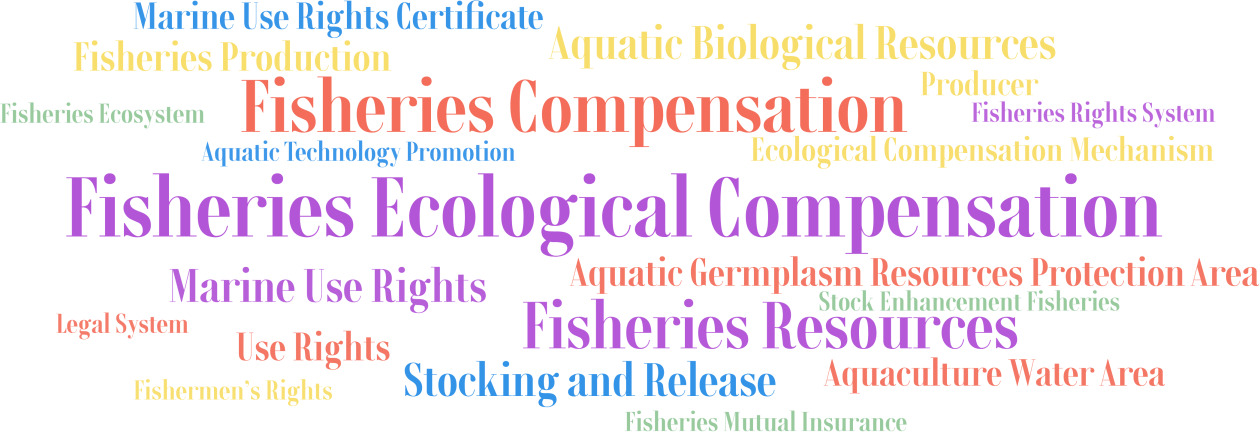
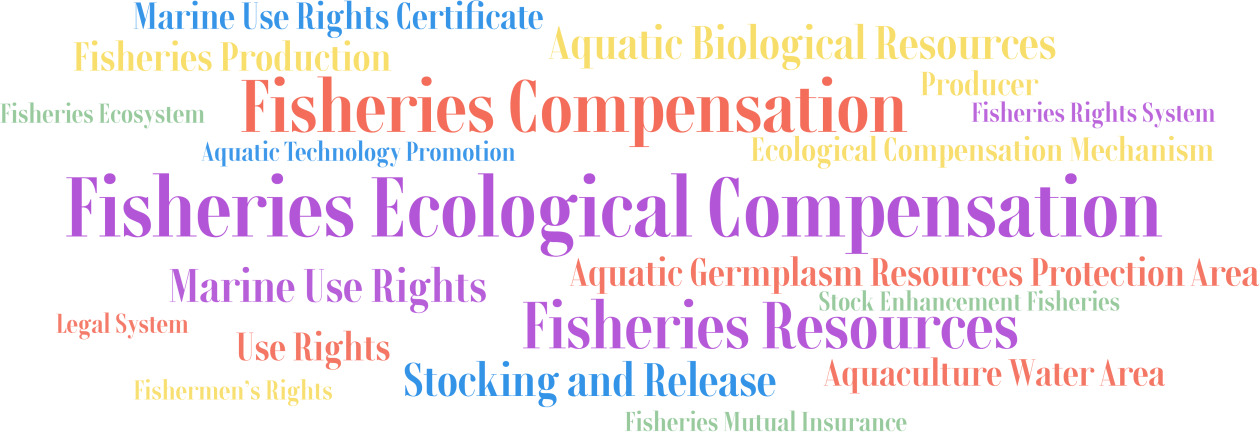
This study finds that research papers related to fishery compensation are predominantly concentrated in the fields of ecological compensation, fishery ecological compensation, and marine fisheries. (As illustrated in Figure 1.) As a crucial mechanism for governments to balance interests between marine ecological protection and economic development, the fisheries compensation system aims to internalize the external costs of marine ecological conservation through economic incentives and accountability constraints. Murawski3 analyzed how ecosystem-based management approaches, such as the fisheries compensation system, reconstruct mechanisms for interest redistribution through “participatory rules,” thereby reconciling intersectoral conflicts and facilitating the internalization of external costs arising from fisheries activities. From the perspective of the United Nations Convention on the Law of the Sea (UNCLOS), Verlaan4 systematically examined responsibility principles for environmental impacts caused by marine scientific research, providing a legal foundation for research on fisheries compensation and climate-related responsibilities. Garcia and coworkers5 empirically confirmed the effectiveness of economic incentive instruments in promoting marine ecological protection and sustainable fisheries development. However, China’s current system remains deficient in several respects: first, the scope of compensation is restricted to direct ecological damage and fails to include climate-induced indirect losses—such as the depreciation of fishing rights due to habitat migration; second, responsibility attribution is ambiguous, with an unclear delineation of responsibilities between the state and enterprises in climate adaptation and ecological restoration; third, international coordination is inadequate, marked by insufficient domestic implementation of international agreements such as the WTO Agreement on Fisheries Subsidies and the absence of a compensation mechanism for transboundary fishery losses caused by climate change.6 These shortcomings have left the fisheries compensation system ill-equipped to meet emerging ecological protection demands under climate change, resulting in the implementation of climate responsibilities within fisheries governance lapsing into a state of “institutional futility.”
The “state responsibility and corporate responsibility” doctrine emphasizes the state’s leading role in institutional provision and the protection of public interests, as well as enterprises’ direct responsibility in environmental risk prevention and damage compensation. However, the application of this doctrine in fishery governance faces two major challenges: on the one hand, the state’s climate responsibility has not been fully integrated into the design of specific fisheries compensation mechanisms—such as the absence of climate adaptation subsidies and transboundary fishery loss-sharing frameworks; on the other hand, regulatory mechanisms for enforcing enterprises’ climate accountability remain inadequate. Ecological damages related to climate change, caused by activities such as illegal fishing and excessive emissions, lack clear compensation standards and effective implementation pathways.7 Therefore, constructing a legislative framework that effectively balances the fisheries compensation mechanism with the implementation of climate responsibility—grounded in the jurisprudence of “state responsibility and corporate responsibility”—has become an urgent priority in advancing China’s marine ecological rule. Murawski3 emphasized the need to innovate government regulatory tools within interest coordination mechanisms, proposing the adoption of a fisheries quota trading system to promote the rational allocation of climate adaptation responsibilities. The socio-ecological resilience legal integration framework proposed by Green and coworkers8 provides empirical insights for designing dynamic compliance mechanisms within corporate climate responsibility systems. Zhang and coworkers9 proposed innovative pathways such as"ecological banks" and, through quantitative research, demonstrated that integrating carbon sink fisheries with the blue carbon trading system can increase enterprises’ emission reduction benefits to 18%–35% of their conventional fishing income.
The aforementioned perspectives examine fishery compensation, climate responsibility, state responsibility, and corporate responsibility in isolation, lacking a systematic integration of these elements within the context of climate change, particularly from the standpoint of state and corporate responsibilities. This paper, therefore, adopts the legal framework of “state responsibility and corporate responsibility” to conduct a comprehensive analysis of the legislative design of fishery compensation, integrating climate responsibility into this inquiry through three interconnected dimensions. First, through normative analysis, it reviews existing Chinese legal instruments such as the Fisheries Law and the Marine Environmental Protection Law, assessing the current state and shortcomings of both fishery compensation mechanisms and climate responsibility regimes. Second, it identifies core practical contradictions by examining real-world cases, including the illegal fishing incident in Haizhou Bay, China. Third, grounded in the “state responsibility and corporate responsibility” legal principle, the study clarifies the respective boundaries of state and corporate obligations, proposing a structured institutional framework comprising “state-led institutional provision, corporate behavioral regulation, and collaborative implementation safeguards.” Furthermore, it explicitly incorporates climate responsibility into the regulatory scope of fishery compensation, aiming to establish a three-dimensional analytical framework that links “fishery compensation, climate responsibility, and responsible subjects” in a coherent and legally robust manner.
Materials and Methods
The academic literature reviewed in this study was drawn from authoritative databases, including Web of Science and Google Scholar. Policy and legal documents were collected from official legislative sources issued by China’s central and local governments as well as ecological and environmental authorities concerning fishery compensation. Data were compiled from international organizations such as the Intergovernmental Panel on Climate Change (IPCC), alongside domestic sources in China—including government portals, environmental protection agency websites, the Peking University Law Database, and relevant research institutions. Methodologically, this study adopts a multifaceted approach that integrates documentary analysis, inductive reasoning, and comparative analysis to ensure a comprehensive and systematic examination of the subject matter. Building upon China’s existing fishery compensation policies and legal framework, and informed by case studies of domestic compensation practices, this research examines the evolution of China’s legislative framework through the jurisprudential lens of “state and corporate responsibility” in the context of climate change, thereby strengthening the feasibility and rationality of the proposed recommendations.
Results
Practical Status Quo and Inadequacies of China’s Fisheries Compensation and Climate Responsibility
Practical Status Quo
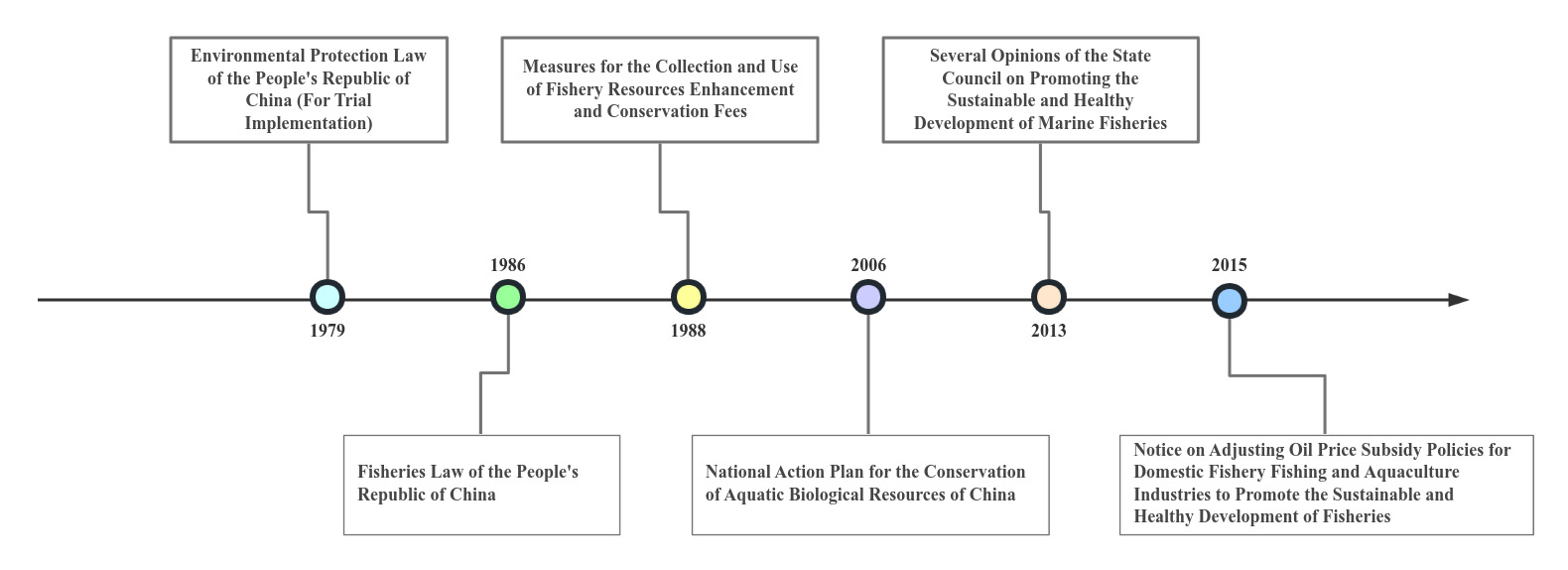
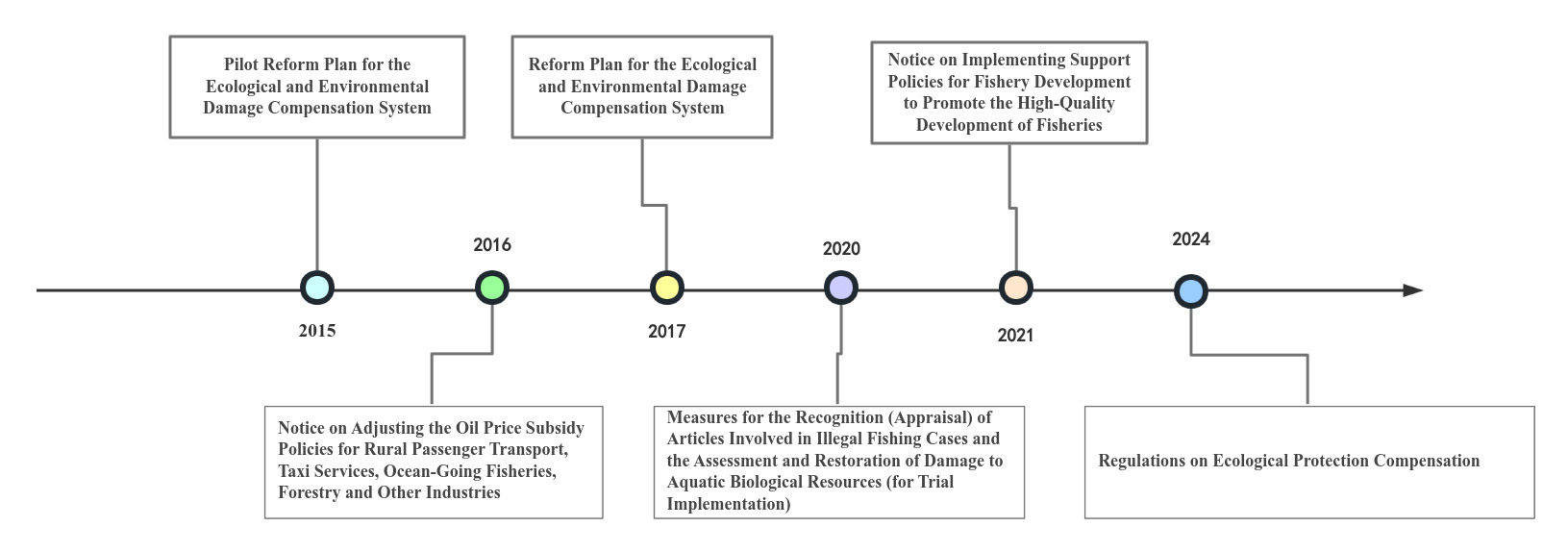
China has initially established a fisheries compensation system centered on “resource conservation subsidies + ecological damage compensation” (Figure 2 and Figure 3). With regard to subsidies, the Chinese government’s support for the fishery sector is primarily divided into two categories: subsidies for the conservation of marine fishery resources and grants for fishery development (Table 1).
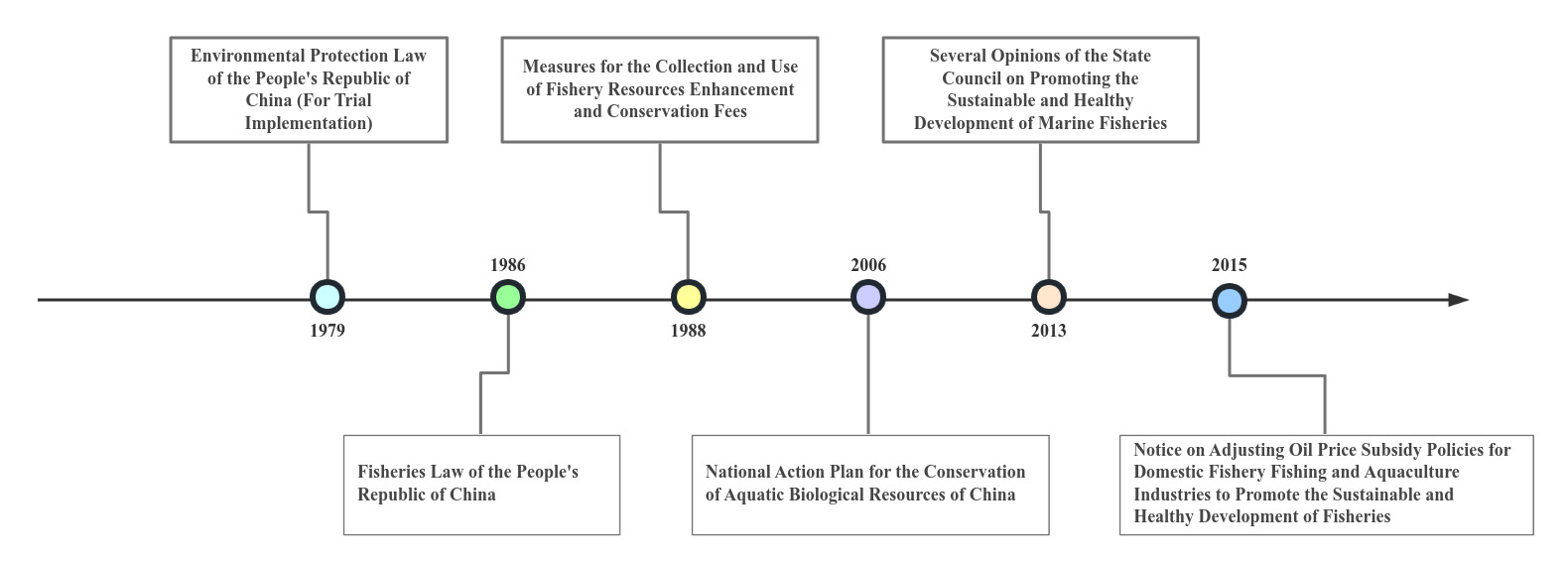
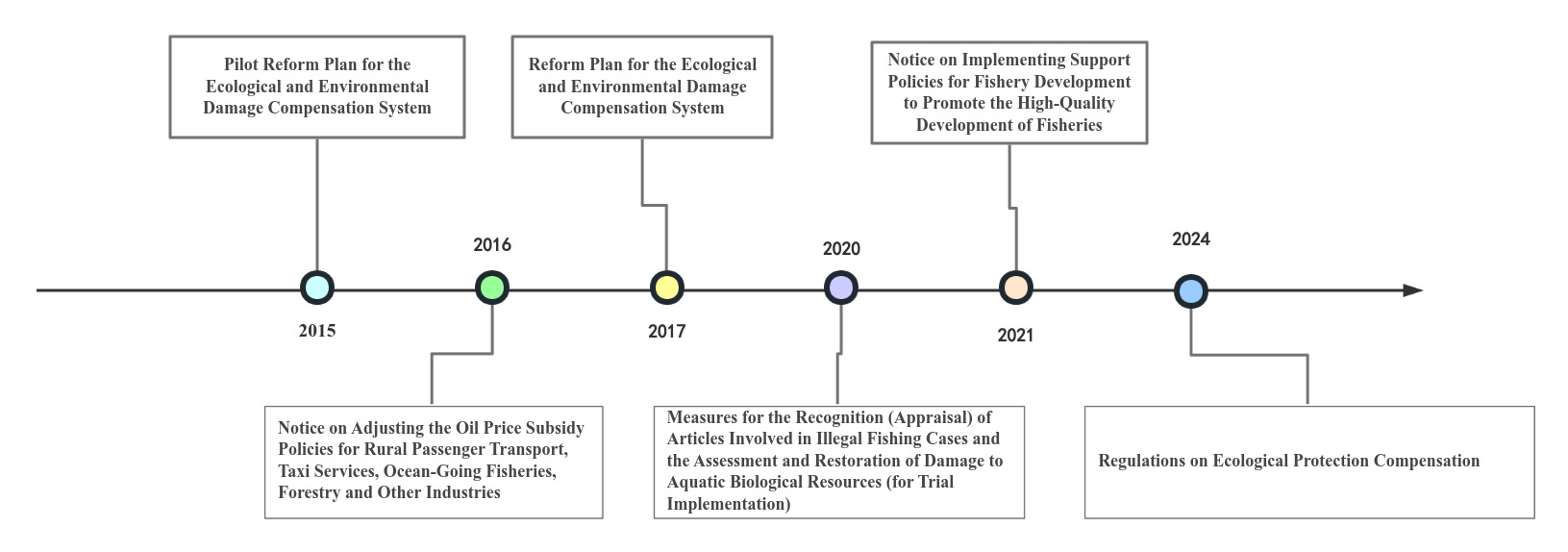
Since 2021, the implemented subsidy policy for marine fishery resource conservation has shifted its focus from fishery fuel oil subsidies to the summer fishing moratorium and the promotion of responsible fishing practices.10 In 2023, central fiscal subsidy funds for fisheries development in Sichuan Province totaled 71.57 million yuan, primarily allocated to support the upgrading of modern fisheries equipment, strengthening compliance with international conventions, and other related initiatives. Specifically, regarding compensation for damages, Article 114 of the Marine Environmental Protection Law of the People’s Republic of China (revised in 2023) explicitly stipulates that the scope of compensation for marine ecological and environmental damage includes costs of preventive measures, restoration costs, losses incurred during the restoration period, and other related expenses. Relevant judicial interpretations issued by the Supreme People’s Court have further clarified the compensation procedures. At the local level, Shandong Province has implemented several effective practices, including the promulgation of the Measures for the Administration of Marine Ecological Compensation in 2016. Currently, Shandong has established a parallel system encompassing marine ecological protection compensation funds, loss compensation funds, and damage compensation funds.
At the national level, the 14th Five-Year Plan for Marine Ecological and Environmental Protection explicitly proposes enhancing the climate resilience of marine ecosystems by incorporating the restoration of fishery habitats and the promotion of climate-adaptive fisheries models into key tasks. In terms of international treaty implementation, China has completed the domestic notification process for the WTO Agreement on Fisheries Subsidies, prohibited subsidies for illegal, unreported, and unregulated (IUU) fishing, and established an information disclosure system for fishery subsidies. In judicial practice, some courts have begun to incorporate climatic factors into the adjudication of cases involving compensation for fishery ecological damage. For example, in a specific illegal fishing case, the court referenced climate models to assess the long-term impacts of habitat destruction, thereby increasing the awarded compensation amount.1
The Inherent Deficiencies in the Institutional Arrangement
The fishery compensation system exhibits limited adaptability to climate change, undermining its effectiveness in addressing climate-induced disruptions to marine ecosystems and fishing communities. First, the scope of compensation does not cover climate-driven losses. The current system primarily targets direct ecological damage—such as illegal fishing and direct habitat destruction—and fails to include climate-related indirect losses, including the diminished value of fishing rights due to habitat migration and the loss of cultural heritage in fishing communities, within the compensation eligibility criteria. For instance, in the illegal fishing case in Haizhou Bay, the court calculated only the economic value of the illegal catch and losses from direct habitat damage, failing to account for the increased climate vulnerability of the ecosystem exacerbated by such activities. Second, compensation standards lack integration of the climate dimension. Current subsidy criteria are largely based on vessel size and fishing operation types, without incorporating differentiated designs that reflect the varying degrees of climate vulnerability in fishery ecosystems or address fishers’ climate adaptation needs. Third, the utilization of compensation funds is restricted. The majority of these funds are directed toward traditional ecological restoration, while funding for climate-adaptive restoration—such as restoring the carbon-sequestration function of seagrass beds or implementing climate-resilient habitat modifications—remains insufficient.
The allocation of responsibility for climate-related issues remains poorly defined, leading to uncertainties in accountability and implementation. With regard to national responsibility, the current legal framework has yet to fully integrate “climate adaptation” into the due diligence obligations of national fishery management. This shortfall manifests in three key areas. First, the absence of legally established standards for ecosystem-based climate risk monitoring and early warning systems leaves administrative authorities without binding guidance when responding to sudden climate-related events such as marine heatwaves and fish stock migrations. Second, there remains a legal vacuum concerning mechanisms for allocating climate-induced losses in transboundary fishery resources, resulting in insufficient international coordination and misalignment between domestic legislation and international obligations—particularly in cases involving the northward shift of fish populations within exclusive economic zones. Third, the legal basis for fisheries climate adaptation subsidies remains unclear; existing regulations do not establish “enhancing climate resilience” as a mandatory criterion for subsidy eligibility, thereby impeding the targeted allocation of public funds toward climate-resilient fishery infrastructure development.11 Regarding corporate responsibility, current legal frameworks define the duty of care for fishing enterprises in the context of climate change in overly broad terms, failing to impose meaningful compliance obligations. First, the absence of mandatory standards for low-carbon and adaptive fishing technologies means that corporate responsibilities to reduce carbon emissions and protect vulnerable marine habitats during fishing operations remain largely confined to non-binding, aspirational provisions. Second, the fishing sector lacks an established system for corporate climate-related information disclosure and risk assessment, which prevents enterprises from bearing legal duties of foresight and prevention regarding the long-term climatic and ecological risks generated by their operational activities.12
The domestic transformation of international rules remains inadequate, resulting in gaps between international obligations and national legal frameworks. First, a significant gap exists between the normative framework of the WTO’s Agreement on Fisheries Subsidies and its domestic compliance mechanisms. While the prohibition on IUU fishing subsidies has been formally adopted, domestic legal systems have yet to interpret and delineate the implied prohibition of “climate-related subsidies” under the Agreement, allowing high-carbon fisheries subsidies to persist in regulatory blind spots due to the absence of clear review criteria.13 Second, the incorporation of the UNFCCC’s loss and damage mechanism into domestic law remains obstructed. The risk-mitigation and relief principles established under the Warsaw International Mechanism for Loss and Damage have not been translated into enforceable rights in national fisheries legislation. Consequently, the existing administrative compensation framework lacks a recognized legal basis for claims arising from transboundary climate impacts, leaving a legal vacuum for climate liability and burden-sharing arrangements. Third, institutional capacity for rule-making in regional fishery governance is inadequate. In the context of RFMOs responding to climate-driven stock migrations, China lacks structured mechanisms to translate scientific evidence into binding international legal rules, leading to institutional marginalization in critical negotiations over dynamic quota allocation and the redistribution of jurisdictional authority.14
The interface between public and private law is poorly integrated, leading to legal inconsistencies and hindering the effective resolution of cross-domain issues. The linkage mechanism between marine ecological and environmental damage compensation (a private law remedy) and administrative law enforcement (a public law regulation) in the context of climate-related fisheries damage remains inadequate. On the one hand, legislative ambiguity exists regarding whether administrative authorities are permitted to initiate ecological damage compensation lawsuits after imposing administrative penalties. This has led to cases in which enterprises bear only administrative responsibility without fulfilling their compensation obligations for climate-related ecological damage. On the other hand, clear standards for the conversion of administrative evidence into civil evidence are lacking. For instance, the admissibility and probative value of climate risk monitoring data and ecological damage assessment reports collected during administrative law enforcement remain uncertain in civil litigation, undermining the judicial efficiency of climate-related damage compensation claims.15
Mathematical Derivation
To mitigate the subjectivity inherent in normative reasoning, we develop an analytical framework grounded in mathematical statistics and economic theory. By modeling climate-related damages to fisheries as negative externalities and conceptualizing regulatory enforcement as a mechanism for advancing public interest, this framework offers robust support for institutional analysis and informed legislative design:
(1) Externality Model
In fishery production and harvesting activities, firms generate both private costs and private benefits, while simultaneously imposing negative externalities on the marine ecosystem. In the context of climate change, these ecological damages exhibit characteristics of amplification and long-term accumulation. Let e denote the intensity of a firm’s fishing effort or emissions, B(e) represent the associated private benefit, C(e) the private cost, and D(e) the ecological damage resulting from fishing activities and their interaction with climate change. The social welfare function can then be expressed as:
W(e)=B(e)−C(e)−D(e)
In the socially optimal outcome, the following conditions must hold:
B′(e)−C′(e)−D′(e)=0
However, in the absence of institutional constraints, firms make decisions aimed at maximizing profits, and the corresponding optimality condition is:
B′(e)−C′(e)=0
A comparison of the two outcomes reveals that, in pursuing private profit maximization, firms fail to incorporate the marginal ecological damage D’(e) into their decision-making, resulting in fishing effort or emission levels exceeding the socially optimal level. This overexploitation further amplifies the vulnerability of marine ecosystems under climate change. Therefore, from the perspective of externality internalization, it is essential that firms bear the corresponding marginal ecological damage costs through mechanisms such as damage compensation, ecological restoration, or liability for climate-related remedial responsibilities:
t∗(e)=D′(e)
This approach is underpinned by clear economic rationality, and the logic constitutes a robust theoretical foundation for assigning direct responsibility to firms within the framework of fishery compensation and climate liability.
(2) Public Goods and Incentive Compatibility: The Necessity of the State’s Responsibility for Institutional Provision and Enforcement
Although externalities can theoretically be internalized through compensation mechanisms or liability constraints, in practice, enterprise fishing activities and their ecological consequences are often characterized by significant information asymmetry, making it difficult to achieve effective regulation through market mechanisms or corporate self-regulation alone. Suppose the state invests m in regulatory and monitoring efforts to supervise firm behavior, with the probability of detecting violations denoted by p(m), where p’(m) > 0 and p’(m) < 0, and the associated monitoring cost is K(m). If a firm gains additional profits ΔΠ from non-compliance but faces a penalty F upon detection, then the expected cost of violation is:
E[violation cost]=p(m)⋅F
In order for enterprises to choose compliance over non-compliance, the incentive compatibility constraint must be satisfied:
p(m)⋅F≥ΔΠ
However, investments in regulation and monitoring inherently exhibit strong public good characteristics. The benefits—such as reduced ecological risks and improved social welfare—are non-excludable and broadly shared, while the costs are borne predominantly by the regulatory authority. As a result, enterprises lack both the incentive and the capacity to supply adequate levels of monitoring and enforcement effort, leading to systemic market failure. Therefore, the state must serve as the institutional provider, discharging its responsibilities through legislation, administrative oversight, and judicial enforcement. State responsibility does not substitute for corporate responsibility; rather, it establishes the institutional framework and enforcement mechanisms necessary for the effective fulfillment of corporate obligations, thereby providing the economic rationale for the irreplaceability of state intervention.
(3) Computable Compensation Function: The Institutional Focus of Fisheries Compensation and Climate Liability
Incorporating climate responsibility into the fishery compensation system hinges on establishing a compensation standard that is both operational and enforceable. To this end, the compensation liability borne by enterprises can be formalized as the following function:
Compi=^Dt(⋅(1+λvi)⋅(1+θFaulti)
Here, t denotes the quantifiable direct ecological and economic damages, Vi represents the climate vulnerability index of the fishery ecosystem, Faulti captures the enterprise’s degree of subjective fault or regulatory non-compliance, and λ and θ are the respective weight coefficients. By building on damage quantification, this compensation function integrates mechanisms for climate risk exposure and liability attribution, enabling the fishery compensation system to account for climate-induced indirect losses and long-term systemic risks. This provides a computable and enforceable technical basis for the institutional integration of fishery compensation and climate liability frameworks.
Discussion
Theoretical Foundations of Fisheries Compensation and Climate Responsibility
Conceptual Delineation of Fisheries Compensation
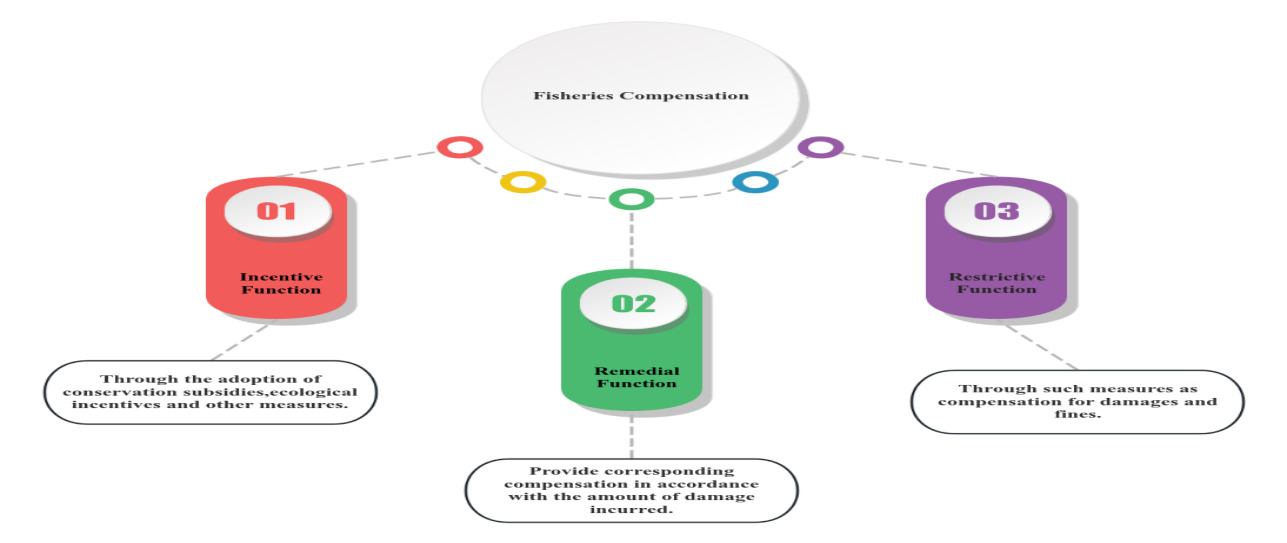
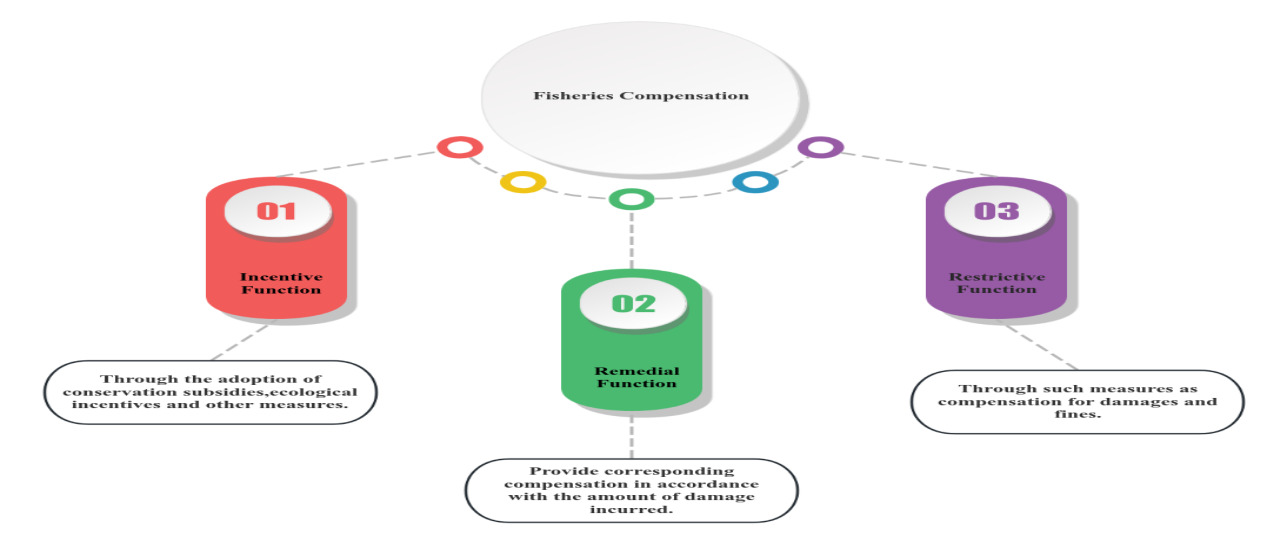
Fishery compensation, as a critical component of marine ecological compensation, can be legally defined as a mechanism for the allocation of rights and the balancing of obligations concerning the ecological interests of fisheries, grounded in the theoretical foundations of “public trust” and “ecosystem services”.16 The institutional functions of fisheries compensation are manifested in three dimensions: first, the incentive function, which encourages fishers to adopt climate-adaptive fishing practices—such as the use of selective fishing gear and compliance with fishing moratoriums—through conservation subsidies, ecological rewards, and related mechanisms; second, the remedial function, which provides economic compensation to individuals affected by climate-driven ecological damages, such as the loss of fishing rights due to habitat migration; third, the restrictive function, which compels enterprises to assume responsibility for climate-related ecological damages through measures including damage compensation and fines (Figure 4).
The construction of the fisheries compensation system shall adhere to three core principles: first, the “Damager-Pays Principle,” which mandates that enterprises engaged in illegal fishing, excessive emissions, or other activities that exacerbate the climate vulnerability of fishery ecosystems bear full responsibility for resulting damages; second, the “ecosystem approach principle,” which integrates fisheries compensation with the integrity and dynamism of marine ecosystems by accounting for the cascading effects of climate change on fishery resources, habitats, and food webs.17 Third, the “principle of equity,” which requires balancing the interests of different regions and social groups, with priority given to safeguarding the legitimate rights and interests of climate-vulnerable communities such as small-scale fishers and coastal populations.
The Legal Sources and Conceptual Connotations of Climate Responsibility
The international legal basis for climate responsibility derives from the principle of "common but differentiated responsibilities (CBDR)."Article 2 of the UNFCCC mandates States to take action to address climate change and its impacts, while Article 194 of the UNCLOS explicitly requires States to “take all necessary measures to prevent, reduce and control pollution of the marine environment,” including pollution induced by climate change. In the fishery sector, the Kunming-Montreal Global Biodiversity Framework (GBF) under the Convention on Biological Diversity (CBD) requires countries to “integrate climate change into biodiversity conservation and restoration plans” to safeguard the climate resilience of fishery ecosystems. Furthermore, the WTO Agreement on Fisheries Subsidies indirectly reduces the pressure exerted by fisheries activities on climate-vulnerable ecosystems by prohibiting subsidies for overfishing, thereby providing trade-rule-based support for the implementation of climate responsibilities.18
In the field of fisheries, climate responsibility refers to the legal obligations and consequences that states and fishing operators must fulfill under the principles of climate justice and the environmental rule of law to address the adverse impacts of climate change on marine ecosystems. Its normative content comprises four dimensions: first, the obligation of prevention—states bear the jurisdictional duty to conduct climate risk monitoring and environmental impact assessments, while enterprises must exercise due care in minimizing damage to vulnerable habitats such as coral reefs through the adoption of low-carbon technologies; second, the obligation of adaptation—states have a statutory responsibility to develop climate-resilient fisheries management plans, whereas enterprises are obligated to comply with adaptive fishing standards and quota systems; third, the obligation of restoration—guided by the “polluter-must-restore” principle, states lead systematic ecological rehabilitation of degraded habitats, and enterprises assume corresponding implementation responsibilities or contribute financially through ecological compensation payments; fourth, the obligation of redress—entailing the establishment of climate damage compensation mechanisms, under which enterprises bear tort-based liability for climate-induced fishery resource losses, while states coordinate international compensation and remedial measures for transboundary fishery damages in accordance with the principle of “common but differentiated responsibilities”.
The Juridical Construction of state responsibility and corporate responsibility
The legal foundation of state responsibility is rooted in international customary law, treaty obligations, and the principles of sovereignty, accountability, and due diligence under public international law. The core role of the state in fisheries compensation and climate responsibility stems from its national environmental obligations. Grounded in the “public trust doctrine,” as trustee of marine resources, the state is obligated to safeguard the sustainability of fishery ecosystems, including through the establishment of a climate-resilient fisheries compensation system and the protection of public environmental rights and interests.15 Specifically, national responsibilities encompass four key dimensions. First is the responsibility for institutional provision, which entails formulating substantive norms and procedural rules that balance risk prevention with damage compensation, while establishing mechanisms to bridge public and private legal frameworks. Second is the responsibility for public services, involving the development of a climate risk monitoring and attribution assessment system to enhance the credibility and reliability of scientific evidence in private law remedies. Third is the responsibility for international collaboration, requiring active participation in cross-border fisheries climate governance and facilitating the domestic incorporation of international maritime legal standards. Fourth is the responsibility for relief guarantee, which strengthens corporate accountability under private law for climate-related damages, addresses the effectiveness gap in private law remedies through risk socialization mechanisms, and ensures a safety net for affected communities.
The legal foundation of corporate responsibility is grounded in international human rights law, environmental law, and business regulatory frameworks, particularly as reflected in principles such as corporate due diligence, the duty to prevent harm, and accountability for transboundary impacts, as set out in soft law instruments such as the UN Guiding Principles on Business and Human Rights. Corporate climate responsibility in the fisheries sector derives from principles such as the “Polluter-Pays Principle” and “Extended Producer Responsibility”. As developers and users of fishery resources and as primary contributors to ecological degradation, enterprises shall bear direct responsibility, which encompasses four dimensions: first, compliance responsibility—adhering to fisheries subsidy regulations, fishing moratorium systems, and climate-friendly fishing standards; second, prevention responsibility—investing in research and development (R&D) and adopting climate-resilient technologies to mitigate the impacts of fishing activities on ecosystem climate vulnerability; third, restoration responsibility—remediating fishery ecological damage caused by their own operations; fourth, compensation responsibility—providing financial compensation for damaged fishery resources, habitats, and associated rights and interests.
A responsibility coordination mechanism refers to a structured institutional framework that facilitates the alignment, integration, and collaborative implementation of legal, regulatory, and operational duties among states, enterprises, and other stakeholders in addressing shared challenges—particularly in complex governance areas such as environmental protection, climate change response, and sustainable resource management. State responsibility and corporate responsibility are not isolated but form a “dominant-supportive” collaborative relationship: the state provides an institutional framework for the implementation of corporate responsibilities through legislation, law enforcement, and judicial remedies; enterprises, in turn, fulfill specific obligations to advance national climate governance objectives.19 This synergistic relationship is specifically manifested in fisheries compensation as follows: the state formulates climate-related fisheries compensation standards and procedures, while enterprises pay compensation funds or assume restoration costs in accordance with these standards; the state establishes a fund supervision mechanism to ensure that the funds are used for climate adaptation restoration and compensation for affected fishers; enterprises participate in the research and development of climate-adaptive technologies, and the state provides corresponding subsidies and policy support.
Recommendations
In the process of legislative design, careful attention should be given to the following key aspects to ensure legal coherence, institutional effectiveness, and alignment with sustainable development objectives.
1. The core objectives of China’s legislation on fisheries compensation and climate responsibility encompass four aspects. First, establishing a “climate adaptation-oriented” fisheries compensation system by fully integrating climate responsibilities into fisheries governance and enhancing the climate resilience of fishery ecosystems. Second, clarifying the responsibility boundaries between the state and enterprises to achieve collaborative governance characterized by “state-led institutional construction and enterprise-held direct responsibilities”. Third, linking international rules with domestic practices to ensure coherence between the sustainable development of China’s fisheries and the fulfillment of its international obligations. Fourth, protecting the legitimate rights and interests of fishermen and coastal communities while achieving a balance between ecological protection and livelihood security. In addition to the general principles of environmental law, the following special principles should be established. First, the “Principle of Climate Adaptability” requires that the design of the fishery compensation system fully consider the impacts of climate change on fishery ecosystems and prioritize support for climate-friendly restoration and adaptation activities. Second, the “Principle of Hierarchical Responsibility” clarifies the distinct responsibilities of the state and enterprises in climate adaptation, ecological restoration, and damage compensation according to their functional positioning. Third, the “Principle of International Coordination” ensures alignment between domestic legislation and international instruments such as the WTO Agreement on Fisheries Subsidies, the United Nations Convention on the Law of the Sea (UNCLOS), and the United Nations Framework Convention on Climate Change (UNFCCC). Fourth, the “Principle of Interest Balance” balances the three core objectives—fishery economic development, ecological protection, and the protection of fishermen’s rights and interests—to avoid prioritizing one at the expense of the others.
2. At the level of legislative refinement concerning state responsibility, institutional supply responsibility entails the development and implementation of specialized legal norms, technical standards, and regulatory frameworks to address institutional gaps and ensure systematic governance in emerging policy areas. First, amend the Fisheries Law by adding a special chapter entitled “Climate Responsibility and Fisheries Compensation,” which clarifies the core elements of fisheries compensation, including its climate adaptation orientation, scope of compensation (to cover climate-related losses), compensation standards, and fund management. Second, formulate the Regulations on Marine Ecological Compensation to refine the scope of application of marine ecological protection compensation funds, loss compensation funds, and damage compensation funds, and explicitly include climate-driven losses in the compensation catalog.16 Third, establish fisheries climate risk assessment standards. By referencing IPCC assessment methodologies, develop an indicator system to assess the climate vulnerability of fishery ecosystems, providing a scientific basis for differentiated design of compensation standards. Fourth, refine fisheries subsidy standards by incorporating climate adaptability as the core criterion in subsidy allocation, and provide preferential support to fishermen and enterprises that adopt climate-friendly technologies and participate in climate adaptation restoration.20
Public service responsibility involves establishing a comprehensive climate adaptation support system that encompasses early warning mechanisms, resilient infrastructure, public awareness programs, and targeted assistance for vulnerable communities to enhance societal capacity to respond to climate risks. First, establish a fisheries climate risk monitoring and early warning system by integrating data on marine meteorology, fisheries resources, ecological environment, and other relevant factors, and construct a nationwide unified monitoring platform to provide fishermen with real-time risk alerts.21 Second, increase investment in research and development (R&D) of climate adaptation technologies, support collaboration among universities, research institutions, and enterprises, and promote the R&D and dissemination of selective fishing gear, carbon sink fishery models, and other relevant technologies and practices. Third, strengthen climate adaptation capacity training for fishermen by incorporating content such as climate risk response and climate-friendly fishing technologies into training programs, thereby enhancing their ability to adapt to climate change. Fourth, establish a fisheries climate insurance system, encourage insurance companies to develop climate-disaster insurance products for fisheries, and enable the state to provide premium subsidies to mitigate losses incurred by fishermen from climate risks.
International collaborative responsibility entails strengthening the governance mechanism for transboundary fisheries through enhanced institutional coordination, harmonized regulatory standards, and effective monitoring and enforcement frameworks to ensure sustainable resource management across national jurisdictions. First, establish a national-level coordinating body for transboundary fisheries climate governance, tasked with participating in the rule-making processes of Regional Fisheries Management Organizations (RFMOs) and in the negotiation and coordination of transboundary fisheries climate-related losses. Second, align with the Warsaw International Mechanism for Loss and Damage associated with Climate Change Impacts (WIM), include regions in China affected by transboundary fisheries-related climate losses within the scope of WIM support, and fulfill China’s international compensation responsibilities as a major fishing nation. Third, strengthen cooperation on fishery climate governance with countries along the Belt and Road Initiative (BRI), jointly establish a transboundary fishery climate risk monitoring platform, share climate adaptation technologies, and develop a mechanism for allocating responsibility for transboundary fisheries-related climate losses. Fourth, enhance the domestic implementation of the WTO Agreement on Fisheries Subsidies, establish a climate impact assessment mechanism for fishery subsidies, and prohibit subsidies that could exacerbate the climate vulnerability of fishery ecosystems.22
Responsibility for relief and security entails strengthening oversight mechanisms and establishing robust safety-net provisions to ensure equitable access to essential support services and to protect vulnerable populations against systemic risks and socioeconomic shocks. First, establish a supervision mechanism for the fisheries compensation fund, clarify the applicable allocation proportions of the fund for climate adaptation restoration, compensation for fishermen’s climate-related losses, and research and development of climate technologies, and subject these allocations to joint oversight by departments including ecological environment, agriculture and rural affairs, and finance. Second, improve the administrative accountability system: where local governments fail to fulfill obligations such as providing fishery climate adaptation systems and supervising funds, the responsible personnel shall be held administratively liable. Third, establish an umbrella guarantee mechanism for fishery climate-related losses: for major climate-related ecological damages that exceed enterprises’ capacity to compensate, advance payments shall be made from the state-established marine ecological damage compensation fund, with recovery pursued from the liable enterprises. Fourth, strengthen judicial safeguards through judicial interpretations issued by the Supreme People’s Court of the People’s Republic of China to clarify the scope of compensation, calculation methods, evidentiary rules, and other matters concerning climate-related fishery ecological damage.
3. At the level of legislative development concerning corporate responsibility, specific requirements and enforceable standards for climate-friendly fishing practices should be clearly established. First, revise the Fisheries Law and the Marine Environmental Protection Law to clarify the climate-friendly standards that enterprises must comply with in fishing activities. These standards include prohibiting intensive fishing in climate-vulnerable ecological protection areas (e.g., coral reefs and seagrass beds), mandating the use of selective fishing gear, and restricting the use of high-carbon-emission fishing equipment. Second, establish a climate impact declaration system for enterprises’ fishery activities, requiring enterprises to regularly report the impacts of their fishing operations on ecosystem climate vulnerability and to submit to supervision and inspection by competent fishery authorities. Third, incorporate climate compliance into the qualification review process for fishery enterprises; fishing permits shall not be issued to enterprises failing to meet climate-friendly standards, and existing qualifications shall be revoked.23 Fourth, improve the compliance conditions for fisheries subsidies: enterprises seeking subsidies must meet requirements for climate-friendly fishing practices, and for non-compliant enterprises, subsidy eligibility shall be revoked and previously disbursed subsidies recovered.
Strengthen the legal obligation to proactively prevent climate-related risks. First, fishery enterprises shall be required to formulate climate risk emergency response plans, specifying concrete measures to address risks such as climate disasters and habitat migration, and submit these plans to the competent fisheries administrative departments for recordation. Second, fishery enterprises shall be mandated to invest in the research and development (R&D) and application of climate-resilient technologies, with large-scale enterprises required to allocate no less than 1% of their operating income to technological R&D. Third, establish a climate risk assessment system for enterprise fishery activities: prior to launching new fishing projects, enterprises must conduct climate risk assessments, and the results shall serve as a key basis for project approval. Fourth, encourage enterprises to participate in fishery carbon sink projects; those that generate benefits through carbon sink trading shall be eligible for policy incentives such as tax reductions and exemptions.24
Clarify the legal obligation to restore ecosystems damaged by climate-related impacts. First, amend the Marine Environmental Protection Law to clarify enterprises’ responsibility for remedying climate-related fishery ecological damage, including the restoration of climate-vulnerable habitats such as seagrass beds and coral reefs, and the recovery of fishery carbon sink functions. Second, establish the"remediation-first principle": where enterprises cause climate-related ecological damage, they shall prioritize remedial measures; if unable to carry out remediation independently, they shall entrust qualified professional institutions to conduct such remediation and bear all associated costs. Third, improve the remediation effectiveness assessment system: assessments of remediation outcomes shall be jointly conducted by competent authorities, including those responsible for ecological environment and fisheries; if the assessment results are deemed unsatisfactory, enterprises shall be required to undertake re-remediation. Fourth, establish a remediation security deposit system: enterprises shall pay a designated proportion of a climate remediation security deposit upon obtaining fishing licenses to ensure fulfillment of their remediation obligations.
Enhance the legal framework for compensating climate-related damages. First, clarify the scope of compensation to include climate-related direct losses (e.g., reduction in fish catches), indirect losses (e.g., impairment of fishing rights value), and non-economic losses (e.g., loss of cultural heritage in fishing communities). Second, establish a compensation calculation method based on the model of “quantified damage + expert weighting coefficient,” where quantified damage is determined by reference to market value and ecosystem service value, and the expert weighting coefficient accounts for factors such as the degree of climate vulnerability and corporate fault. Third, improve the compensation procedure: upon identifying that an enterprise has caused climate-related ecological damage, administrative authorities shall order it to assume compensation responsibility; if the enterprise refuses, the authorities may initiate civil litigation on behalf of the state. Fourth, establish a linkage mechanism between compensation and restoration: after fulfilling compensation obligations, the enterprise shall still carry out its ecological restoration duties, and compensation funds shall be prioritized for ecological restoration.25
4. In the legislative refinement of the interface mechanism between public and private law, the principle of “administrative priority, judicial fallback” should be formally established. First, clarify the priority of administrative authorities in addressing climate-related fishery ecological damage: upon detecting such damage, administrative authorities shall first order the responsible enterprise to implement remedial measures and assume corresponding administrative responsibility; if the enterprise fails to fulfill these obligations, the authorities may initiate ecological damage compensation litigation. Second, establish an administrative-judicial information sharing mechanism: monitoring data, assessment reports, evidence of illegal activities, and other materials collected by administrative authorities during law enforcement shall be promptly shared with judicial authorities for use as evidence in civil litigation. Third, streamline litigation procedures: for cases involving climate-related fishery ecological damage compensation, implement the principle of “expedited case filing, trial, and judgment” to enhance judicial efficiency.
Clarify the admissibility of administrative evidence in civil proceedings. First, revise judicial interpretations under the Civil Procedure Law to clarify that materials such as monitoring data, inspection and testing reports, and assessment reports collected by administrative authorities during fisheries administrative law enforcement may be admitted as evidence in civil cases after being cross-examined by the parties. Second, establish a presumption of authenticity rule for administrative evidence: facts recorded in official documents—such as penalty decisions and investigation reports—issued by administrative authorities shall be presumed authentic unless the opposing party presents sufficient counter-evidence to rebut the presumption. Third, standardize procedures for collecting administrative evidence: administrative authorities shall follow statutory procedures when gathering climate-related evidence to ensure its legality and authenticity.
Prevent both overlap and omission in the allocation of responsibilities. First, clarify the concurrent application of administrative and civil responsibility: where an enterprise causes climate-related fishery ecological damage, it shall be subject to administrative penalties (e.g., fines) and bear civil responsibility for compensation, and these liabilities shall not be mutually exclusive. Second, establish a responsibility-set-off mechanism: administrative fines already paid by the enterprise may be offset against its civil compensation obligation, thereby avoiding a double burden. Third, strengthen the connection between criminal and civil responsibility: if an enterprise is found guilty of a crime related to environmental resource protection, such criminal responsibility shall not exempt it from civil compensation obligations, and an incidental civil action may be brought within the criminal proceeding.
Conclusion
Synergistic governance of fisheries compensation and climate responsibility constitutes a crucial pathway for addressing climate change and ensuring the sustainable development of fisheries. Based on the legal principle of “state/enterprise responsibility”, this study systematically examines the current status and existing deficiencies in China’s fisheries compensation and climate responsibility systems, and proposes a legislative framework centered on “state-led institutional supply, enterprise-level direct responsibility, and synergistic protection through public and private law.” By amending the Fisheries Law and the Marine Environmental Protection Law, formulating the Regulations on Marine Ecological Compensation, and improving relevant judicial interpretations, it is feasible to clarify the state’s responsibilities in institutional design, public services, international coordination, and remedial guarantees, as well as enterprises’ obligations in compliant fishing operations, risk prevention, ecological restoration, and damage compensation. These measures will facilitate the climate-adaptive transformation of the fisheries compensation system and promote the comprehensive implementation of climate responsibility across the fisheries sector.
With the deepening of global climate governance and the ongoing advancement of China’s ecological civilization construction, synergistic governance of fisheries compensation and climate responsibility is poised to become an integral component of the legal framework for marine ecological protection. Through enhanced legislation, strengthened enforcement, and optimized judicial practices, a scientifically sound, rights-and-responsibilities-defined, and efficiently functioning institutional system can be established. This not only strengthens the climate resilience of China’s fisheries ecosystems and safeguards the sustainable development of fisheries but also offers a Chinese solution and contributes Chinese wisdom to global fisheries climate governance.
Acknowledgments
This research was funded by the 2024 Heilongjiang Provincial Philosophy and Social Science General Project (24FXB001), the 2025 Heilongjiang Provincial Law Society Annual General Project (HFXH (2025) B14), the Northeast Forestry University Central University Project (2572024DZ32), the Northeast Forestry University Graduate Education Teaching Reform Project (DGYYJ2023-27), Northeast Forestry University Graduate Education Teaching Reform Project (DGYYJ2023-25), and 2025 Industry-Education Integration Postgraduate Joint Training Base Construction Support Project (Grant Number: 140-41502140).
Authors’ Contribution
Conceptualization: Zhen Jing (Equal), Gan Jia (Equal). Methodology: Zhen Jing (Equal), Gan Jia (Equal). Formal Analysis: Zhen Jing (Equal), Gan Jia (Equal). Investigation: Zhen Jing (Equal), Gan Jia (Equal), Mengke Li (Equal), Siyuan Zhang (Equal). Writing – original draft: Zhen Jing (Equal), Gan Jia (Equal). Funding acquisition: Zhen Jing (Lead). Supervision: Zhen Jing (Equal), Gan Jia (Equal), Mengke Li (Equal), Siyuan Zhang (Equal). Writing – review & editing: Mengke Li (Equal), Siyuan Zhang (Equal).
Competing of Interest – COPE
The authors declare that they have no conflicts of interest.
Informed Consent Statement
All authors and institutions have confirmed this manuscript for publication.
Ethical Conduct Approval – IACUC
This study focuses on policy and legal responses and does not involve research related to animals or plants.
Data Availability Statement
All are available upon reasonable request.