
INTRODUCTION
Fishmeal has been considered as the primary protein source in aquafeeds due to its balanced amino acid profile, high digestibility, and palatability.1 However, the rapid expansion of global aquaculture has substantially increased demand for fishmeal, resulting in high costs and raising serious concerns about the sustainability of wild fish stocks used for its production.2 Overreliance on fishmeal not only threatens marine ecosystems but also constrains the economic viability of aquaculture. Therefore, the identification of sustainable, cost-effective, and nutritionally adequate alternative protein sources has become a major priority in aquafeed research.1,3
Among potential protein sources in aquafeeds, marine macroalgae have attracted increasing attention as functional feed ingredients.4,5 Seaweeds are widely available, renewable, and environmentally friendly, and their cultivation does not compete with terrestrial agriculture for land or freshwater resources.6 Red seaweeds of the genus Gracilaria are promising due to their moderate protein content, favorable amino acid composition, and abundance of bioactive compounds such as sulfated polysaccharides, minerals, vitamins, and natural antioxidants.7,8 These compounds may contribute not only to growth and feed utilization but also to improved health and stress resistance in aquatic animals.4,8 Additionally, Gracilaria species have been cultivated at large scales for agar extraction, making their by-products potentially suitable and economically feasible for inclusion in aquafeeds.7,8 Moreover, the red seaweed Gracilaria tenuistipitata exhibits a high tolerance to a wide range of environmental conditions and is commonly found in estuaries, bays, and intertidal zones.7 Notably, G. tenuistipitata occurs naturally with high biomass in brackish water bodies of the Mekong Delta, Vietnam, indicating high potential for its utilization in aquaculture.9 Several studies have demonstrated the potential of Gracilaria species as a functional feed ingredient to enhance growth performance, feed efficiency, and immune responses in finfish and crustaceans.3–9
The mudskipper Pseudapocryptes elongatus is a commercially valuable brackish-water fish in Southeast Asia, characterized by high tolerance to fluctuating salinity, growing market demand as a food fish, and potential to diversify aquaculture.10 This species is one of the important aquaculture species in the Vietnamese Mekong Delta, contributing to the diversification of aquaculture activities in the region.10 Protein is the most expensive and nutritionally critical component of aquafeeds, and identifying sustainable protein sources suitable for aquaculture species is essential to improve growth performance, feed efficiency, and production profitability.2,3,11
To date, information on the use of red seaweed, particularly G. tenuistipitata, as a protein source in mudskipper diets is scarce. Given the species’ natural exposure to algal-rich environments and detritus-based food webs, mudskippers may have a favorable capacity to utilize seaweed-derived nutrients.11 Therefore, evaluating G. tenuistipitata meal as a partial substitute for fishmeal protein represents a promising approach toward developing sustainable and species-appropriate diets. The present study aimed to investigate the effects of replacing fishmeal protein with graded levels of G. tenuistipitata protein in diets for juvenile mudskipper P. elongatus. Growth performance, feed efficiency, survival, and fillet proximate composition were evaluated to determine the optimal replacement level and assess the potential of red seaweed meal as a sustainable alternative protein source in mudskipper farming.
MATERIALS AND METHODS
SOURCE OF EXPERIMENTAL MATERIALS
Red seaweed (Gracilaria tenuistipitata) was collected from improved extensive shrimp ponds in Ca Mau Province, Vietnam, thoroughly rinsed with freshwater, shade-dried for four days, ground into fine powder, and stored at −20 °C until use. Fishmeal was obtained from Sing Viet Song Doc Company, while other feed ingredients, including soybean meal, cassava, rice bran, vitamin premix, squid oil, lecithin, and gelatin, were sourced locally. Wild mudskipper fingerlings were acclimated for one week in 1 m³ tanks under controlled conditions using feeding trays. Saline water from Bac Lieu saltworks was treated with chlorine (30 g/m³), aerated for four days to remove residual chlorine, and diluted with freshwater to obtain 10 ppt salinity before being supplied to the culture tanks.
EXPERIMENTAL DIETS
The experimental diets were formulated using different feed ingredients. The proximate composition of the main feed ingredients is presented in Table 1.
Fishmeal, containing the highest protein and lipid, served as the main protein source in the control diet. Soybean meal provided substantial protein and carbohydrates, while red seaweed meal had moderate protein; high ash and fiber. Rice bran offered moderate protein and high energy-yielding carbohydrate, and cassava meal contributed low protein and lipid but high carbohydrate, primarily as an energy source.
Experimental diets were formulated using Microsoft Excel’s SOLVER to be isonitrogenous (~30% crude protein) and isolipidic (~7% lipid). Mixed ingredients were processed into sinking pellets (~1,000 µm) with a manual pelletizer, oven-dried at 50 °C to reach approximately 11% moisture, and stored at 4 °C until use. Proximate composition of the diets is presented in Table 2.
FEEDING TRIAL
After acclimation, thirty mudskippers (0.54 ± 0.07 g; 5.62 ± 0.16 cm) were randomly stocked per tank at a salinity of 10 ppt, with three replicates per treatment. Fish were fed experimental diets twice daily at 10% biomass, adjusted based on feed residues. Uneaten feed was collected 1.5 h post-feeding, oven-dried, and used to calculate feed intake. Every two days, the tank bottoms were siphoned and refilled with fresh seawater to the original volume, and approximately 40% of the total tank water was replaced each week to maintain water quality throughout the experiment.
DATA COLLECTION
Water quality
Water temperature and pH were recorded daily at 7:00 AM and 2:00 PM using a YSI 60 Model pH meter (HANNA Instruments, Mauritius). The contents of total ammonia nitrogen (TAN) and nitrite (NO₂⁻) were determined weekly according to protocols of APHA.12
Fish performance
The initial weight and length were determined by a random sample of 30 fish from the conditioning tank. Fish weight was assessed every 15 days by randomly sampling ten fish per tank, using a high-precision balance (0.01 g) to determine the mean body weight. Total length of each fish was measured using calipers. At the termination of the feeding trial, the total biomass of fish in each rearing tank was evaluated by weighing the entire tank population, and count all survival to calculate survival. These parameters including daily weight gain (DWG), specific growth rate (SGR), feed intake (FI), feed conversion ratio (FCR), protein efficiency ratio (PER), survival and biomass of fish were calculated using the following equations:
DWG (g/day) = (final weight - initial weight)/Days of experiment
SGRw (%/day) = 100× (final weight - initial weight)/Days of experiment
SGRL (%/ day) = ((ln final length) - (ln initial length))/cultured days x 100
FI (g/fish) = Total feed supply (dry weight)/[(Initial number + Final number)/2]
FCR = FI (dry weight)/weight gain (wet weight)
PER = Fish weight gain/ protein intake
Survival (%) = 100× Final numbers of fish/Initial numbers of fish
Fish biomass (g/m3) = total fish weight (g)/ culture volume (m3)
Proximate composition of fish
At the conclusion of the feeding trial, five fish per tank were randomly sampled and stored at −20°C until analysis. In this study, the edible portions of the fish, including the skin and muscle, were used to determine moisture (water content of the fresh sample), crude protein, crude lipid, fiber, and ash, following standard AOAC13 methods.
STATISTICAL ANALYSIS
All percentage data were subjected to arcsine transformation prior to statistical analysis. Results were analyzed using one-way analysis of variance (ANOVA) to determine the overall effects of the dietary treatments. Duncan’s multiple range test was applied to compare mean values at a significance level of P < 0.05. All statistical analyses were performed using SPSS software (version 22.0).
RESULTS
WATER QUALITY IN THE REARING TANK
Parameters of water quality during the 45-day feeding trials are presented in Table 3. Daily water temperature ranged from 26.9 to 29.2 °C, while pH remained between 7.79 and 8.10. Total ammonia nitrogen (TAN) and nitrite (NO₂⁻) concentrations varied slightly, ranging from 0.32–0.38 mg/L and 0.69–0.76 mg/L, respectively. These measurements indicated that water quality were maintained within acceptable limits for mudskipper culture.11
FISH PERFORMANCE
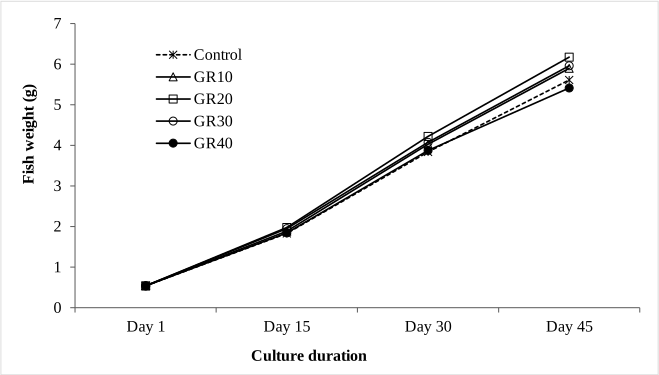
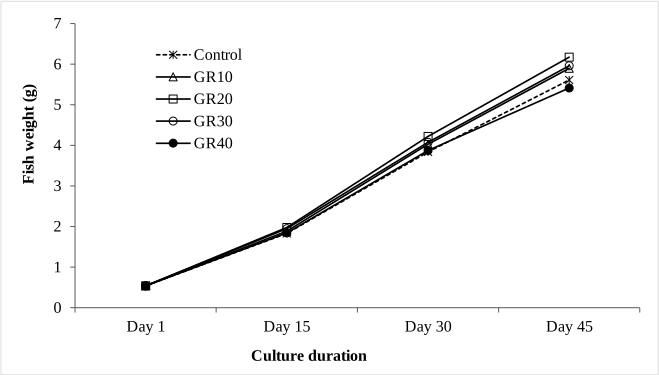
Body weight changes in mudskippers fed diets with increasing levels of red seaweed protein replacing fishmeal protein became evident after 30 days. The GR20 group showed the highest growth, while the control group had the lowest, a trend persisting through day 45 (Figure 1).
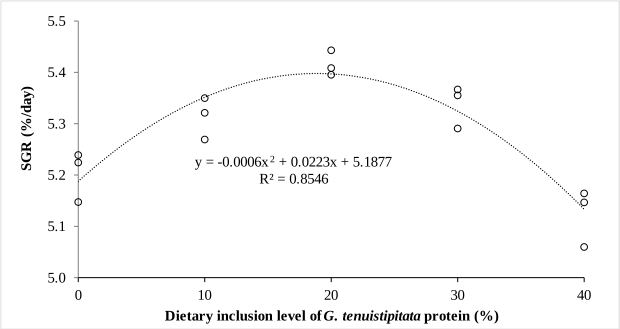
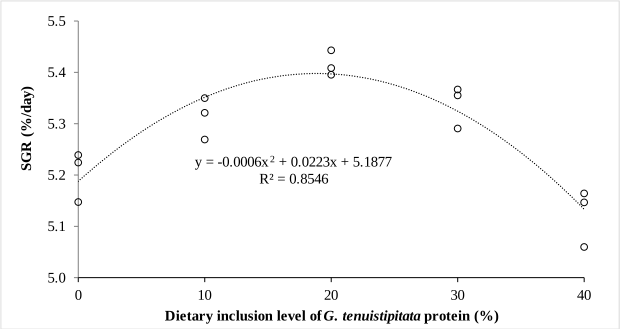
After 45 days of feeding trial, fish fed low-to-moderate replacement diets (GR10–GR30) showed significantly higher growth than the control, with GR20 achieving the highest growth (Table 4). In contrast, GR40 exhibited the poorest growth, similar to the control. Polynomial regression indicated that dietary inclusion up to 20% enhanced SGR, whereas higher levels (≥30%) reduced growth (Figure 2), highlighting an optimal replacement threshold for G. tenuistipitata protein. Despite these differences in weight growth parameters, dietary treatments did not significantly affect (P>0.05) the total length and specific growth rate (SGRL) of the fish. Survival of mudskipper across all treatments was high and no significant differences (P>0.05) were observed among the feeding treatments. Average biomass ranged from 767.4 to 894.7 g/m³, with the highest value recorded in the GR20 group and higher than the control and GR40 groups.
FEED UTILIZATION
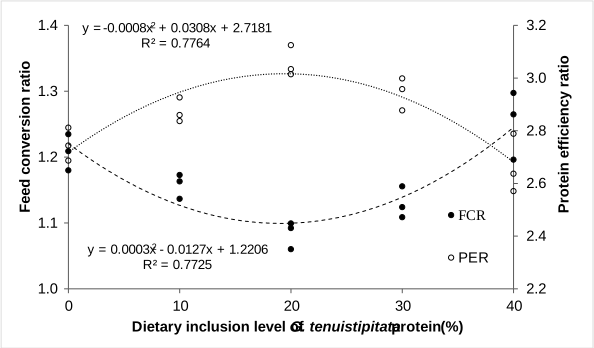
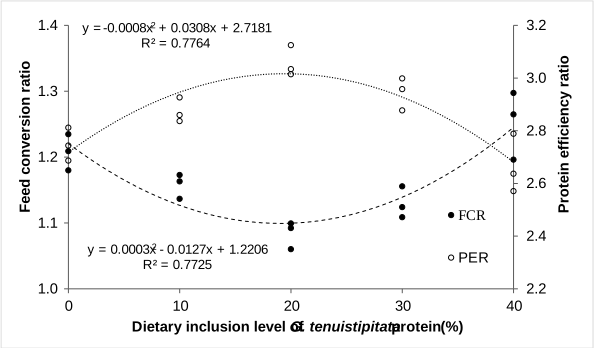
Feed utilization is summarized in Table 5. Feed intake did not differ among treatments, indicating seaweed inclusion did not affect palatability. FCR and PER were optimal in GR20, with FCR significantly lower and PER significantly higher than most other treatments. The values of PER in GR10 and GR20 were comparable (P <0.05). Furthermore, polynomial regression showed dietary G. tenuistipitata inclusion up to 20% improved FCR and PER, whereas higher levels (≥30%) reversed this trend. Maximum feed efficiency was achieved at 20% seaweed protein inclusion (Figure 3).
CHEMICAL COMPOSITION FISH FILLET
After 45 days, fillet composition varied with dietary seaweed protein inclusion levels (Table 6). Moisture and ash increased with higher replacement levels, while lipid decreased, with GR40 showing the highest moisture and ash and the lowest lipid. Crude protein slightly improved at 20% replacement but declined at higher levels. Overall, seaweed meal protein affected fillet composition by elevating moisture and minerals while reducing lipid, with the most balanced profile observed at a moderate inclusion level (GR20).
4. Discussion
The present study demonstrated that partial replacement of fishmeal protein with red seaweed G. tenuistipitata meal significantly affected growth performance, feed utilization, and body composition of mudskipper P. elongatus over the 45-day feeding trial. Overall, moderate inclusion levels, particularly 20% replacement (GR20), yielded the most favorable outcomes, while excessive inclusion (GR40) resulted in reduced performance. High survival indicates G. tenuistipitata is a safe, sustainable aquafeed protein source. Earlier studies have consistently demonstrated that seaweed meal are generally safe and physiologically well-tolerated when utilized as dietary ingredients in aquafeeds.4,9 The lack of mortality differences further supports the ecological adaptability of mudskipper, a species naturally feeding on detritus and microbial biofilms, which likely facilitates acceptance of plant- and algae-based ingredients.11
Growth indices clearly showed that dietary inclusion of G. tenuistipitata protein up to 20% significantly enhanced final weight, daily weight gain, specific growth rate in weight (SGRW), and biomass compared with the control and higher inclusion levels. The positive relationship between SGRW and dietary G. tenuistipitata protein inclusion up to an optimal level (Figure 2) suggests that this red seaweed meal can partially replace fishmeal protein without compromising growth performance. The superior growth performance and feed utilization observed in fish fed the GR20 diet indicate that a 20% replacement of fishmeal protein with G. tenuistipitata represents an optimal balance between nutritional enhancement and digestive activities in mudskipper P. elongatus. At this inclusion level, fish achieved the highest growth rate in weight, biomass, and protein efficiency ratio (PER), together with the lowest FCR, reflecting more efficient utilization of dietary nutrients. Previous investigations revealed that red seaweed G. tenuistipitata contains sulfated polysaccharides and other functional compounds that have been shown to improve digestive enzyme activity, gut health, and nutrient absorption in aquatic organisms.14–16 G. racilaria’s fibers and phenolics enhance digestion and beneficial gut microbiota.16–18 These factors can collectively increase feed efficiency, consistent with the lower FCR and higher PER observed in the GR20 treatment. Similar improvements in growth and feed utilization at moderate levels of macroalgae inclusion have been reported in several fish species.4,19–22 However, such benefits are often dose-dependent and diminish when inclusion levels exceed the digestive capacity of the species.4
In the current study, fish growth performance decreased as the red seaweed protein replacement level increased to 40%. This phenomenon could be related to amino acid imbalance and reduced protein digestibility. Although Gracilaria species are valuable protein sources, their amino acid composition differs from that of fishmeal, particularly with respect to sulfur-containing and certain indispensable amino acids. At high replacement levels, such imbalances may limit protein synthesis and growth rate, leading to increased FCR and reduced PER.8,23 Morover, Gracilaria meal typically contains high ash and fibre and moderate crude protein, and its relatively low essential amino acid content (Methionine, Lysine) may restrict growth when included at high levels.24,25 High fiber fractions, especially insoluble polysaccharides, can dilute metabolizable energy and hinder nutrient absorption in carnivorous and omnivorous fish.26 Although mudskipper is not strictly carnivorous, the observed reduction in growth at 40% replacement suggests that there are physiological limitations in digesting seaweed meal at high proportion in the diet. Feed intake did not differ across treatments, indicating that seaweed inclusion did not impair palatability. Previous studies have shown that macroalgae can enhance or maintain feed acceptance because of their natural pigments, mineral content, and bioactive compounds.27,28 Mudskippers readily accepted seaweed diets; 20% replacement improved FCR via efficient protein use, while 40% reduced FCR, indicating excess dietary seaweed protein impairs nutrient utilization. Similarly, excessive ash in high seaweed diets may lower digestible energy and nutrient absorption, partly explaining reduced growth at 40% replacement.
Regarding the biochemical composition of fish muscle, the composition shifted with seaweed inclusion: moisture increased, and lipid decreased at higher replacement levels (30 and 40%), reflecting reduced energy deposition from lower protein quality or digestible energy availability.29,30 Reduced lipid deposition at high dietary seaweed levels may be due to the lower energy density and higher fiber content of the diets, consistent with earlier studies involving red seaweeds in fish feeds.31,32 At 20% inclusion, crude protein increased due to efficient nitrogen retention, while fillet ash increased with higher seaweed levels, reflecting G. tenuistipitata’s high mineral content.16 This mineral contribution has been observed in other studies where seaweed inclusion elevated whole-body or fillet ash in fish.33 Furthermore, the reduction in lipid content may be associated with lower dietary lipid levels or altered lipid metabolism induced by seaweed-derived bioactive compounds, such as antioxidants and polysaccharides, which have been reported to regulate lipid synthesis and storage in fish.4,34 Increased ash content at higher inclusion levels likely reflects the naturally high mineral content of red seaweeds, contributing to greater mineral deposition in fish tissues. The inverse relationship between moisture and lipid content observed in this study is consistent with established patterns in fish muscle composition.35
Notably, the species-specific feeding ecology of mudskippers may explain their favourable response to moderate seaweed inclusion. Mudskippers naturally inhabit estuarine and mangrove ecosystems where algae and detritus contribute to the natural food web. This ecological adaptation likely enables P. elongatus to efficiently utilize algal-derived nutrients up to a threshold, beyond which digestive and metabolic limitations set in.11 The GR20 diet may therefore reflect a dietary composition that aligns closely with the species’ natural feeding strategy.
The results of this study highlight the potential of G. tenuistipitata meal as a sustainable alternative protein source in mudskipper culture. Replacing fishmeal protein at an optimal level of approximately 20% improved growth performance, feed utilization, and flesh quality without compromising the survival of fish. These findings align with global efforts to reduce reliance on fishmeal by incorporating alternative, environmentally friendly feed ingredients in aquaculture diets.1–3
5. Conclusions
This study demonstrated that red seaweed G. tenuistipitata meal is a viable alternative protein source for mudskipper fingerlings, with optimal inclusion levels of 20% improving growth, feed efficiency, and the quality of fish fillets. Further research should examine digestibility coefficients, gut microbiome responses, and immune-related outcomes to better understand the functional roles of red seaweeds in mudskipper nutrition.
Acknowledgments
This study was supported through the provision of sampling assistance and laboratory facilities by Can Tho University and Bac Lieu University. Additional technical support from staff and students involved in various stages of the work is also gratefully acknowledged.
Authors’ Contribution
Conceptualization: Vu H. Le, Ngoc Anh T. Nguyen; Methodology: Vu H. Le, Ngoc Anh T. Nguyen; Formal analysis and investigation: Ngoc Anh T. Nguyen; Writing - original draft preparation: Vu H. Le, Ngoc Anh T. Nguyen; Writing - review and editing: Vu H. Le, Ngoc Anh T. Nguyen; Funding acquisition: Vu H. Le, Ngoc Anh T. Nguyen; Resources: Vu H. Le; Supervision: Ngoc Anh T. Nguyen
Competing of Interest – COPE
The authors declare that there are no financial, personal, or professional competing interests that could have influenced the work reported in this manuscript, in accordance with COPE guidelines.
Ethical Conduct Approval – IACUC
Throughout the trial, all efforts were made to minimize stress, discomfort, and suffering of the mudskippers. Fish were acclimated prior to experimentation, handled gently, monitored daily for health and welfare, and euthanized humanely following accepted aquaculture welfare standards. The research complies fully with the Convention on Biological Diversity and the Convention on the Trade in Endangered Species of Wild Fauna and Flora (CITES).
Informed Consent Statement
All authors and institutions have confirmed this manuscript for publication.