
1. INTRODUCTION
The largemouth bass (Micropterus salmoides), native to the southeastern United States, is a highly resilient freshwater carnivorous fish.1 Owing to its strong disease resistance, broad temperature tolerance, short culture cycle, and rapid growth rate, this species has gained considerable popularity among aquaculturists and has been rapidly promoted nationwide.2 Nowadays, the largemouth bass has become a mainstay of China’s freshwater aquaculture industry.3 In 2023, the national production of largemouth bass reached 888,000 tonnes.4
Currently, some farmers are intensifying aquaculture practices to pursue higher production efficiency and output. However, this intensification renders artificially reared largemouth bass under high-density conditions more susceptible to disease outbreaks.5 To combat these diseases, antibiotics and antiparasitic drugs remain the most commonly employed therapeutic agents. Nevertheless, the application of these pharmaceuticals leaves substantial residues in aquaculture water and aquatic products. These residual drugs, once entering the human body through the food chain, pose a serious threat to human health.6 Consequently, since 2020, China has implemented a strict “complete ban on antibiotics” policy, prohibiting the use of antibiotics as feed additives in animal feeds.7 Therefore, there is an urgent need to identify green feed additives that can promote growth, enhance immunity, and improve overall health.
Chinese herbs, as natural substances, contain bioactive components that can increase appetite and feed intake,8 modulate intestinal microbiota,9 and enhance endogenous enzyme activities.10 Chinese herbs also offer notable advantages, including excellent therapeutic efficacy, low potential for inducing drug resistance, minimal side effects, and rapid metabolism, characteristics difficult to achieve with antibiotics.11 Moreover, Chinese herbs serve a dual role in aquaculture: they act as functional nutritional supplements participating in metabolic regulation while also supplementing dietary nutrients.12 For example, He et al.13 demonstrated that Artemisia extract could enhance hepatic antioxidant capacity, improve intestinal morphology, increase the abundance of beneficial gut bacteria, and modulate intestinal microbiota, thereby promoting growth in largemouth bass. Wang et al.14 reported that Isatis indigotica root polysaccharides enhanced innate immune responses and lysozyme activity in crucian carp (Carassius auratus), and improved resistance against Aeromonas hydrophila infection. Adineh et al.15 found that dietary supplementation with licorice root powder improved growth performance, lipid metabolism, antioxidant capacity, and immune responses in common carp (Cyprinus carpio), while also enhancing tolerance to crowding stress. Li et al.16 indicated that astragalus polysaccharide, a major component of Astragalus membranaceus, could improve growth performance, intestinal health, and antiviral immunity in zebrafish. Collectively, these findings suggest that Chinese herbs hold great promise as green feed additives.
Although single herbal compounds may impose a metabolic burden on the liver, kidneys, and other organs of aquatic animals when administered long-term or at high doses, compound herbal formulations not only exert direct antibacterial effects but also modulate immune functions,17,18 thereby demonstrating good antimicrobial activity.19,20 Thus, they represent highly promising feed additives for aquatic species. However, weight gain and survival rate in aquatic animals are not necessarily proportional to the dosage or proportion of herbal additives; excessive use may even produce negative effects. Furthermore, the efficacy of herbal preparations is greatly influenced by feeding strategies. Nevertheless, little research has been reported on the feeding strategies for dietary herbal supplementation. What effects do the presence or absence of various types of compound Chinese herbs in the feed and the different feeding strategies have on the breeding performance of largemouth bass? With the above questions in mind, the present study was therefore conducted to compare the effects of dietary herbal inclusion (presence vs. absence) and different feeding regimens, with the aim of providing a theoretical basis for the application of compound Chinese herbs in largemouth bass feed.
2. METHODS
2.1. EXPERIMENTAL DIETS AND DESIGN
Two types of commercial feed were used in the experiment, namely the control feed and the Chinese herbs feed. The Chinese herbs feed was formulated by adding 2% compound Chinese herbs to the Con and reducing the amount of wheat flour, forming two groups of isonitrogen and isolipid feeds. The composition of the compound Chinese herbs are artemisia annua (Artemisia annua L.), astragalus (Astragalus membranaceus), isatis indigotica (Isatis indigotica Fort.), polygonatum (Polygonatum sibiricum Redouté) and licorice (Glycyrrhiza uralensis Fisch.), and the ratio of the five herbs is 1:1:1:1:2. The 2% dosage of the Chinese herbs and the various combinations of different Chinese herbs were all the optimal solutions we obtained from our previous experiments. These Chinese herbs were purchased from the specialized market for medicinal herbs in Bozhou, Anhui Province. Fish meal, cottonseed protein concentrate, pork meal, soy protein concentrate, soybean meal, and wheat gluten are the main protein sources in feed. Fish oil, soybean oil, soybean lecithin, and squid visceral meal were added to the feed to meet the fat requirements of largemouth bass. The use of soybean meal and wheat flour has met the carbohydrate requirements. The moisture content of both feeds is less than 12%, and their protein and fat content is 50% and 12%, respectively (Table 1). Both types of commercial feed are provided by Jiangsu Changshou Group Nanshan Feed Co., LTD.
The experiment was conducted with three treatment groups, each comprising four replicates. Largemouth bass were fed the respective diets for 8 weeks, after which various parameters were measured to evaluate the effects of the compound herbal-supplemented diet on growth performance, immune function, intestinal and hepatic histomorphology, and disease resistance. The three groups were: a control group fed a basal commercial diet (Con), a group fed the basal diet supplemented with the compound Chinese herbs (ChF), and an interval-feeding group (IF) that received the two diets alternately on a weekly basis (i.e., one week of the basal diet followed by one week of the herbal-supplemented diet).
2.2. EXPERIMENTAL FISH AND FEEDING MANAGEMENT
Largemouth bass were purchased from Taizhou Yujiu Aquaculture Base and transported to the Aquatic Nutrition Laboratory of Jiangsu Agri-Animal Husbandry Vocational College. Upon arrival, the fish were acclimatized to the basal diet (control diet) and experimental conditions for two weeks in the laboratory. Prior to the start of the growth trial, the fish were fasted for 24 h. A total of 240 fish with an initial mean body weight of 27.96 ± 0.33 g were selected and randomly assigned to 12 aerated recirculating polyvinyl chloride (PVC) tanks (1.0 m × 1.0 m × 0.5 m), with 20 fish per tank and four replicate tanks per treatment group (n=4).
During the feeding trial, the fish were fed twice daily (at 8:00 and 17:00) at a ration of 3-6% of body weight for 8 weeks. The feeding amount was maintained consistently across all tanks and adjusted based on weather conditions, water temperature, and fish growth performance to ensure no feed residues remained after each meal. Fecal matter and uneaten feed were removed daily by siphoning, and one-third of the water volume was renewed every three days. Throughout the rearing period, water temperature ranged from 28 to 32.5℃, dissolved oxygen was maintained above 5 mg/L, pH ranged from 6.5 to 7.3, ammonia nitrogen was kept between 0.1 and 0.2 mg/L, and nitrite nitrogen was maintained below 0.1 mg/L.
2.3. SAMPLING
At the end of the feeding trial, the fish were fasted for 24 h. The total number and weight of fish in each tank were recorded to calculate weight gain rate (WG), feed conversion ratio (FCR), and survival rate (SR). From each tank, three fish were randomly sampled for whole-body proximate composition analysis. Another three fish from each tank were randomly selected, and blood samples were then collected from the caudal vein. After centrifugation at 1512 × g for 10 min at 4℃, the serum was separated, and the supernatant was collected for evaluation of blood physiological and biochemical parameters. Immediately following blood collection, the same fish were dissected, and the viscera and liver were removed and weighed to calculate the viscerosomatic index (VSI) and hepatosomatic index (HSI). Under sterile conditions, the mid-intestine (1-2 cm) and liver from another three fish per tank was excised and fixed in Bouin’s solution for histomorphological analysis, respectively, while the remaining mid-intestinal tissues were stored at -80℃ for subsequent assay of digestive enzyme activities.
2.4. MEASUREMENT INDICATORS AND METHODS
2.4.1. GROWTH PERFORMANCE AND MORPHOLOGICAL INDICES
Weight gain rate (WG), feed conversion ratio (FCR), survival rate (SR), viscerosomatic index (VSI), and hepatosomatic index (HSI) were calculated using the following formulae:
WG (%) = 100 × (final body weight – initial body weight) / initial body weight;
FCR = feed intake (g) / (final body weight – initial body weight);
SR (%) = 100 × (final number of fish) / (initial number of fish);
VSI (%) = 100 × (final visceral weight, g) / (final body weight, g);
HSI (%) = 100 × (final liver weight, g) / (final body weight, g).
2.4.2. SERUM BIOCHEMICAL INDICES AND MID-INTESTINAL DIGESTIVE ENZYME ACTIVITIES
The serum biochemical parameters measured included catalase (CAT, colorimetric method), superoxide dismutase (SOD, xanthine oxidase method), malondialdehyde (MDA, colorimetric method), alkaline phosphatase (ALP, ELISA), and lysozyme (LZM, ELISA). All these indices were determined using commercial assay kits purchased from Shanghai Haling Biotechnology Co., Ltd.
For intestinal digestive enzyme activity assays, intestinal samples were thawed at 4℃, homogenized, and centrifuged at 3000 rpm for 15 min. The supernatant was collected for enzyme activity determination. Protease activity was measured using the Folin-phenol method. One unit of protease activity (U mg-1prot) was defined as the amount of enzyme that hydrolyzed casein to produce 1 μg of tyrosine per minute at 37℃ and pH 7.2, using 2% casein as substrate. Lipase activity (U g-1prot) was defined as the amount of enzyme that consumed 1 μmol of substrate per minute per gram of tissue protein at 37℃. Amylase activity (U g-1 prot) was defined as the amount of enzyme that hydrolyzed 10 mg of starch per milligram of tissue protein at 37℃ for 30 min. The protein concentration of the enzyme extracts was determined using the Coomassie Brilliant Blue method. All assays for protease, lipase, and protein concentration were performed according to the manufacturer’s instructions provided with the kits (Nanjing Jiancheng Bioengineering Institute, Nanjing, Jiangsu, China).
2.4.3. INTESTINAL AND HEPATIC HISTOLOGY
For histological examination, mid-intestinal and liver tissues were dehydrated in graded ethanol, cleared in xylene, and embedded in paraffin wax. Sections of 5 μm thickness were cut using a microtome (Leica RM2235, Germany), stained with haematoxylin and eosin (H&E), and mounted as permanent slides. The morphological characteristics of intestinal folds and hepatic were observed under a light microscope (Nikon YS100 photomicrography system) and photographed. The height and width of intestinal epithelial folds, as well as intestinal wall thickness, were measured using an ocular micrometer.
2.4.4. CHALLENGE TEST
After the sampling procedure, the remaining fish were kept in their original tanks and fed their respective diets for an additional 3 days to allow recovery. Subsequently, 8 fish with intact body surface and normal vitality from each tank were selected for a challenge test with Aeromonas hydrophila. Each fish was injected intraperitoneally through the base of the pectoral fin with 0.2 mL of a bacterial suspension at a concentration of 2.1 × 10⁹ CFU/mL (the concentration and dosage were determined based on preliminary trials, LD50). The Aeromonas hydrophila strain was provided by the National Aquatic Animal Pathogen Bank of Shanghai Ocean University. Cumulative fish mortality was recorded daily for 7 days post-challenge.
Cumulative mortality (CM, %) = 100 × (cumulative number of dead fish) / (total number of injected fish).
2.5. STATISTICAL ANALYSIS
For statistical analysis, the tank was considered the experimental unit (n=4). All data were presented as mean ± standard deviation and analyzed using SPSS 22.0 statistical software. A one-way analysis of variance (ANOVA) and Tukey’s tests were used to determine the statistical significance among groups. Statistical significance was determined at P < 0.05. In addition, a follow-up trend analysis was performed using orthogonal polynomial contrasts to determine whether the significant effect was linear and/or quadratic.
3 RESULT
3.1. GROWTH PERFORMANCE
As shown in Table 2, the FBW, WG, and SR of the largemouth bass in the ChF group were significantly higher than those in the control group, whereas the FCR was significantly lower (P < 0.05). No significant differences were observed in the HSI or VSI among all groups (P > 0.05).
3.2. SERUM BIOCHEMICAL INDICES
As shown in Table 3, serum SOD and CAT activities in the ChF group were significantly higher than those in the Con (P < 0.05). Serum ALP and LZM activities in both the ChF and IF groups were significantly higher, while MDA content was significantly lower, compared with the Con (P < 0.05).
3.3. DIGESTIVE ENZYME ACTIVITIES
Protease and lipase activities in the mid-intestine of fish in the ChF group were significantly higher than those in the Con (P < 0.05), whereas no significant differences in amylase activity were observed among all groups (P > 0.05) (Table 4).
3.4. INTESTINAL AND HEPATIC HISTOLOGY
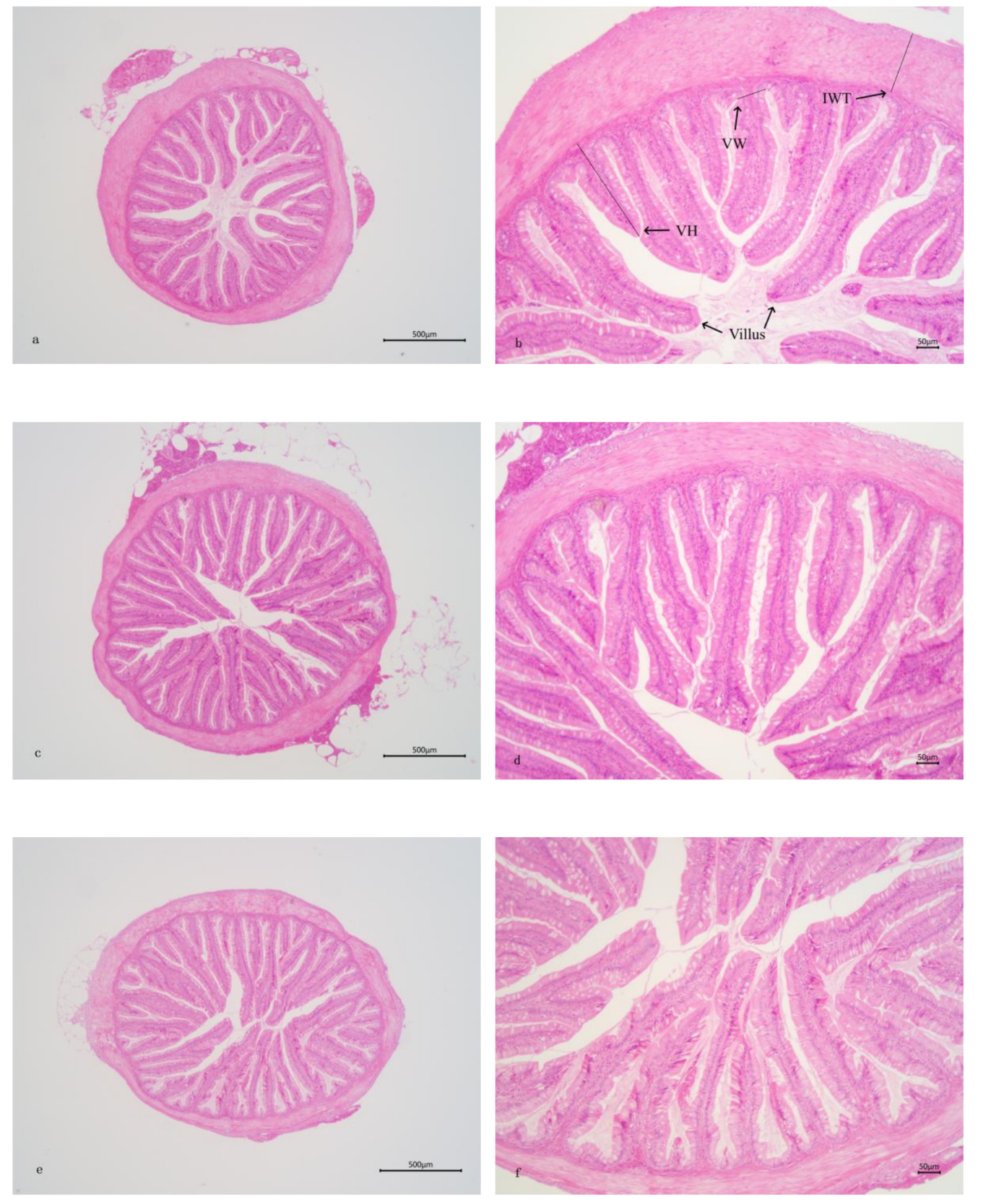
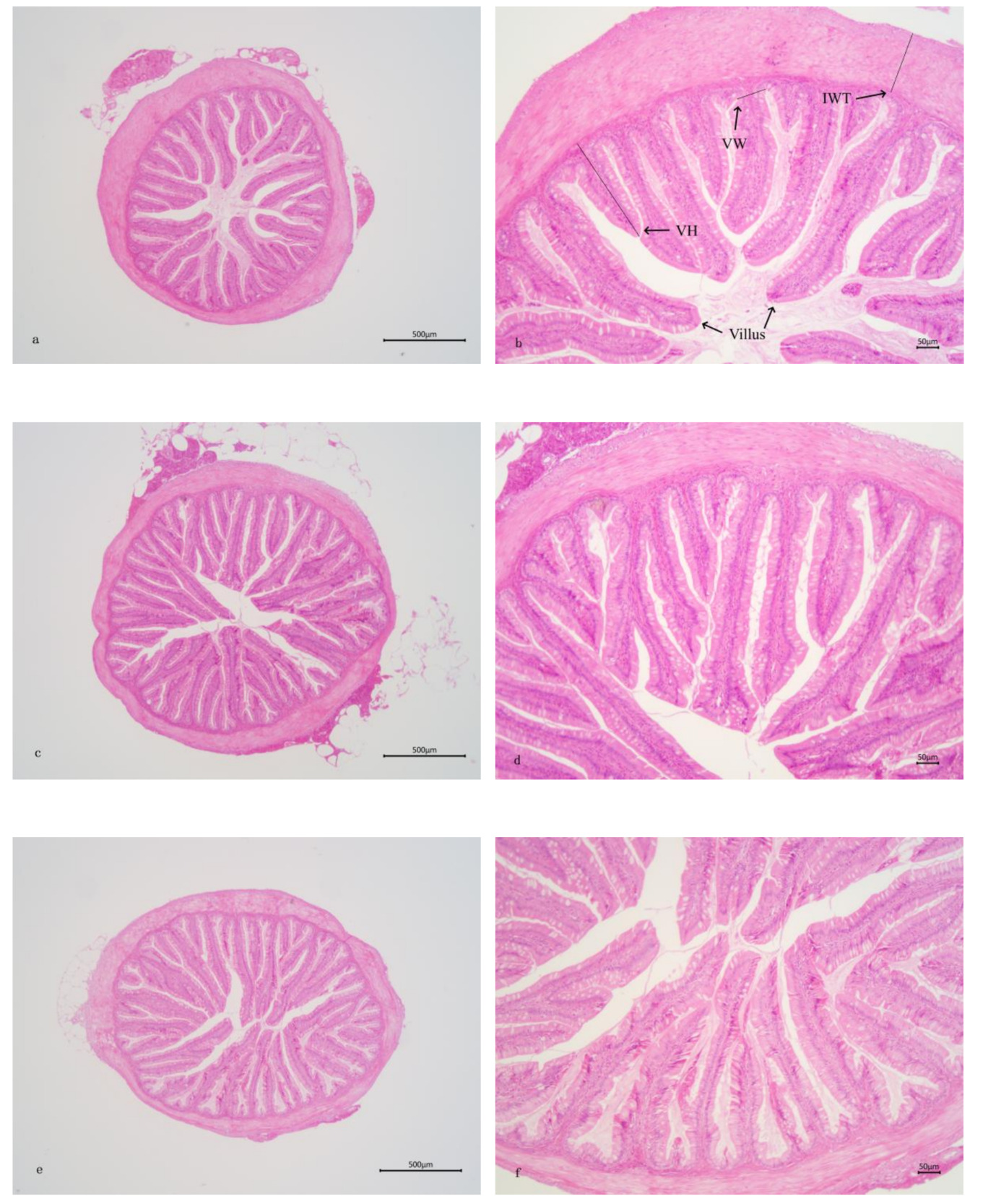
Figure 1 illustrates the mid-intestinal morphology of largemouth bass fed the different diets. The intestinal villi were clear and well-preserved in all groups. Villus height and intestinal wall thickness in the ChF group were significantly greater than those in the control group (P < 0.05), while no significant difference was detected in villus number or intestinal wall thickness among the groups (P > 0.05) (Table 5).
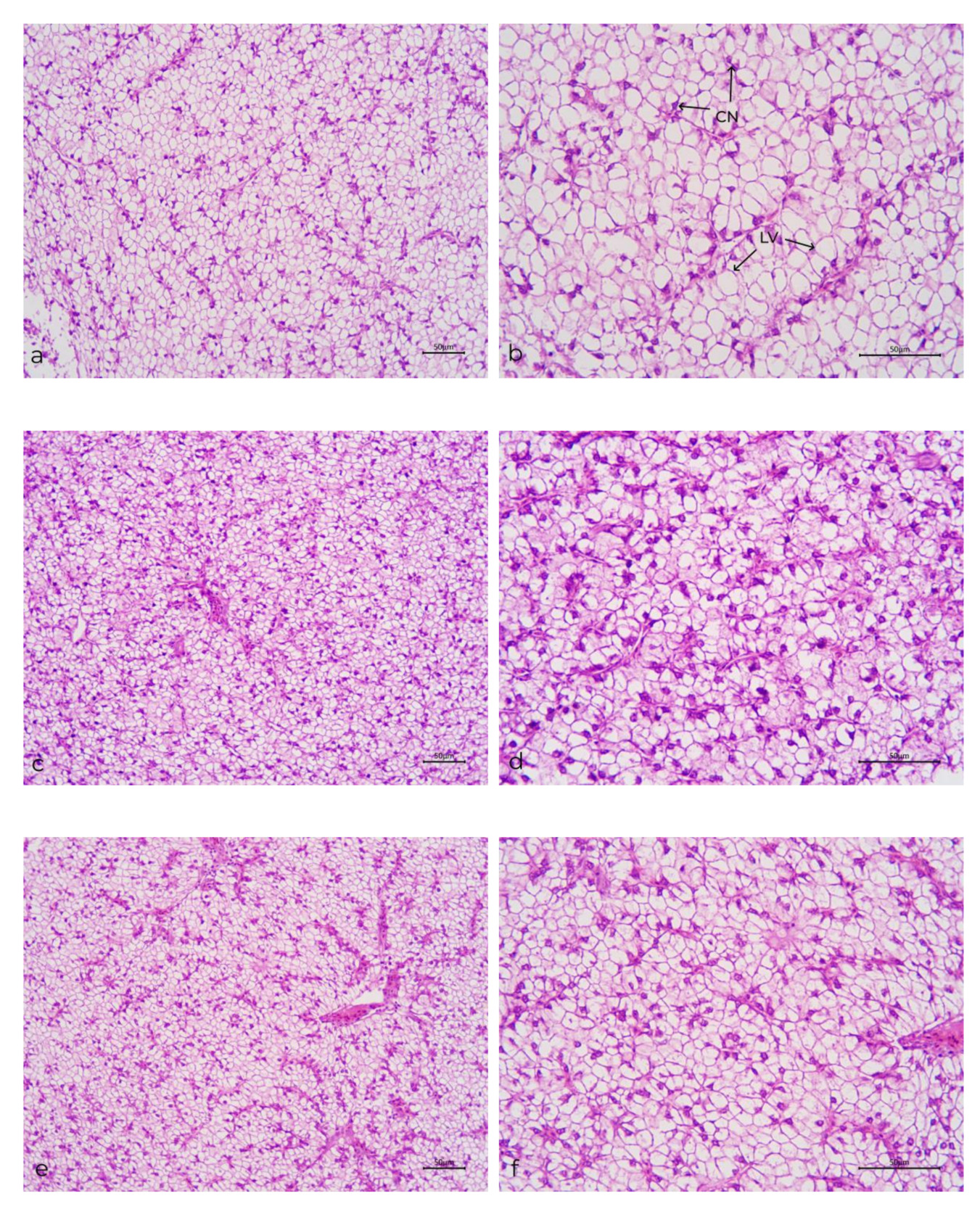
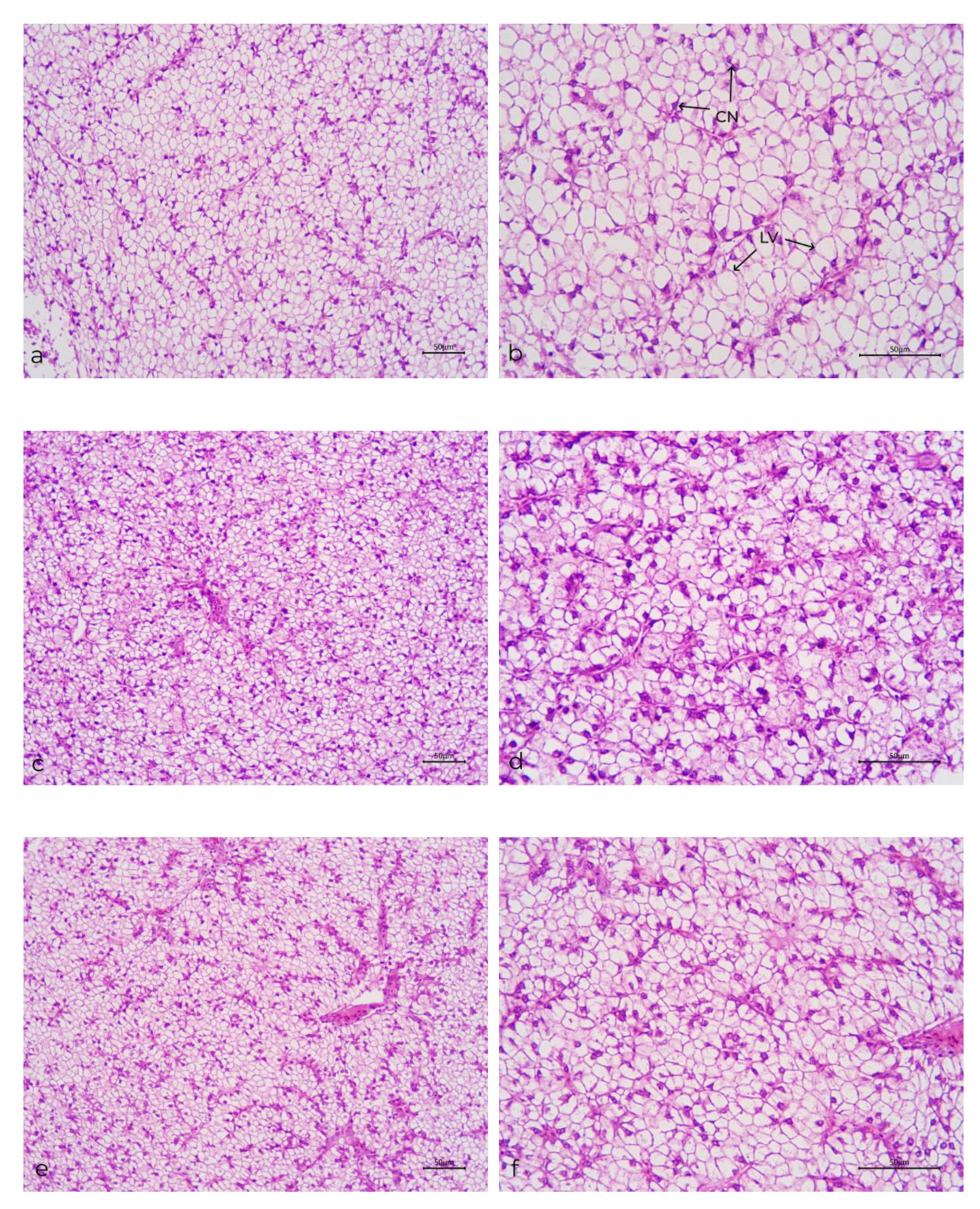
In all groups, hepatocytes exhibited a regular polyhedral structure with spherical nuclei that were centrally or eccentrically located. The control diet induced noticeable morphological alterations, including peripheral displacement of nuclei and cytoplasmic vacuolation. Supplementation of the control diet with the compound herbal mixture alleviated these symptoms, as evidenced by a reduced number of vacuolated hepatocytes and a decrease in vacuolar area (Figure 2).
3.5. CHALLENGE TEST
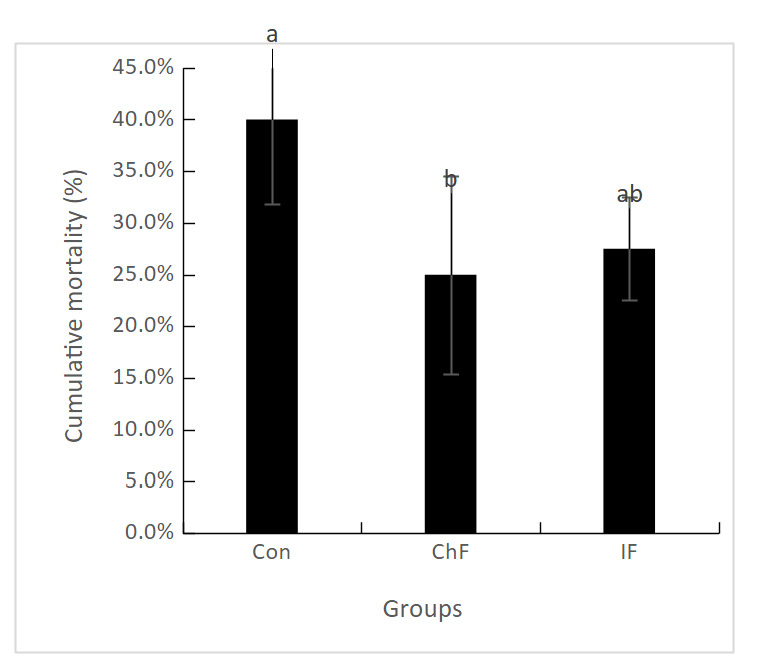
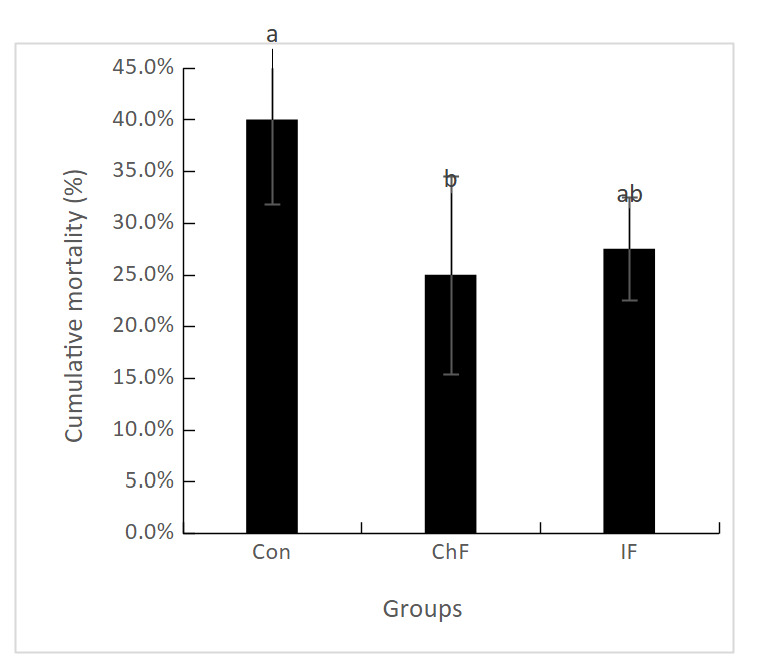
As presented in Figure 3, following 7 days of infection with Aeromonas hydrophila, the cumulative mortality of the control group was 40.0%, while that of the ChF group (25.0%) was significantly lower (P < 0.05). No significant difference in cumulative mortality was observed between the IF group and the control group (P > 0.05).
4. DISCUSSION
4.1. Effects of Chinese herbs on growth performance and digestive enzyme activities in juvenile largemouth bass
Chinese herbs are known to promote metabolic processes in aquatic animals, thereby facilitating growth and improving feed utilization.21 Previous studies have demonstrated that dietary supplementation with Chinese herbs enhances growth performance in various aquatic species, including the Chinese soft-shell turtles (Pelodiscus sinensis),22 hybrid grouper (Epinephelus fuscoguttatus♀×Epinephelus lanceolatu♂),23 and Pacific white shrimp (Litopenaeus vannamei).24 In the present study, long-term dietary supplementation with the Chinese herbs effectively promoted the growth of juvenile largemouth bass and improved feed utilization (Table 2), which is consistent with the findings of the aforementioned studies.
In general, growth performance in fish is positively correlated with digestive capacity,25 and the digestion and utilization of nutrients are influenced by digestive enzyme activities.26 Therefore, we hypothesize that the improved growth performance observed in the present study may be attributed to the enhanced digestive enzyme activities induced by the dietary herbal supplementation. Indeed, several studies have reported that medicinal plants can enhance digestive enzyme activities, thereby promoting growth in aquatic animals.27–30 In line with these reports, the present results showed that protease and lipase activities in the mid-intestine of the ChF group were significantly higher than those of the control group. This effect may be related to the active components present in certain herbs included in the formulation. For instance, astragalus polysaccharide, a major active component of Astragalus membranaceus, has been shown to increase intestinal digestive enzyme activities and improve intestinal structure, consequently promoting growth in juvenile crucian carp31 and juvenile large yellow croaker (Larimichthys crocea).32 In addition, glycyrrhizin derived from liquorice has been reported to enhance the gene expression of appetite-related factors and increase digestive enzyme activities, thereby improving growth performance in juvenile large yellow croaker.33 The Chinese herbs used in this experiment consisted of Artemisia annua, Astragalus membranaceus, Isatis indigotica, Polygonatum sibiricum, and Glycyrrhiza uralensis. A rational combination of these herbs may exert synergistic effects to enhance their efficacy. For example, Chen et al.6 found that a dietary supplement combining white peony and liquorice exerted hepatoprotective effects through complementary and synergistic mechanisms. Collectively, these findings suggest that long-term feeding of the compound herbal mixture can enhance digestive enzyme activities and digestive function in fish, thereby improving feed utilization and ultimately promoting growth performance. However, the alternate feeding regimen (herbal and basal diets on a weekly basis) did not significantly improve growth performance.
4.2. Effects of Chinese herbs on immune function and antioxidant capacity in juvenile largemouth bass
Serum immunity plays a critical role in the immune defense of fish.34 Previous studies have demonstrated that dietary supplementation with Chinese herbs enhances immune function in various aquatic species, including yellow catfish (Pelteobagrus fulvidraco),35 common carp,36 and Phoxinus lagowskii.37 Ardó et al.38 reported that dietary supplementation with Astragalus membranaceus significantly elevated serum LZM levels in Nile tilapia (Oreochromis niloticus). Jian et al.39 found that Astragalus enhanced serum LZM and complement activity in common carp, thereby improving immune function. Song et al.40 demonstrated that dietary supplementation with Isatis indigotica increased serum LZM and complement activities in pufferfish (Takifugu obscurus), thus enhancing immune competence. Hong et al.41 showed that a compound herbal formula containing Isatis indigotica and Astragalus membranaceus improved ALP activity and consequently enhanced immune function in giant river prawn (Macrobrachium rosenbergii). In the present study, serum ALP and LZM activities in both the ChF and IF groups were significantly higher than those in the control group, which is consistent with the findings of the aforementioned studies.
At the end of the feeding trial, bacterial challenge is often used as an indicator of fish health status.42 In the present Aeromonas hydrophila challenge test, cumulative mortality in the ChF group was significantly lower than that in the control group at 7 days post-infection, whereas the IF group exhibited a mortality rate comparable to that of the control group (Figure 3). Previous studies have reported that most Chinese herbs possess antibacterial and bactericidal properties and can enhance the immune capacity of cultured animals. In particular, Astragalus membranaceus, a component of the herbal formula used in this experiment, has been shown to modulate both cellular and humoral immunity in fish and to enhance the activation of lymphocyte-derived and immune-regulatory factors.43 Collectively, these results indicate that dietary supplementation with the compound herbal mixture effectively improves immune performance in largemouth bass, with long-term continuous feeding yielding superior effects compared with the alternate-feeding regimen.
During normal metabolism, fish generate reactive oxygen species (ROS), which are potentially harmful. To counteract their deleterious effects, fish have evolved an antioxidant defense system, with SOD and CAT serving as core enzymatic components.44 SOD converts excess ROS into hydrogen peroxide, while CAT acts in synergy with SOD to further decompose hydrogen peroxide into water, thereby alleviating oxidative stress.45 However, when antioxidant enzyme activities are inhibited, excessive ROS cannot be effectively eliminated; these free radicals then attack cell membranes, triggering lipid peroxidation and resulting in the production of malondialdehyde, ultimately leading to oxidative damage.46
In rainbow trout (Oncorhynchus mykiss), dietary supplementation with Chinese herbal medicines has been shown to increase plasma antioxidant enzyme activities.47 Xu et al.48 found that dietary Astragalus supplementation elevated SOD and CAT activities in common carp. Sarhadi et al.49 reported that Artemisia annua also improved antioxidant enzyme activities and reduced MDA content. In the present study, serum SOD and CAT activities in the ChF group were significantly higher than those in the control group, while MDA content was significantly lower (Table 3), which is in agreement with the aforementioned findings.
It is well established that most medicinal plants possess excellent antioxidant properties, largely attributable to their polyphenol and flavonoid content.50 Polyphenols exert their antioxidant effects primarily through direct scavenging of ROS and free radicals, owing to the presence of active phenolic hydroxyl groups in their molecular structures, which can donate electrons or hydrogen atoms to free radicals, thereby effectively neutralizing oxidative stress-induced damage.51,52 The compound herbal mixture used in this experiment is rich in polyphenols and flavonoids, which likely accounts for the superior antioxidant capacity observed in the ChF group. Notably, the improvement in antioxidant capacity was more pronounced with continuous long-term herbal supplementation than with the alternate-feeding regimen.
4.3. Effects of Chinese herbs on hepatic and intestinal histomorphology in juvenile largemouth bass
The liver, as the largest digestive organ in fish, serves as a critical indicator of overall health status under certain conditions.53,54 Previous studies have demonstrated that dietary supplementation with Chinese herbs can improve hepatic morphology and function in cultured species, including large yellow croaker55 and largemouth bass.56 Abdel-Latif et al.57 reported that dietary herbal supplementation improved hepatic functional structure in striped catfish (Pangasianodon hypophthalmus). In the present study, juvenile largemouth bass fed the Chinese herbs diet exhibited a reduction in the number of vacuolated hepatocytes and a decrease in vacuolar area (Figure 2), which is consistent with the findings of the aforementioned studies. Liu et al.58 found that dietary supplementation with Chinese herbs reduced the number of vacuolated hepatocytes in Atlantic salmon (Salmo salar), which they attributed to flavonoids’ ability to bind effectively to lipid metabolism-related proteins, thereby inhibiting oxidative stress and modulating lipid metabolism.59 Thus, the flavonoids present in the herbal mixture used in this experiment appear to effectively regulate lipid metabolism in largemouth bass, thereby contributing to hepatic health. Notably, this beneficial effect was observed in both the ChF and IF groups.
The fish intestine, as the primary organ for digestion and absorption, not only plays a key role in selective nutrient uptake but also effectively recognizes and eliminates harmful substances, thereby contributing substantially to overall health.60 Increased villus height enhances the absorptive surface area, thereby improving nutrient absorption capacity,61 while increased intestinal wall thickness improves intestinal peristalsis.62 Studies have shown that dietary supplementation with astragalus polysaccharides can increase intestinal villus height and basement membrane thickness in tilapia, thereby promoting growth and development.63 Similarly, in large yellow croaker, dietary compound herbal supplementation has been reported to improve intestinal barrier function and morphology.64 In the present study, mid-intestinal villus height and intestinal wall thickness in the ChF group were significantly greater than those in the control group (P < 0.05), which is in agreement with the above-mentioned studies. This effect may be explained by the fact that astragalus polysaccharides, through specific interactions with the gut microbiota, promote the production of butyrate,65 which in turn enhances villus height and intestinal wall thickness, thereby optimizing intestinal structure.66 Collectively, these findings indicate that dietary supplementation with the compound herbal mixture improves intestinal function, with continuous long-term feeding yielding better intestinal morphology than the alternate-feeding regimen.
5. CONCLUSIONS
In conclusion, dietary supplementation with the Chinese herbs effectively improved growth performance, immune function, antioxidant capacity, and intestinal and hepatic histomorphology in largemouth bass. Moreover, continuous long-term feeding of the herbal-supplemented diet yielded significantly better effects than the alternate-feeding regimen.
ACKNOWLEDGMENTS
This work was financially supported by Jiangsu Agri-animal Husbandry Vocational College school level research project (NSF2025ZR08) and Jiangsu Changshou Group Nan Shan Feed Co., Ltd. (S20240005).
CRediT AUTHORS’ CONTRIBUTION
Project administration: Wenxiang Yao (Equal), Chunyan Zhang (Equal), Guoan Hua (Equal), Sizhe Zhao (Equal), Jianguo Wang (Equal). Funding acquisition: Wenxiang Yao (Equal), Chunyan Zhang (Equal), Jianguo Wang (Equal). Formal Analysis: Yang Zhi (Equal), Xinzhe Li (Equal), Xiaoya Wu (Equal), Guoan Hua (Equal), Sizhe Zhao (Equal). Writing – original draft: Yang Zhi (Equal), Xinzhe Li (Equal), Xiaoya Wu (Equal). Methodology: Chunyan Zhang (Lead). Investigation: Chunyan Zhang (Lead). Writing – review & editing: Chunyan Zhang (Lead). Conceptualization: Chunyan Zhang (Lead).
DECLARATION OF COMPETING INTEREST
The authors report no conflicts of interest. The authors alone are responsible for the content and writing of this article.
ETHICAL CONDUCT APPROVAL – IACUC
All animal care and use procedures were approved by the Institutional Animal Care and Use Committee of Jiangsu Agri-animal Husbandry Vocational College (Permit number: jsahvc-2025-17), and all authors clearly indicated that such guidelines have been followed.
INFORMED CONSENT STATEMENT
All authors and institutions have confirmed this manuscript for publication.
DATA AVAILABILITY
Data will be made available on request.