
1. Introduction
Digital transformation is a key driver for cultivating new productive forces and deepening the reform of state-owned assets,1 while also promoting the high-quality development of China’s public-owned economy.2 Chairman of Xi Jinping has clearly proposed establishing a holistic food security concept, developing marine aquaculture and fishing industries to build marine pastures, and driving the transformation and upgrading of marine fisheries towards informatization, intellectualization, and modernization, thereby setting a strategic direction for the fisheries industry. The 2025 Government Work Report emphasizes driving agricultural modernization by fostering new productive forces tailored to local conditions. As important supporters and platforms for the development of the fisheries industry, listed fisheries companies need to prioritize digital transformation, shoulder the vital responsibility of integrating the fisheries industry with the digital economy, and advance the high-quality growth of publicly owned enterprises.
The sustainable competitiveness of listed fisheries firms is critical to their survival and long-term growth, as well as to the resilience of the fisheries value chain. It also has important implications for safeguarding food security and supporting national agricultural and maritime development strategies. At present, the fisheries industry is constrained by resource depletion, ecological degradation, and other issues, and is confronted with external challenges such as the tightening of environmental and quality standards and the upgrading of global market demand, making the traditional development paths of scale expansion and cost control unsustainable.3 Bolstered by technologies such as big data, the Internet of Things and digital twins, digital transformation empowers the entire fisheries industrial chain to restructure its operation and collaboration models, thus providing a new pathway for enterprises to break through development bottlenecks. Listed fisheries companies are leveraging digital transformation to cultivate sustainable competitiveness, establishing this as an important mechanism for achieving synergy between commercial objectives and social responsibilities.
In recent years, the academic community has undertaken comprehensive research on the correlation between the digital transformation of listed fisheries companies and their sustainable competitiveness. When measuring the sustainable competitiveness of enterprises, researchers have constructed an analysis framework from different perspectives: Previous studies have focused on operational efficiency4 and have integrated ecological, economic, social, and governance dimensions into a comprehensive evaluation framework.5 Several paths of digital empowerment for sustainable fishery development, have been analyzed,6 covering technical, organizational and environmental dimensions. These studies expand the concept of sustainable fishery competitiveness from single economic performance to multi-dimensional system synergy. On this basis, the driving effect of digitalization on operational efficiency has become another research hotspot. The digital economy has improved the low-carbon total factor productivity of marine fisheries by technological progress.7 This influence has been extended to resource and environmental efficiency8,9 and to supply chain efficiency.10 The promotion of digital transformation in this field has also been investigated. This has prompted researchers to explore the path of digital empowerment: four kinds of fishery digital ecosystems that can produce high-level sustainable competitiveness have been identified, and multiple paths and complex mechanisms for the sustainable development of fishery digitalization have been revealed.6 A three-stage evolutionary model from digitalization to intelligence has been developed, demonstrating the dynamic coupling mechanism between technical advancement, organizational transformation, and environmental adaption.11 It has been emphasized that the core value of digitalization lies in transforming traditional aquaculture practices that rely on experience into quantifiable, transferable and value-added data assets, thus realizing the double promotion of industrial efficiency and value.12
However, previous research mainly focused on the macro level of fisheries, lacking in-depth discussion of the digital transformation mechanisms of micro entities, such as listed companies, and a systematic analysis of the complete transmission path. This study addresses the research gap by selecting China’s A-share fishery enterprises from 2000 to 2024 as the subject of investigation, and employing a fixed-effect model to incorporate the new development philosophy (comprising innovative, coordinated, green, open, and shared development) into the analytical framework linking digital transformation and sustainable competitiveness. An evaluation index system is established based on these five criteria. This paper explores the mechanism by which digital transformation affects sustainable competitiveness and examines the regulatory significance of digital specialists.
2. Theoretical Framework and Hypothesis
2.1. Sustainable Competitiveness of Chinese Listed Fisheries Companies
As the core vehicles for industrialized fisheries operations,13 listed fisheries companies serve as crucial micro-level enablers for advancing the transformation of traditional fisheries toward informatization, intelligentization, and modernization, while implementing the broader food security perspective. Their development quality and sustainable competitive capabilities (SUS) not only directly impact corporate survival and long-term growth but also influence the resilience and stability of the fisheries industry chain. This holds significant strategic importance for advancing the development of both an agricultural powerhouse and a maritime powerhouse.
Sustainable competitiveness refers to a company’s comprehensive capability to maintain competitive advantage and to achieve synergistic development of economic, social, and environmental benefits, reflecting its overall performance and state of long-term survival and development.14,15 Fisheries are highly dependent on natural resources and ecosystem health, which makes sustainable competitiveness particularly salient for listed fishery firms. On the one hand, fishery enterprises rely heavily on marine or freshwater ecosystems, and resource depletion and ecological degradation directly threaten their survival foundation; On the other hand, the fishery industry chain is huge, covering fishing, breeding, processing, distribution and sales, and the interruption or inefficiency of any link will affect the overall competitiveness.
Faced with these challenges, the traditional development path, which relies on scale expansion and resource consumption, is unsustainable. The competitiveness of listed fishery enterprises in China is expected to shift toward sustainable transformation.3 Sustainable transformation requires enterprises to achieve coordinated development of economic, environmental and social benefits under resource constraints, which often makes enterprises fall into a dilemma between compliance and profitability.16 In this transformation process, digital technology provides a feasible technical approach to solve this dilemma by virtue of its unique advantages: accuracy, intelligence, traceability and end-to-end supply chain management.17–19 Digital transformation plays an increasingly important role in addressing the dilemma of fishery sustainability, facilitating the implementation of sustainable transformation and promoting endogenous growth of sustainable competitiveness.20
The impact of digital transformation on the sustainable competitiveness of listed fishery companies is mainly reflected in two dimensions: financial performance and environmental performance, and there is a synergistic effect between them.21 From a financial performance perspective, the application of digital technology promotes accurate feeding and intelligent management, thereby directly reducing production costs.22 Enterprises actively pursuing green development can effectively avoid compliance risks posed by increasingly stringent environmental regulations and ensure stable operations. In terms of environmental performance, digital transformation has promoted green innovation and improved the low-carbon total factor productivity of fisheries. The transparency of information enabled by digitalization strengthens government and societal oversight and urges enterprises to continuously improve their environmental practices. When environmental management is deeply integrated into the operation system, environmental performance becomes the basic support and endogenous driving force for sustainable growth. Based on the above analysis, the following research hypothesis is put forward:
H1: Digital transformation enhances the sustainable competitiveness of Chinese listed fisheries companies.
2.2. The Transmission Mechanism of Digital Transformation
2.2.1. The Mediating Role of New Development Philosophy Implementation
The new development philosophy measures the strategic actions and resource input of enterprises from five dimensions: innovative, coordinated, green, open, and shared development.23 It discusses the core theoretical issues such as development goals, driving factors and paths, which provides practical guidance for enterprises to achieve sustainable development.24 These five dimensions are interrelated and mutually reinforcing, constituting a comprehensive and unified theoretical framework for new development and an important part of China’s sustainable development solution.25
Digital transformation, supported by digital technologies such as big data, IoT and digital twinning, promotes enterprises to fully implement new development philosophy by reconstructing production and operation modes, optimizing resource allocation efficiency and breaking down industry barriers, thus comprehensively enhancing enterprises’ understanding and practice of new development philosophy.26–29 The thorough implementation of this concept, in turn, promotes the sustainable competitiveness of enterprises in economic, ecological and social dimensions.30 Therefore, the implementation level of the new development philosophy serves an intermediary role between the digital transformation and the sustainable competitiveness of listed fishery enterprises. The digital transformation indirectly enhances the sustainable competitiveness of enterprises by promoting their full adoption of the new development philosophy.
Digital transformation plays a key role in promoting enterprises to implement new development philosophy. It is highly consistent with the development environment and transformation needs of fisheries. It has promoted the continuous practice of the new development philosophy within fishery enterprises,6 which is reflected in the following five key dimensions:
Innovative development level: Digital transformation has broadened the access of listed fishery enterprises to technology and information, urged companies to increase investment in research and development, accelerated the commercialization of patents, and promoted integrated innovation in core fishery areas such as precision farming, intelligent fishing and green processing.31,32 This method breaks through the bottleneck of fishery resources shortage and low production efficiency and improves the innovation and development level of enterprises by increasing input and output.
Coordinated development level: Digital technology enables listed fishery enterprises to integrate and manage financial, production and supply chain data. This will help to optimize the capital structure, reduce financial risks, and guide enterprises to focus on core business.33–35 By reducing the unbalanced development caused by the dispersion of non-core business resources, these technologies have consolidated the foundation for enterprises to achieve coordinated development through internal governance and industrial synergy.
Green development level: Digital tools such as IoT, satellite remote sensing and water quality monitoring can accurately control the fishery production process. This urges enterprises to increase investment in environmental governance, optimize production processes, reduce energy consumption per unit of output, and reduce aquaculture pollutant emissions, thereby realizing sustainable utilization of fishery resources through data-driven management.9,36
Open development level: the digital transformation has broken down geographical and information barriers, enhancing the ability of listed fishery enterprises to participate in the international market. At the same time, it enables the visualization and transparency of supply chain information through digital tools, broadening the scope of enterprises’ pursuit of open development.37
Shared development level: production efficiency improvements and economic growth driven by digital transformation have laid the foundation for enterprises to raise employees’ salaries and improve the training system.38 Simultaneously, firms leverage digital transformation to advance the growth of small and medium-sized enterprises in the fisheries upstream and downstream sector, increase their tax contribution and fulfill their social responsibilities.39,40 This way, the achievements of enterprise development can benefit employees, society and the wider fishery industry.
Listed fishery enterprises strengthen the implementation of new development philosophy and provide core support for cultivating multi-dimensional sustainable competitiveness: technological innovation breakthroughs bring sustained growth momentum; Collaborative development optimization ensures operational stability and supply chain toughness; Green development lays the foundation for coping with ecological constraints and compliance supervision; Increase the openness and create new market and resource opportunities; Shared development to enhance the social status and industry leading position of enterprises. Digital transformation promotes enterprises to fully implement the new development philosophy. These five dimensions promote each other and cooperate with each other, prompting enterprises to change from a single financial performance improvement to a comprehensive improvement of economic, ecological and social performance, and finally achieve sustainable competitiveness.
Digital transformation provides the technological foundation, the new development philosophy guides corporate actions, and sustainable competitiveness is the ultimate outcome. Based on the above analysis, the research hypothesis is proposed as follows:
H2: Digital transformation enhances sustainable competitiveness by enabling enterprises to practice the new development philosophy.
2.2.2. The Moderating Role of Digital Talent Level
According to the absorptive capacity theory,41 the ability of enterprises to absorb, transform and apply new external technologies is the core premise to realize the value creation of technological application. This absorptive capacity is highly dependent on enterprises’ human capital reserves. Digital transformation in the fishery sector represents a profound integration of digital technology with traditional practices. The benefits derived from this transformation extend beyond mere technology investment.6 Its success depends on whether enterprises can combine digital technology with the application scenarios of aquaculture, fishing, and processing to realize localized applications. As the carrier of digital technology knowledge and fishery experience, digital talents are the key bridge connecting digital technology with actual fishery production.
Digital talents play a vital role in promoting the digital transformation of listed fishery enterprises, which is mainly reflected in the following aspects: firstly, accurately grasp the application logic of digital technology, optimize technical solutions according to actual production needs, and promote the application of digital technology in the fields of precision farming, smart fishing and supply chain management.20,31,32,36,38 Secondly, employ digital technology to identify optimization opportunities in fishery production and management, reformulate the production and management model, and enhance production and resource allocation efficiency, thereby transforming the advantages of digital technology into operational performance advantages.42 Thirdly, deeply integrate the new development philosophy with the digital transformation strategy to ensure the direction of digital transformation is consistent to enhance the sustainable competitiveness of enterprises.
If the listed fishery companies lack digital talent, even if they invest heavily in digital technology, it will be difficult to achieve effective application, and the promotion of digital transformation toward sustainable competitiveness will not be obvious. When enterprises have sufficient digital talent, they can fully leverage the enabling value of digital technology, amplify the driving role of digital transformation within a new development philosophy, and thereby enhance its impact on sustainable competitiveness. According to the above analysis, the following research hypothesis is proposed as follows:
H3: The level of digital talent positively moderates the impact of digital transformation on a company’s sustainable competitiveness.
3. Materials and Methods
This study builds on the previous theoretical research, establishing a fixed-effects model to examine the effect of DT on the sustainable competitiveness (SUS) of Chinese listed fisheries companies:
SUSi,t=α0+α1DTi,t+∑jαj⋅Controlsi,t+μi+λt+εi,t
In Equ (1):
: an individual Chinese listed fisheries company; : the year;
SUS i, t : the sustainable competitiveness of listed fisheries enterprise in year
DT i, t : the level of digital transformation of listed fisheries company in year ;
Controls i, t : a vector of control variables;
μi : the firm-specific fixed effect; λt : year fixed effect.
3.1. Explained Variable
This paper measures the sustainable competitiveness (SUS) of Chinese listed fisheries companies from two core dimensions: company financial and environmental performance. As the outcome variable of this study, SUS reflects the comprehensive performance and indicates the state of their competitiveness.21
Following the established approach in prior studies,43 we used Return on Assets (ROA) as an indicator of financial performance for the sample firms, reflecting the economic underpinning of sustainable competitiveness. The Wind ESG Rating System comprehensively assesses enterprise performance across three core pillars: environmental responsibility, social responsibility, and internal governance quality. Its environmental dimension sub-score can accurately characterize the core environmental behaviors of sample firms in production and operation, including ecological conservation, pollution control and regulation, and resource utilization efficiency. This research uses the environmental dimension sub-score from the Wind ESG Rating System as a proxy for corporate environmental performance (CEP).44
To eliminate the dimensional differences between the two types of indicators and guarantee the comparability of indicators of financial and environmental performance across different dimensions, this paper takes into account the fisheries industry’s inherent strong dependence on ecological systems, while accounting for the availability, continuity and stability of indicators under the constraint of the limited sample size of listed fisheries companies. For each sample firm, we standardize its ROA and corporate environmental performance (CEP), respectively, rescale the values of both indicators to a uniform range of 0 to 1, and construct the comprehensive indicator of corporate sustainable competitiveness (SUS) based on the standardized financial and environmental performance.45 The estimation procedure is specified as follows:
m∗=m−min(m)max(m)−min(m)
SUS=(1−|ROA−CEP|)×√ROA×CEP1
3.2. Explanatory Variable
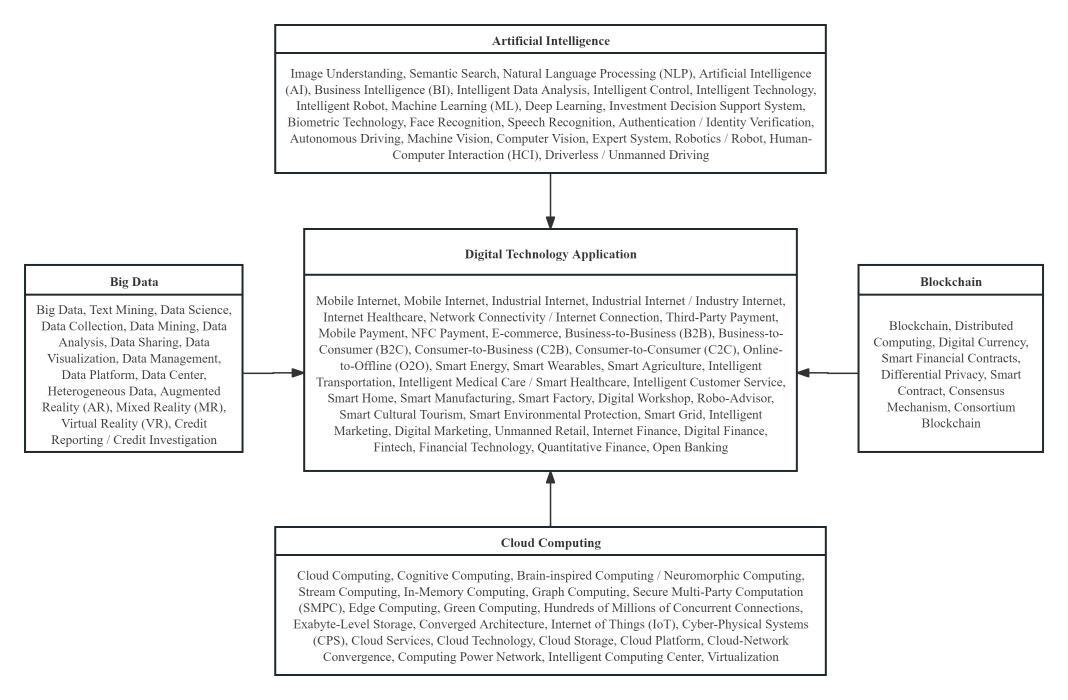
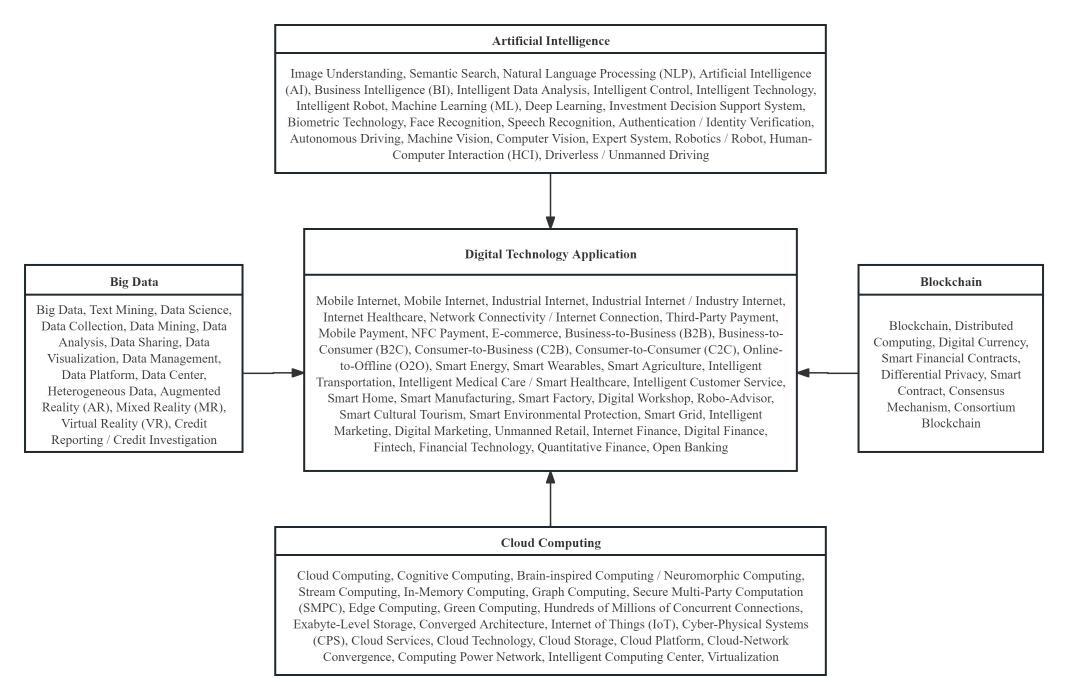
Using textual analysis, this paper constructs an indicator to capture the level of digital transformation (DT) of Chinese A-share-listed fisheries enterprises. Specifically, we use Python web-crawling techniques to retrieve keywords related to DT from the annual reports of sample firms. Drawing on the keyword from the paper of Wu et al.,45 enterprise digital transformation is categorized into five core dimensions: AI technologies, Big Data (BD) technologies, Blockchain (BC) technologies, Cloud Computing (CC) technologies and Digital Technology Applications (DTA).45 Among them, the first four dimensions constitute the underlying technological infrastructure of enterprise digital transformation, while the fifth dimension reflects the specific application of digital technologies in business scenarios. Referring to official documents and industry reports on enterprise digital transformation, we construct the digital transformation lexicon for fisheries enterprises (Fig. 1). Finally, in accordance with the aforementioned analysis, we aggregate the frequency of keywords related to DT of fisheries enterprises to derive the enterprise digital transformation indicator (DT).
3.3. Control Variables
In light of the limited sample size of Chinese listed fisheries companies, and drawing on relevant established studies, we select Firm Size (Size), Ownership Concentration (Top3), Firm Age (Age), and Regional Innovation Environment (InnovEnv) as the control variables for our model.46 Specifically, InnovEnv is measured as the provincial R&D-to-GDP ratio.47
3.4. Mediating variable
According to relevant studies, the new development philosophy has a significant impact on regional sustainable competitiveness.48 On the basis, this paper further explores the transmission mechanism of the new development philosophy at the enterprise level, takes it as the mediating variable, focuses on the specific actions and investment of enterprises in the five development concepts, and examines its mediating role in the impact of enterprise DT on sustainable competitiveness. This study constructs a second-level model on the basis of concept of innovative, coordinated, green, open and shared development and relevant studies and applied the entropy model to calculate the comprehensive mediating variable, the level of implementation of the new development philosophy (NDP).35,49–52 The specific indicator system and second-level weights are shown in Table 1, following the format of existing studies.53 According to Wen and Ye,54 this research constructs the following mediating effect models54:
NDPi,t=β0+β1DTi,t+∑jβj·Controlsi,t+μi+λt+εi,t
SUSi,t=γ0+γ1DTi,t+γ2NDPi,t+∑jγj⋅Controlsi,t+μi+λt+εi,t
3.5. Moderating Variable
The value creation of digital transformation is highly dependent on firms’ absorptive capacity for digital technologies while digital talents serve as the core carrier of digital skills within enterprises.41 This research uses the proportion of employees holding a bachelor’s degree as the proxy variable to capture the level of digital talent in corporations (Tal).55
3.6. Data Sources and Description
This research takes listed fisheries companies from 2000 to 2024 as objects, and processes the data as follows: 1. Exclude enterprises with extreme abnormal financial data, such as Special Treatment (ST) firms; 2. Exclude listed company samples with severe data missing; 3. Adopt mean imputation to fill in general data with random missing, including simple mean imputation and conditional mean imputation. After the above processing, a total of 339 observations of Chinese A-share listed fisheries companies have been collected. The data on DT are derived from the reports of sample firms published on CNINFO (China Securities Information Network), which are obtained by using Python to crawl text data and conduct keyword-based textual analysis; ESG data are from Wind ESG Ratings; financial, governance and patent data are obtained from the CSMAR Database, Wind Database and CNRDS Platform; GDP data of each province are gathered from the NBS Platform and China Science and Technology Indicators Database (CSTID).
3.7. Descriptive Statistics Results
Table 2 exhibits the results for the core variables. For the full sample, sustainable competitiveness (SUS) has a mean of 0.433 and an SD of 0.183, suggesting notable heterogeneity in the sustainable competitiveness across sample firms. The maximum value of digital transformation (DT) is 3.135, with SD of 0.906 and Median of 0, which illustrates a significant difference across the industry in the level of digitalization among Chinese listed fisheries companies. With a mean of 0.084, the level of new development philosophy implementation (NDP) indicates that there is still considerable room for improvement in the overall practice of the new development philosophy among the sample enterprises. Standard errors are clustered at the firm level.
4. Results
4.1. Overview
To systematically investigate how digital transformation influences the sustainable competitiveness of Chinese listed fisheries companies, this research specifies a fixed-effects model with relevant data covering 2000 to 2024 to estimate the direct influence of DT on corporate sustainable competitiveness (SUS). To conduct an in-depth analysis of its transmission path, we incorporate the level of new development philosophy (NDP) as the mediating variable. In addition, this paper provides an in-depth discussion through the lens of the moderating effect of digital talent level and heterogeneity in firm size, offering multidimensional empirical support for DT strategies.
4.2. Baseline Regression Results
Table 3 shows the results for the direct influence of DT on sustainable competitiveness (SUS). As listed in column (1), the coefficient of DT on sustainable competitiveness (SUS) is 0.0453 which is obviously positive at the 1% significance level. As taking the full set of control variables into account, the coefficient on DT is 0.0489 (Column 2), which remains statistically significant, hence it can be concluded that DT contributes significantly to the sustainable competitiveness of Chinese listed fisheries companies, and this conclusion remains robust after controlling for other confounding factors. Hypothesis 1 (H1) is thus empirically supported.
Firm Size (Size), Firm Age (Age), and Regional Innovation Environment (InnovEnv) exert no statistically significant impact on sustainable competitiveness (SUS). This may be attributed to the challenges traditional fisheries enterprises face in adapting to the transformation and development in the new era. The coefficient on Ownership Concentration (Top3) is significantly positive, which suggests that concentrated ownership is conducive to the effective implementation of corporate strategies.
4.3. Mediating Effect Test Results
This paper adopts a two-step model to empirically test the transmission path where digital transformation ultimately enhances sustainable competitiveness by driving enterprises to implement the new development philosophy (NDP), as Table 3. As Column (2), the direct impact of DT on corporate sustainable competitiveness is obviously positive. In Column (3), the level of implementation of the new development philosophy (NDP) is a dependent variable. The regression coefficient of DT is 0.0137, and it is significant at 10% significance level (t = 1.8964). The result shows that digital transformation exerts obvious positive effect on the comprehensive implementation level of the new development philosophy among listed fisheries companies. Concerning control variables, the coefficient for enterprise size (Size) is negative and significant at the 10% level, indicating that larger fishing companies may face greater transformation resistance or organizational inertia when implementing the new development philosophy. Equity concentration (Top3) is significant at the 1% level (t=0.1704), suggesting that concentrated ownership facilitates more efficient implementation of the new development philosophy, thereby enhancing the enterprise’s sustainable competitiveness. Firm Age (Age) and Regional Innovation Environment (InnovEnv) exert no significant effects, indicating that the improvement in enterprises’ implementation level of the NDP is primarily driven by the application of digital technologies, rather than simply the length of enterprise operation or regional innovation support.
Furthermore, from the perspective of the indicator weights of the level of implementation of the new development philosophy (Table 1), green development (weight = 0.4336) and opening-up development (weight = 0.3542) are the core dimensions constituting the level of implementation of the new development philosophy (NDP). This indicates that digital transformation enhances sustainable competitiveness by significantly increasing enterprises’ investment in environmental governance and their participation in international markets. There is substantial heterogeneity in environmental protection investment across sample firms, while the disparity in energy consumption efficiency is relatively smaller by comparison. This may be attributed to the fact that the energy consumption of fisheries enterprises is inherently highly constrained by their production modes, or to the limited discriminability of the indicator after data standardization. Notably, digital transformation enhances supply chain collaboration and global resource mobilization through data sharing, with highly comparable weights assigned to these two sub-dimensions. This indicates that neither the domestic nor the international dimension of opening-up development can be neglected, and both are equally indispensable.Most of the sample firms are mature, listed fisheries companies with relatively stable financial structures and business concentrations, which therefore do not serve as key factors differentiating the level of implementation of the new development philosophy (NDP) across the sample.
Digital transformation not only directly promotes the improvement of sustainable competitiveness (SUS) of Chinese listed fisheries companies, but also drives enterprises to practice the new development philosophy. This provides preliminary empirical evidence for the mediating role of the level of the new development philosophy (NDP), and Hypothesis 2 (H2) is thus empirically supported.
4.4. Robustness Tests
This paper conducts robustness checks to ensure the stability of the regression results as reported in Table 4:
4.4.1. Indicator Measurement Replacement
We replace the measurement method of sustainable competitiveness (SUS) with the equal weighting method. The digital transformation (DT) still exhibits an obviously positive coefficient, with its sign unchanged. Hence, the baseline conclusions are robust to the indicator weighting method, as reflected in the regression results.
4.4.2. Lagged Explanatory Variable
We replace the digital transformation (DT) of Chinese listed fisheries companies with its one-period lagged value (L.DT) to eliminate the reverse impact of the current period’s sustainable competitiveness (SUS) on DT and alleviate reverse-causality bias. The results reveal that the coefficient still obvious positive, suggesting that severe estimation bias due to reverse causality is unlikely.
4.5. Heterogeneity Analysis
This research established grouped regression model based on firm size, with the results in Table 5. The results show that the impact of digital transformation (DT) on a company’s sustainable competitiveness (SUS) significantly depends on firm size. It provides empirical evidence for Chinese-listed fisheries companies to formulate distinct digital transformation strategies.
The grouped results reveal that DT attains significance at 10% level for large-scale firm group, but reaches 1% level for small and medium-sized firm group. This implies that the sustainable competitiveness (SUS) of small and medium-sized fisheries enterprises is more strongly enhanced by digital transformation. A further Chow test confirms a significant difference in the regression coefficients between the two groups (F = 2.38, p = 0.0000), verifying that the enhancing effect of DT on the sustainable competitiveness of SMEs is indeed stronger than that of large-scale firms. This can be explained that small and medium-sized firms have relatively lower operational efficiency prior to transformation, leaving greater room for marginal improvement brought by digitalization. In contrast, large-scale firms already have a relatively mature operation system, and their digital transformation is more reflected in incremental optimization. For the control variables, Ownership Concentration (Top3) and Regional Innovation Environment (InnovEnv) are significantly positive in the small and medium-sized firm group. This indicates that a stable governance structure and a sound external innovation ecosystem are essential to ensuring that small and medium-sized companies can unlock digital dividends. For firms with flexible organizational structures and tight resource constraints, concentrated ownership helps reduce agency costs, enables more effective decision-making for transformation, and ensures the conversion of digital investment into sustainable competitiveness. Meanwhile, constrained by their own R&D capacity and resource endowments, small and medium-sized enterprises tend to leverage external innovation resources to compensate for the insufficiency of internal R&D capabilities,56 thereby improving sustainable competitiveness. This explains their strong dependence on the regional innovation ecosystem.
4.6. Moderating Effect Test Results
Table 6 shows the results of the moderating effect. In table 6, the coefficient on digital transformation (DT) does not reach statistical significance, indicating that digital transformation (DT) exerts no significant direct impact on sustainable competitiveness (SUS) under the scenario of an extremely low level of digital talent. The coefficient on the interaction term (DT×Tal) stands at 0.1097, obvious positive at 5% level (t = 2.1703), pointing to the positive effect of digital talent level in the association of digital transformation (DT) and corporate sustainable competitiveness (SUS). Specifically, a higher proportion of digital talents within an enterprise is associated with a stronger enhancement effect of digital transformation on sustainable competitiveness. Hypothesis 3 (H3) is thus empirically supported.
For the control variables, the significance levels of Firm Age (Age), Ownership Concentration (Top3) and Regional Innovation Environment (InnovEnv) accord with regression results; the coefficient on Firm Size (Size) is significant at 10% level, with a slight decline in significance relative to the baseline results.
Taken together, the moderating effect test results indicate that talent exerts key contingent function in the association between DT and the SUS of Chinese listed fisheries companies.
5. Discussion
5.1. Digital Transformation and Sustainable Competitiveness
The empirical results indicate that digital transformation significantly enhances the sustainable competitiveness of Chinese listed fishery companies (H1). This finding aligns with existing research that concludes digitalization improves operational efficiency and environmental performance in the fishery sector.4,6
Compared to non-listed fisheries enterprises, listed companies face greater financial performance pressure and environmental compliance requirements.3 Digital transformation effectively addresses these two aspects: on the one hand, it reduces production costs through accurate feeding and intelligent management22; on the other hand, it strengthens environmental supervision and reduces regulatory risks by improving data transparency.37 Therefore, the digital transformation offers the listed fishing companies the opportunity to attain a “financial-environmental” win-win situation.22
5.2. The Mediating Role of the NDP
This study revealed that digital transformation has significantly enhanced the sustainable competitiveness of China’s fisheries sector. The study suggests that the degree of adoption of the new development philosophy serves as a partial bridge connecting digital transformation with sustainable competitiveness (H2). The index weight analysis shows that green development and open development are the main dimensions of the implementation level of the new development philosophy (the weights are 0.4336 and 0.3542, respectively), indicating that digital transformation mainly drives sustainable competitiveness through two core paths. The first path focuses on environmental governance: enterprises can strengthen environmental inputs and reduce energy consumption through technologies such as IoT and water quality monitoring, thereby addressing the ecological constraints faced by fisheries.36 The second path focuses on market opening: the digital platform breaks down the information barrier, enhances enterprises’ ability to participate in the international market, increases supply chain transparency, and effectively responds to global competitive pressure.38 The weight of the innovation dimension is relatively low (0.1799), which may be due to the obvious lag time between R&D investment and patent output, which may not be fully captured during the observation period of this study.
5.3. The Moderating Role of Digital Talents
The connection between digital transformation and sustainable competitive advantage is positively moderated by the level of digital talent (H3), which is consistent with the absorptive capacity theory.41 In the adjustment model, the main effect of digital transformation is not significant (Table 6), indicating that when enterprises lack sufficient digital talent, it is difficult to convert simple technology investments into practical performance improvements. This discovery is particularly important for traditional fishery enterprises: as a labor-intensive industry, fishery is facing the severe challenge of aging talent structure.42 The localization application of digital technology needs mixed talents with both technical and fishery skills. This conclusion has been further extended to the digital talent pool at the employee level, providing micro-level evidence for the problem of “digital divide”.55
5.4. Heterogeneity Analysis: SMEs Benefit More Significantly
Heterogeneity analysis shows that digital transformation has a notably greater effect on enhancing the sustainable competitiveness of small and medium-sized listed fishery enterprises (Table 5). This finding can be explained from three aspects: firstly, the digitalization level of small and medium-sized enterprises tends to be low before transformation, so the initial investment can bring greater marginal benefits. Secondly, the governance structure of small and medium-sized enterprises is relatively simple, and the decision-making chain is short, so that digital technology can be integrated into the production process more quickly.56 The significant positive coefficient of ownership concentration (Top3) in the sub-sample of SMEs also confirms this point. Third, small and medium-sized enterprises have limited internal R&D capabilities and are more dependent on the regional innovation environment. Regional innovation environment (InnovEnv) is significantly positive for SMEs but not for large firms. This discovery emphasizes the need for fishery enterprises to formulate differentiated digital transformation strategies.
5.5. Practical Implications
The above research results provide many insights for policy formulation and industry improvement.
The government should increase its support for the digital transformation of fishery enterprises, prioritizing green, open development. Through targeted subsidies, tax benefits and technical assistance, the digital transformation of enterprises can be accelerated.
Fishery enterprises must simultaneously promote technical input and personnel training. The proficiency of digital talents is essential for achieving the benefits of transformation. Professional staff can ensure the comprehensive and effective application of digital technology, while high-quality talents cultivation creates a broad space for the development of enterprises.
For SMEs, the government can create a good regional innovation environment through talent subsidies, innovation platforms and technology promotion services. This approach can make up for the lack of internal R&D capabilities in small and medium-sized enterprises, thereby achieving sustainable benefits.
6. Conclusions
6.1. Main Conclusion
Based on theoretical research, this paper conducts an empirical analysis of the connection between digital transformation and sustainable competitiveness, using enterprise data from 2000 to 2024. The main findings are as follows: First, digital transformation has greatly improved the sustainable competitiveness of listed fishery companies, and this conclusion still holds after the robustness test. Second, digital transformation substantially advances the practical implementation of the innovative, coordinated, green, open, shared development—thereby enhancing the comprehensive performance of sustainable competitiveness. The degree of accordance with the new development philosophy partially mediates the relationship between digital transformation and sustainable competitiveness. Third, the positive impacts of digital transformation on sustainable competitiveness are more pronounced in enterprises with ample digital talent reserves, indicating that talent development is a crucial safeguard for digital transformation to empower sustainable competitiveness. Fourth, heterogeneity analysis indicates that small- and medium-sized enterprises derive greater benefits from digital transformation.
6.2. Contributions
This paper offers three main contributions. First, by focusing on listed fishery companies, it provides micro-level evidence that small and medium-sized firms benefit more from digital transformation, complementing prior research. Second, it examines the mediating role of the new development philosophy, shedding light on the mechanism linking digital transformation to sustainable competitiveness. Third, it proposes an entropy-based evaluation framework for the new development philosophy, which may serve as a methodological reference for future studies.
6.3. Limitations of the Study
There are some limitations to this study: first, it provides only preliminary evidence for the integrated intermediary pathways of the new development philosophy. Future research could employ more refined methodologies to further validate these pathways, quantify and compare the differentiated intermediary contributions of each sub-dimension (innovative, coordinate, green, open, and shared development), or contrast weight distributions across different periods. This would reveal shifts in corporate priorities during implementation of the new development philosophy, offering empirical support for governments to dynamically optimize support policies and for enterprises to timely adjust their digital strategies. Secondly, the sample size in this study is constrained by the scarcity of listed fishery firms in China. Further verification of the universality of its conclusion is required with a larger sample size. (for example, including unlisted enterprises or global fishery enterprises). In addition, limited by the sample size, this study cannot fully investigate the complex regulatory effects and heterogeneity. Future research should explore these areas more deeply.
Acknowledgments
This study was supported by Shandong Provincial Key Research and Development Program (Major Scientific and Technological Innovation Project) (2025CXGC010802) and the Project of Central Public-interest Scientific Institution Basal Research Fund, CAFS (Grant No. 2023TD30). We are very grateful to Lanlan Sun for providing valuable ideas that helped improve this manuscript. We are grateful to the anonymous reviewers for their valuable comments and suggestions that helped improve this manuscript. We also thank the editor for his editorial handling and constructive feedback.
Authors’ Contribution
Conceptualization: Faran Lu (Lead). Methodology: Faran Lu (Lead). Formal Analysis: Faran Lu (Equal), Qingqing Jiang (Equal), Tianyuan Yang (Equal). Investigation: Faran Lu (Equal), Qingqing Jiang (Equal), Tianyuan Yang (Equal). Software: Faran Lu (Equal), Tianyuan Yang (Equal). Writing – original draft: Faran Lu (Lead). Resources: Qingqing Jiang (Lead). Supervision: Qingqing Jiang (Lead). Validation: Qingqing Jiang (Lead). Data curation: Qingqing Jiang (Lead). Visualization: Qingqing Jiang (Lead). Writing – review & editing: Tianyuan Yang (Equal), Zhuming Zhao (Equal). Funding acquisition: Zhuming Zhao (Lead). Project administration: Zhuming Zhao (Lead).
Competing of Interest – COPE
No competing interests were disclosed.
Ethical Conduct Approval – IACUC
This study did not involve animal or plant experiments. Therefore, ethical approval from an IACUC was not required.
Informed Consent Statement
All authors and institutions have confirmed this manuscript for publication.
Data Availability Statement
All are available upon reasonable request.