
Introduction
Since the Industrial Revolution, the extensive combustion of fossil fuels has precipitated severe global environmental and climate challenges, including global warming and ecosystem degradation.1 In response, the transition towards renewable energy sources has become a global imperative. Solar energy, characterized by its abundant reserves, wide distribution, and zero-emission profile, has emerged as a cornerstone technology for achieving low-carbon and sustainable development goals.2 Global solar photovoltaic (PV) capacity has experienced exponential growth, with electricity generation reaching 2,072.56 TWh in 2024, of which China, the European Union, and the United States collectively accounted for over two-thirds.3 Projections indicate that solar electricity generation could reach 9,068.32 TWh by 2035,4 underscoring the sector’s rapid expansion. China, as the world’s largest PV market, had a cumulative installed solar capacity of approximately 1,201.73 GW by the end of 2025, representing a year-on-year increase of 35.53% and accounting for nearly 31% of the nation’s total installed electricity capacity.5
However, the rapid proliferation of traditional land-based PV power stations has intensified land-use conflicts, particularly in China’s densely populated and economically vibrant eastern coastal regions, where land resources are scarce and subject to stringent agricultural protection policies.6 To alleviate this pressure, the utilization of water surfaces for PV deployment has gained considerable policy and industrial momentum. Overwater PV, including floating and pile-supported systems, offers distinct advantages over land-based installations, such as land conservation, reduced dust soiling, and enhanced power generation efficiency due to the cooling effect of the underlying water body.7,8
The integration of PV systems with aquaculture, termed “fishery-PV complementary” or “aquavoltaics,” represents an innovative “PV + water surface” model. This approach co-locates solar energy generation with aquatic production on ponds, lakes, and reservoirs, thereby achieving an efficient, compound utilization of land and water resources.9 In China, this model gained significant traction following policy shifts after 2017 that permitted PV development on non-basic farmland water surfaces, and it entered a phase of rapid expansion after 2021 with the formal proposal of the national “Dual Carbon” goals. The industry’s geographical distribution follows a pattern of “pioneering in coastal areas and following along rivers,” with major development clusters in provinces such as Jiangsu, Shandong, Zhejiang, and Guangdong.
A growing body of research has focused on the environmental effects of PV shading on aquaculture ponds. Field studies have documented substantial reductions in solar radiation (89–93%), water temperature (average 1.5 °C decrease), and wind speed (41–50%) beneath PV arrays, accompanied by decreased chlorophyll-a concentrations and altered nutrient dynamics.10 The relationship between PV coverage ratio and dissolved oxygen (DO) appears non-linear: Li et al. (2020)11 reported increased DO at moderate coverage levels but declines when coverage exceeded 50%, while Li et al. (2023)12 found that floating PV systems exert daytime cooling and nighttime thermal insulation effects, with no significant adverse impacts on water nutritional status at coverage ratios below 50%.
The responses of cultured aquatic species to PV-induced environmental modifications vary considerably. For crustaceans, flexible PV arrays were reported to have no significant effect on growth or meat yield of Chinese mitten crab (Eriocheir sinensis), while concurrently improving water quality.13 In contrast, Pacific white shrimp (Litopenaeus vannamei) exhibited reduced body weight in integrated PV-pond systems compared to traditional culture.14 For fish species, Qian et al. (2021)15 observed no adverse effects of PV shading on grass carp (Ctenopharyngodon idella) growth, and certain shade-tolerant species may benefit from the modified light environment.6 Economic assessments have generally supported the viability of aquavoltaic systems, though profitability depends on local conditions,16,17 and studies estimate that fishery-PV systems reduce CO₂ emissions by an average of 978.6 tons per MW annually.6
Despite this progress, several critical knowledge gaps remain. First, the majority of existing studies are controlled experiments or single-site field trials; systematic, multi-regional field surveys comparing diverse commercial-scale projects are conspicuously absent.18 Second, the technical and operational factors differentiating successful from underperforming projects have not been adequately synthesized from empirical data. Consequently, there is a lack of comprehensive field-based evidence regarding the adaptation strategies of aquaculture techniques—including species selection, aeration configuration, and pond modification—under different PV coverage scenarios. This knowledge gap impedes the formulation of evidence-based technical standards and policies necessary to guide the industry’s sustainable development.
Therefore, the objectives of this study are threefold: (1) to systematically characterize the current development status and regional differentiation of fishery-PV complementary models across representative provinces in China; (2) to identify and analyze the key technical, operational, and policy-related factors associated with successful project performance; and (3) to propose targeted recommendations for promoting the sustainable and synergistic development of the industry. By employing a multi-case comparative field survey across Jiangsu, Shanghai, Guangxi, and Shandong, this study aims to provide practical, evidence-based insights for stakeholders, policymakers, and researchers, thereby contributing to the refinement of aquavoltaic practices in China and other regions facing similar land-water-energy nexus challenges.
Materials and Methods
Study area and sample selection
China’s fishery-PV complementary industry has undergone rapid development since the formal proposal of the national “Dual Carbon” strategic goals in 2021. To capture the regional diversity and developmental heterogeneity of this emerging sector, a multi-case comparative field survey was conducted across four provincial-level administrative regions: Jiangsu Province (eastern plains river network area), Shanghai Municipality (eastern developed coastal area), Guangxi Zhuang Autonomous Region (southern subtropical coastal area), and Shandong Province (northern coastal area). These regions were purposively selected based on the following criteria: (1) a high cumulative installed PV capacity, ranking among the top in China5; (2) representativeness of distinct geographical zones (coastal, river network) and economic development levels (developed, emerging); and (3) the presence of diversified fishery-PV development pathways, ranging from large-scale base-oriented models to high-tech precision aquaculture systems.
Within each of the four selected regions, individual fishery-PV complementary bases were identified using purposive sampling. The inclusion criteria for individual bases were as follows: (1) grid-connected PV capacity ≥ 10 MW; (2) commercial operation duration ≥ 1 year to ensure the availability of production data and operational experience; (3) accessibility of detailed aquaculture production data; and (4) willingness of project managers and technical personnel to participate in the survey. A total of 12 fishery-PV complementary bases meeting these criteria were included in the study. The geographical distribution and basic characteristics of the surveyed bases are summarized in Table 1.
Data collection
Field surveys were conducted between March and June 2025. Data were collected through a combination of three primary methods: semi-structured interviews, on-site observation and measurement, and the collection of production records.
- Semi-structured interviews
Semi-structured interviews were conducted on-site with key informants at each base, including project managers, PV operations supervisors, and senior aquaculture technicians. The interview protocol was designed to systematically capture quantitative and qualitative information across five thematic areas: (1) Basic project information, including total investment, ownership structure, grid-connected capacity, and operational history; (2) PV system layout parameters, specifically front-to-back row spacing (m), height of the lower edge of PV panels above the water surface (m), estimated shading rate (%), and support type (fixed, flexible, or rotatable); (3) Aquaculture models and management practices, covering primary cultured species, stocking density (individuals per mu or per m³), stocking size and timing, polyculture structure, and any adaptive techniques employed under PV shading; (4) Pond modification and facility configuration, detailing water intake and drainage methods, slope protection measures, aeration system types and capacity, and tailwater treatment protocols; and (5) Economic performance, including annual production output, production costs (RMB/mu), and estimated return rates (%). All interviews were documented through detailed note-taking and, with participants’ consent, audio recordings for subsequent verification.
- On-site observation and measurement
To verify and supplement the information obtained from interviews, on-site observations and direct measurements were conducted at each base. Key PV layout parameters were measured using a handheld laser rangefinder and a measuring tape. For each base, measurements were taken at three randomly selected PV array sections to calculate mean values for front-to-back row spacing and lower edge panel height above the water surface. The shading rate, defined as the ratio of the total projected area of PV panels to the total water surface area, was estimated through a combination of visual assessment, aerial imagery from unmanned aerial vehicles (UAVs) where available, and project design blueprints. The type of support structure (e.g., fixed-tilt, flexible tracking, rotatable) was recorded through visual inspection and confirmed with project managers. Aquaculture facilities, including aeration equipment, feeding platforms, and water-control structures, were documented with photographs.
- Collection of production data
Quantitative production data were obtained from project records maintained by the base operators. Where comprehensive written records were unavailable, data were triangulated through repeated interviews with technical personnel and cross-referenced with sales and input purchase records. The following variables were extracted for each primary cultured species: (1) annual stocking density (ind/mu or ind/m³); (2) average stocking size (g or cm); (3) annual production output (kg/mu or tons/year); (4) total annual production cost (RMB/mu), including expenditures on seed, feed, electricity, labor, and maintenance; and (5) estimated return rate (%), calculated as net profit divided by total cost. For bases practicing polyculture or rotational breeding, production data were disaggregated by species and production cycle.
Data analysis
Given the exploratory and comparative nature of this multi-case study, data analysis primarily employed descriptive statistics and cross-case synthesis. For continuous variables, such as project area, grid-connected capacity, and production costs, means and standard deviations (SD) were calculated to characterize the sample. For categorical and ordinal variables, such as support type and aeration configuration, frequencies and percentages were tabulated.
To identify patterns of regional differentiation and key factors associated with project performance, a cross-case comparative analysis was conducted. Projects were grouped and compared based on their geographic region (Jiangsu, Shanghai, Guangxi, Shandong) and their PV system configuration characteristics, particularly the shading rate (categorized as low: 30–35%, moderate: 36–55%, high: 60–70%). The relationships between PV layout parameters (e.g., shading rate, panel height) and aquaculture productivity and economic returns were examined through a qualitative synthesis of the case study evidence, guided by the analytical framework proposed by Yin (2018)19 for multiple-case study research. Findings from the comparative analysis were triangulated with the qualitative insights derived from semi-structured interviews to enhance the validity and contextual richness of the interpretation. Due to the limited sample size (n=12) and the heterogeneous nature of the projects, inferential statistical tests were not deemed appropriate; instead, the analysis focused on identifying convergent and divergent patterns across cases to generate robust, evidence-based propositions.
Results
Overview of surveyed bases
A total of 12 fishery-PV complementary bases were surveyed across four provinces/municipalities in China: Jiangsu Province (n=4), Shanghai Municipality (n=3), Guangxi Zhuang Autonomous Region (n=3), and Shandong Province (n=2). The project area ranged from 7.3 to 1,333.3 hm², with a mean (± SD) of 241.4 ± 372.8 hm². Grid-connected PV capacity ranged from 12.0 to 800.0 MW, with a mean of 168.7 ± 213.4 MW. The grid connection years spanned from 2019 to 2025, indicating a continuous and recent expansion of fishery-PV complementary development. Notably, all surveyed projects were either solely invested by state-owned enterprises (SOEs) or operated as joint ventures with SOE participation, reflecting the policy-driven nature and substantial capital requirements characteristic of this industry in China (Table 2).
Characteristics of PV system layout
Substantial variation was observed in PV system layout parameters across the 12 surveyed bases (Table 2). The front-to-back row spacing of PV panels ranged from 20.0 to 40.0 m. The majority of bases (66.7%, 8/12) adopted a spacing of 20.0–23.0 m, whereas four bases (33.3%) utilized larger spacings of 35.0–40.0 m, including Jiangsu Shunshan Farm (40.0 m), Shanghai Puye Town (40.0 m), and Shandong Zhanhua Jinhui (40.0 m).
The height of the lower edge of PV panels above the water surface varied considerably, ranging from 1.4 to 6.0 m. Most projects (75.0%, 9/12) maintained panel heights concentrated between 2.0 and 4.0 m. The lowest panel height was recorded at Jiangsu Sheyang Yinbao (1.4 m), a configuration attributed to the need for structural stability in the strong coastal winds of Yancheng. Conversely, the highest panel height was observed at Guangxi Nanning Jinyu (6.0 m), which accommodated a land-based circular pond system requiring greater operational clearance.
The estimated shading rate, defined as the proportion of water surface covered by PV panels, ranged from 30 to 70% across the surveyed bases. Three bases (25.0%) maintained relatively low shading rates of 30–35%: Jiangsu Huaneng Yixing (35%), Shanghai Puye Town (30%), and Shandong China Resources Caijin (30%). In contrast, four bases (33.3%) exhibited high shading rates of 60–70%, with Shanghai Shencao recording the highest rate at 70%.
Regarding support structures, fixed-tilt supports were the most prevalent type, utilized by seven bases (58.3%). Flexible support systems, including double-pole and multi-cable anti-typhoon designs, were employed by three bases (25.0%). One base in Guangxi (Xinhenggang) featured rotatable PV panels that could be rotated at night to balance power generation with aquaculture light requirements.
Regional aquaculture models and management practices
- Jiangsu Province
The four bases surveyed in Jiangsu Province demonstrated diversified and refined aquaculture models (Table 3). At Jiangsu Huaneng Yixing, a co-culture system of Chinese mitten crab (Eriocheir sinensis) and giant freshwater prawn (Macrobrachium rosenbergii) was practiced. Crab were stocked at 900 ind/mu (size: 6.25–10 g) and prawn at 750 ind/mu. The production cost was approximately 11,000 RMB/mu, with a reported return rate of 40–45%. A “Company + Village + Farmer” cooperative model was adopted, and water quality was managed using self-cultured beneficial bacteria at a cost of 300–400 RMB/mu.
Jiangsu Shunshan Farm operated a system focused on American shad (Alosa sapidissima) and Chinese mitten crab. Shad were stocked at 1,500 ind/mu (size: 4–5 cm) with a production cost of 30,000 RMB/mu and a return rate of approximately 70%. Crab were stocked at 1,000 ind/mu (size: 6.25–10 g) with a cost of 15,000 RMB/mu and a return rate of 70–80%. The farm utilized a greenhouse under the PV panels for shad culture to maintain lower water temperatures.
At Jiangsu Sheyang Yinbao and Jiangsu Suken Fisheries, the primary species was channel catfish (Ictalurus punctatus), stocked at densities of 1,500 ind/mu and 1,000 ind/mu, respectively. Production costs ranged from 8,500 to 15,000 RMB/mu, with return rates of 25–40%. Both bases supplemented their culture with filter-feeding fish such as silver carp (Hypophthalmichthys molitrix) and bighead carp (Aristichthys nobilis) for water quality management.
- Shanghai Municipality
The three bases surveyed in Shanghai exhibited the most technologically advanced and diversified aquaculture structures among the study regions. Shanghai Puye Town implemented a multi-species three-dimensional aquaculture model, integrating softshell turtle (Pelodiscus sinensis), largemouth bass (Micropterus salmoides), and American shad. Turtles were stocked at 6,000 ind/mu (size: ≤50 g) with a cost of 30,000–35,000 RMB/mu and a return of approximately 50%. Largemouth bass were stocked at 1,500 ind/mu (size: ≥5 cm) with a cost of 25,000–30,000 RMB/mu and a return of 35–40%. American shad were cultured at a density of 100 ind/m³ (size: 4–5 cm) with a cost of 20,000–25,000 RMB/mu and a return of approximately 60%. A 20% fully enclosed area was dedicated to turtle culture, and the integration of cultural tourism was reported as an additional revenue stream.
Shanghai Lühua Town Baodao Crab focused exclusively on Chinese mitten crab, but with differentiated stocking densities based on shading levels. In areas with 40% shading, crabs were stocked at 2,000 ind/mu (size: ≥2 g), whereas in 30% shading areas, stocking density was increased to 2,800 juvenile crabs/mu. The production cost was 12,000–15,000 RMB/mu, with a return rate of 40–50%. The combined use of low-temperature tolerant Elodea and high-temperature tolerant Alternanthera philoxeroides was employed to regulate the pond environment.
Shanghai Shencao cultured Thai shad (Tenualosa reevesii) and Pacific white shrimp (Litopenaeus vannamei). Shad were stocked at 1,000 ind/mu (size: 4–5 cm) with a cost of 20,000–25,000 RMB/mu and a return of 55–60%. Shrimp were stocked at 30,000 ind/mu (size: ~1 cm) with a cost of 8,000–10,000 RMB/mu and a return of 20–25%. However, the high shading rate at this base (70%) was reported to have caused an approximate 40% reduction in shrimp yield compared to non-shaded conditions.
- Guangxi Zhuang Autonomous Region
The three bases in Guangxi demonstrated innovative models adapted to the subtropical climate. Guangxi Nanning Jinyu operated a land-based circular pond system culturing red tilapia (Oreochromis niloticus) and largemouth bass. Tilapia were stocked at 4,000 ind/pond (pond volume: 70 m³; size: 1–3 cm) with a cost of 15,000 RMB/pond and a return of 35–40%. Largemouth bass were stocked at 80–120 ind/m³ (50–100 g) at a cost of 35,000 RMB/pond, with a return of approximately 22%. The unit water output reached 28 kg/m³.
Guangxi Jufu Agricultural Technology specialized in antibiotic-free bullfrog (Hoplobatrachus chinensis) cultured in net cages within PV-covered ponds. Tadpoles were stocked at 12,000 ind/net (net area: 57 m²; size: 3–5 cm). The production cost was 20,000–25,000 RMB/mu, with a return of approximately 50% and an annual output of 50,000–100,000 jin/mu.
Guangxi Xinhenggang implemented a “two species per year” rotational breeding system for Australian red claw crayfish (Cherax quadricarinatus) and largemouth bass. Crayfish were stocked at 5,000–6,000 ind/mu (size: 1.5–2 cm) with a cost of 15,000–20,000 RMB/mu and a return of approximately 50%. Largemouth bass were stocked at 3,000 ind/mu (size: ~50 g) with a cost of 25,000–30,000 RMB/mu and a return of approximately 30%. The base also operated a hatchery producing 30 million crayfish larvae annually.
- Shandong Province
The two bases surveyed in Shandong Province represented large-scale, industrialized development models. Shandong Zhanhua Jinhui focused on Pacific white shrimp cultured at 30,000 ind/mu (size: ≥1.0 cm) in saline-alkali mudflat areas. The production cost was 8,000–10,000 RMB/mu, with a return rate of 30–40%. The project followed a “power above, aquaculture below” development philosophy, and PV panels were observed to inhibit excessive algal growth, thereby contributing to pond management.
Shandong China Resources Caijin represented the largest building-integrated photovoltaic (BIPV) factory-style aquaculture facility in China. Pacific white shrimp were cultured at densities of 1,200–1,800 ind/m³ (stocking size: PL12–PL15). The production cost was 15,000–20,000 RMB/mu, with a return of approximately 50%. The facility achieved an annual output of approximately 2,000 tons.
Pond modification and facility configuration
Substantial diversity was observed in pond modification and facility configuration across the surveyed bases (Table 3). Water intake was primarily achieved via pump systems (50.0%, 6/12) or through natural river/estuary exchange (33.3%, 4/12). Slope protection measures included composite geomembranes (25.0%, 3/12), standard geomembranes (16.7%, 2/12), external cement boards (8.3%, 1/12), and cage structures (8.3%, 1/12). Three bases (25.0%) had no dedicated slope protection.
The aeration configuration showed a clear trend toward combined systems. Subsurface micropore aeration was the most common single technology, used by seven bases (58.3%). A dual-aeration model combining subsurface micropore and paddlewheel aerators was employed at four bases (33.3%), including Jiangsu Huaneng Yixing, Jiangsu Shunshan Farm, Shanghai Puye Town, and Guangxi Xinhenggang. Impeller-type aeration alone was used by two bases (16.7%). One base (Shandong Zhanhua Jinhui) reported no mechanical aeration system.
Tailwater treatment measures were implemented at seven bases (58.3%). The most common approach was the “three-pond, two-dam” system, a standardized ecological treatment method in China, used by three bases (25.0%). Other methods included internal recirculation treatment, biological purification using filter-feeding fish and snails, and tailwater collection for agricultural irrigation. Five bases (41.7%) reported having no dedicated tailwater treatment system.
Relationship between shading rate, regional patterns, and economic performance
To systematically evaluate the influence of PV panel coverage on aquaculture productivity and economic viability, the 12 surveyed bases were analyzed from two complementary perspectives: first, by stratifying projects into discrete shading rate categories, and second, by comparing average outcomes across the four surveyed regions.
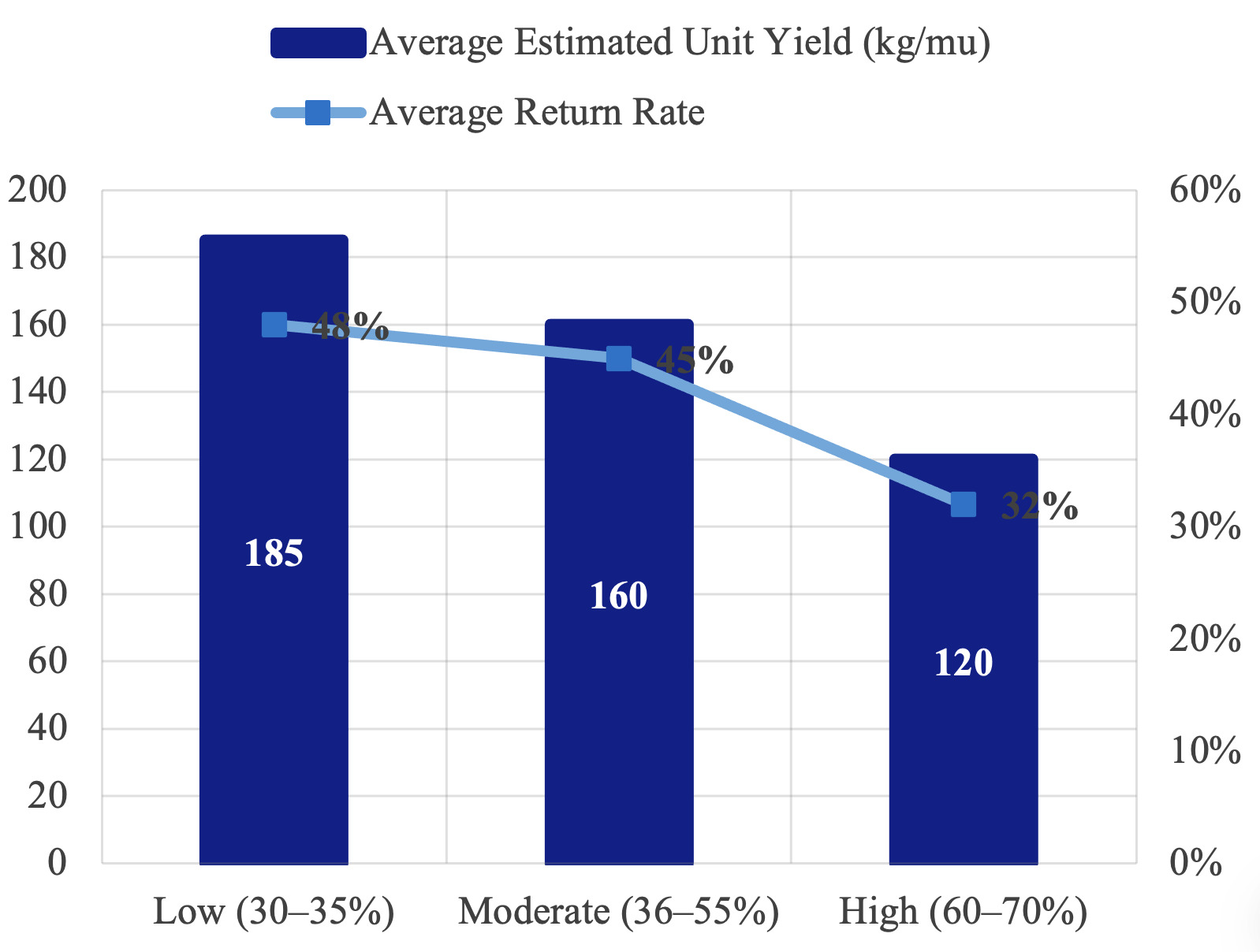
For the categorical analysis, bases were stratified into three groups based on their estimated shading rates: low (30–35%, n=3), moderate (36–55%, n=4), and high (60–70%, n=5). The low shading category comprised Jiangsu Huaneng Yixing (35%), Shanghai Puye Town (30%), and Shandong China Resources Caijin (30%). The moderate shading category included Jiangsu Shunshan Farm (30%, classified here due to its larger row spacing which effectively mitigated light limitation), Shanghai Baodao Crab (55%), Guangxi Xinhenggang (60%, whose rotatable panel design allows for diurnal adjustment of shading), and Shandong Zhanhua Jinhui (35%, included here based on its overall system configuration). The high shading category consisted of Jiangsu Sheyang Yinbao (60%), Jiangsu Suken Fisheries (60%), Shanghai Shencao (70%), Guangxi Jinyu Aquatic (60%), and Guangxi Jufu Agricultural Technology (70%). The average estimated unit yield and average economic return rate were calculated for each category (Fig. 1). A clear inverse association was observed between shading intensity and both productivity metrics. Bases in the low shading category exhibited the highest average unit yield (185 kg/mu) and average return rate (48%). In the moderate shading category, average unit yield declined to 160 kg/mu and the average return rate decreased to 45%. The most pronounced reductions were observed in the high shading category, where average unit yield fell to 120 kg/mu and the average return rate dropped substantially to 32%. This pattern suggests that while moderate levels of PV coverage may be compatible with acceptable aquaculture performance, excessive shading-particularly exceeding 60%-is consistently associated with diminished productivity and economic returns.
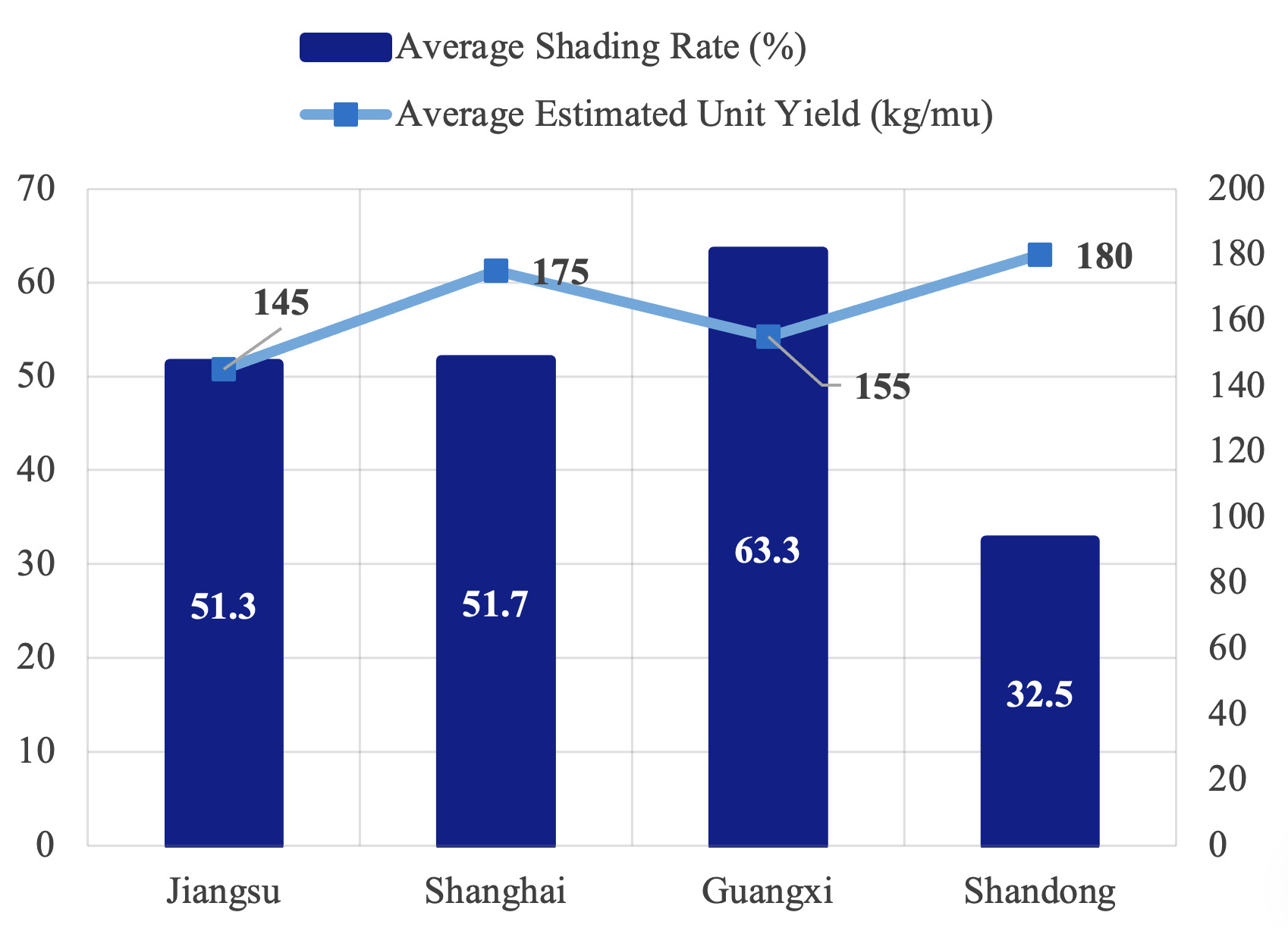
Regional aggregation of the data provided additional insights into the interplay between shading, geography, and production strategy (Fig. 2). Shandong Province, with the lowest regional average shading rate (32.5%), achieved the highest average estimated unit yield (180 kg/mu), driven by its large-scale industrialized and BIPV factory models. Shanghai Municipality, despite a moderate regional average shading rate (51.7%), also attained a high average unit yield (175 kg/mu), attributable to its technologically sophisticated three-dimensional aquaculture systems and selection of high-value species. Jiangsu Province exhibited an intermediate average shading rate (51.3%) and a correspondingly moderate average unit yield (145 kg/mu), reflecting its reliance on refined but more traditional co-culture and monoculture practices. In contrast, Guangxi Zhuang Autonomous Region recorded the highest regional average shading rate (63.3%) and a relatively lower average unit yield (155 kg/mu), although its innovative land-based circular pond and rotational breeding models demonstrated considerable potential for intensification under shaded conditions. Notably, the cases of Shanghai and Guangxi illustrate that the relationship between shading rate and aquaculture output is not strictly deterministic; technological sophistication, species selection, and adaptive management can partially offset the negative effects of reduced light availability. Nevertheless, the overall regional trend reinforces the finding that lower average shading rates are generally associated with higher unit yields across the surveyed sample.
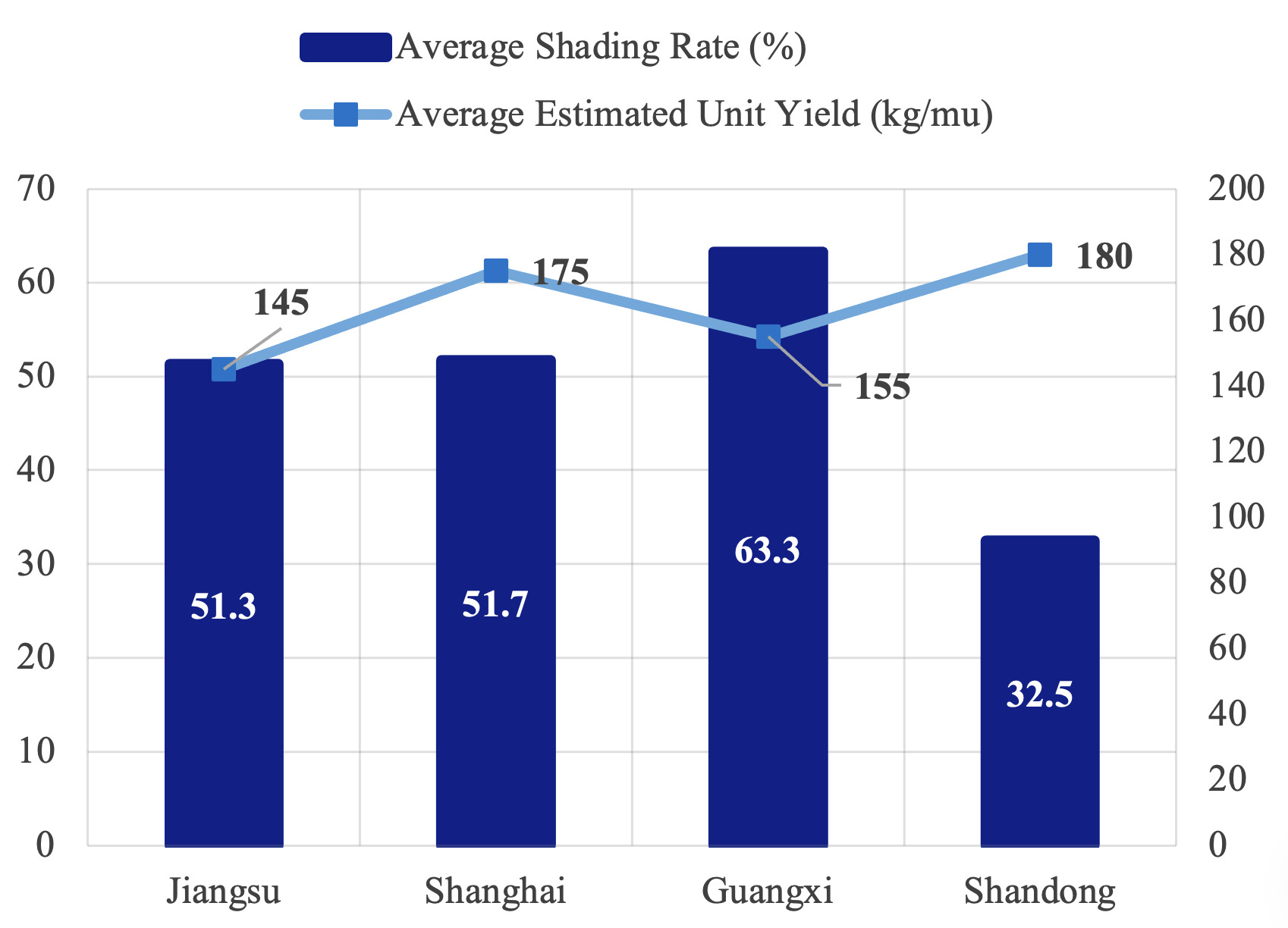
Taken together, the results presented in Fig. 1 and Fig. 2 demonstrate that shading rate is a primary determinant of aquaculture performance in fishery-PV systems, but its effects are modulated by regional production strategies and the degree of technical adaptation. The optimal balance between energy generation and aquatic productivity appears to be achieved at shading rates below 50%, with the highest economic returns observed in the 30–35% range.
Relationship between PV panel lower edge height and economic return rate
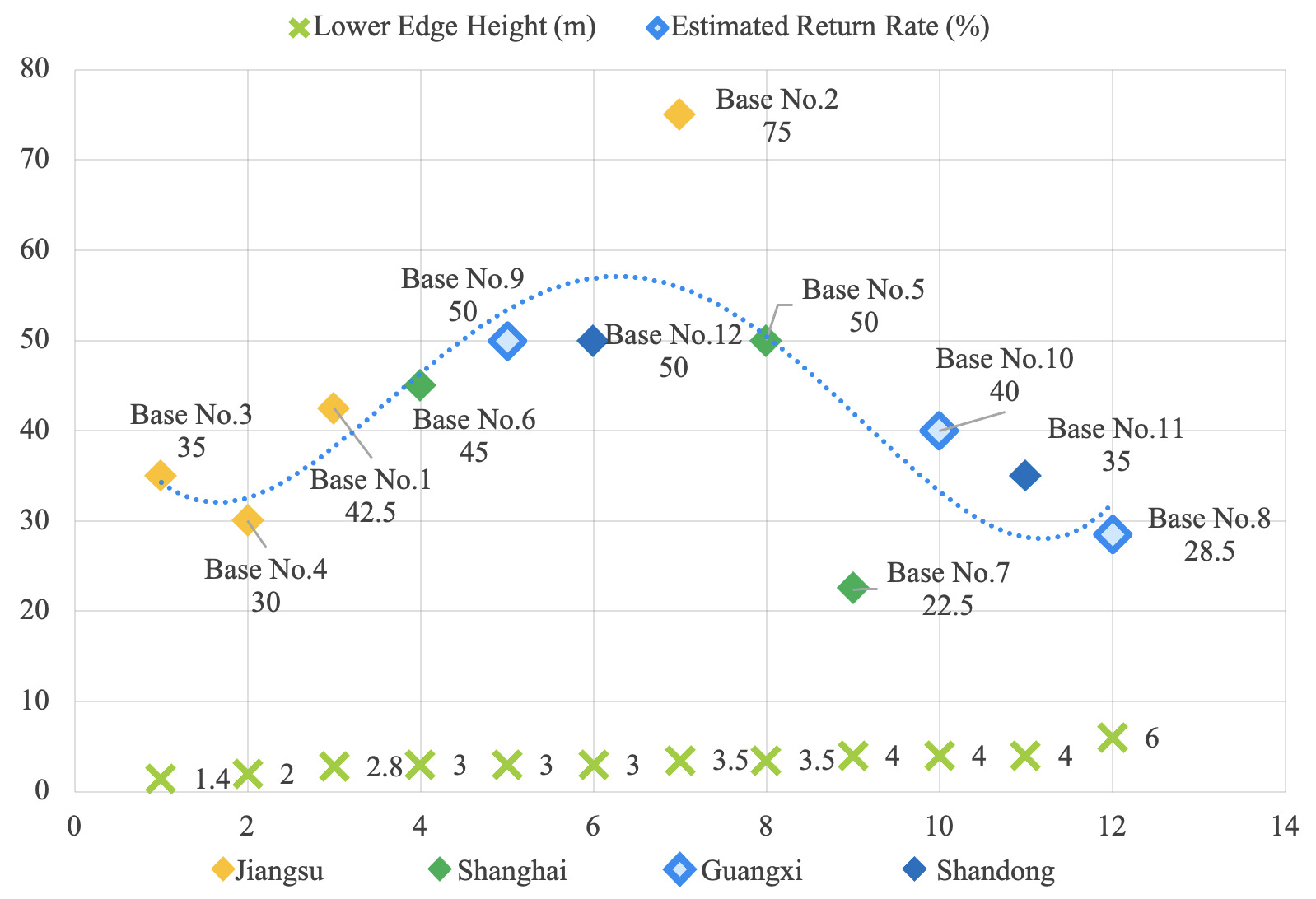
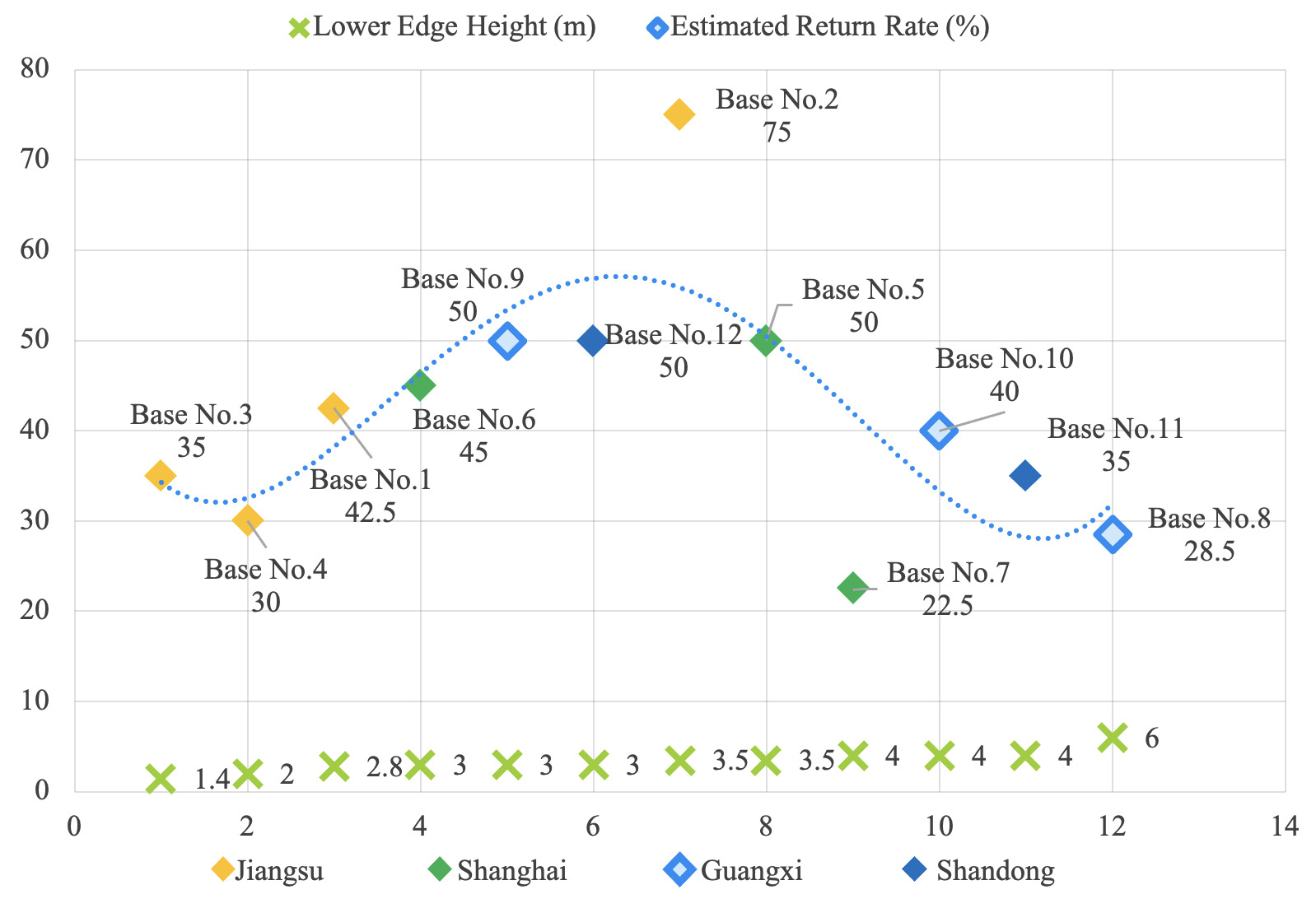
The relationship between the height of the lower edge of PV panels above the water surface and the economic return rate of aquaculture production was examined across the 12 surveyed bases (Fig. 3). A polynomial regression analysis revealed a moderate but statistically meaningful fit (R² = 0.5539), indicating a non-linear association between panel height and economic performance. Bases with panel heights in the range of 3.5–4.0 m consistently achieved the highest return rates, ranging from 35 to 75%. Notable examples include Jiangsu Shunshan Farm (3.5 m, 75%), Shanghai Puye Town (3.5 m, ~50%), Guangxi Xinhenggang (4.0 m, 40%), and Shandong Zhanhua Jinhui (4.0 m, 35%). In contrast, bases with panel heights below 2.0 m, such as Jiangsu Sheyang Yinbao (1.4 m, 35%) and Jiangsu Suken Fisheries (2.0 m, 30%), exhibited moderate returns, albeit lower than those of taller bases, despite culturing shade-tolerant species like channel catfish. Bases with intermediate panel heights (2.8–3.0 m) displayed variable performance, with return rates clustering between 28 and 50%, suggesting that factors other than height—such as species selection and management intensity—play a more decisive role in this range. The single base with an exceptionally high panel height of 6.0 m (Guangxi Jinyu Aquatic) achieved a moderate return rate of approximately 28.5%, reflecting the high capital and operational costs associated with its specialized land-based circular pond system rather than a direct height-derived benefit. Collectively, these observations suggest that a panel height of 3.5–4.0 m represents a practical optimum for balancing favorable aquaculture conditions with economic viability, whereas heights below 2.0 m may constrain operational flexibility and limit production potential for most commercially valuable species.
Discussion
Regional differentiation in development models
The findings of this study reveal significant regional differentiation in the development pathways of fishery-PV complementary systems across China, reflecting distinct adaptations to local resource endowments, climatic conditions, and market demands. This spatial heterogeneity aligns with the principles of agricultural geography and technology adoption theory, which posit that production systems are co-shaped by biophysical constraints and socioeconomic contexts.6 Four distinct development trajectories were identified from the comparative analysis.
In Jiangsu Province, the co-culture of Chinese mitten crab and giant freshwater prawn under moderate shading (35–60%) represents a refined, management-intensive model. The “Company + Village + Farmer” cooperative framework observed at Jiangsu Huaneng Yixing illustrates the critical role of institutional arrangements in facilitating technology diffusion and risk mitigation. This model capitalizes on Jiangsu’s established aquaculture expertise and sophisticated supply chains, enabling the successful integration of PV without compromising the high-value crustacean production for which the region is renowned. This finding corroborates the work of Niu et al. (2021),20 who reported that carefully designed integrated aquaculture systems can maintain or even surpass conventional yields when appropriate species and management strategies are selected.
Shanghai Municipality exhibited the most technologically diversified and vertically integrated aquaculture structures. The three-dimensional aquaculture model at Shanghai Puye Town, which achieved a reported 1.5-fold increase in output value per unit area compared to traditional aquaculture, exemplifies the potential of vertical space utilization within PV-shaded environments. This approach extends the findings of Chateau et al. (2019),21 who suggested that economic compensation from energy production could offset potential aquaculture losses. The Shanghai cases demonstrate that, beyond mere compensation, strategic species stacking and precision environmental control can directly enhance aquaculture productivity itself. This is likely driven by the region’s access to capital, strong R&D capacity, and proximity to high-value urban markets for diverse aquatic products.
Guangxi Zhuang Autonomous Region showcased innovative models adapted to subtropical thermal and light regimes. The land-based circular pond system at Guangxi Nanning Jinyu, achieving a unit water output of 28 kg/m³, represents a significant intensification of production within a compact, controlled environment. Similarly, the “two species per year” rotational breeding model at Guangxi Xinhenggang maximizes temporal resource utilization, producing 30 million crayfish larvae annually. The success of Australian red claw crayfish and bullfrogs under PV shading supports the hypothesis that certain shade-tolerant or low-light-adapted species can thrive in these modified environments. This aligns with observations by Qian et al. (2021)15 regarding the resilience of some species to reduced light, but extends it by identifying specific high-value candidates for subtropical aquavoltaic systems.
Shandong Province’s focus on large-scale, industrialized models, epitomized by the China Resources Caijin BIPV factory, represents a distinct pathway prioritizing economies of scale and process control. The integration of rooftop PV with enclosed, recirculating aquaculture systems effectively decouples production from ambient environmental variability, mitigating many of the risks associated with pond-based PV shading. This model is particularly suited to regions with extensive coastal mudflats or saline-alkali land, where traditional agriculture is marginal. The observation that PV panels inhibited algal blooms at the Zhanhua Jinhui site suggests a potential ecological synergy that warrants further quantitative investigation.
Key factors associated with successful fishery-PV integration
The cross-case comparative analysis identified several recurring factors associated with positive economic and productive outcomes in the surveyed fishery-PV systems.
- Optimal shading rate
The shading rate emerged as a critical parameter influencing aquaculture performance. Bases maintaining moderate shading rates of 30–35% (e.g., Jiangsu Huaneng Yixing, Shanghai Puye Town, Shandong China Resources Caijin) consistently reported higher economic returns compared to those with high shading rates of 60–70%. The most pronounced negative impact was observed at Shanghai Shencao, where a 70% shading rate was associated with an approximate 40% reduction in Pacific white shrimp yield. This empirical observation strongly supports the experimental findings of Li et al. (2022),4 who documented a decline in dissolved oxygen levels when simulated PV coverage exceeded 50%. The mechanism is likely twofold: severe light limitation suppresses phytoplankton photosynthesis, reducing both primary productivity and daytime oxygen replenishment, while simultaneously increasing the biological oxygen demand from decaying organic matter. This underscores the necessity of maintaining a “photosynthetic floor” to sustain pond ecosystem function and highlights that shading rates should be capped at or below 50% to avoid crossing critical ecological thresholds.
- Panel height and row spacing
Adequate panel height and row spacing were identified as crucial for maintaining operational functionality and environmental quality. Most successful projects maintained lower panel edge heights between 2.0 and 4.0 m and row spacing of 20–40 m. These parameters ensure sufficient clearance for routine aquaculture activities (e.g., feeding, harvesting, netting), facilitate air circulation which aids in natural reaeration and thermal regulation, and allow for more uniform light distribution across the pond surface. The exceptionally high 6.0 m panels at Guangxi Nanning Jinyu demonstrate that layout parameters must be tailored to the specific aquaculture infrastructure, in this case, tall circular ponds. The “Three-Reserve” standard observed at Jiangsu Suken Fisheries—reserving edges, feeding points, and ventilation corridors—represents a best-practice design philosophy that should be incorporated into future technical guidelines.
The non-linear relationship observed between PV panel lower edge height and economic return rate (Fig. 3) provides further insight into optimizing this parameter. The superior performance of bases with panel heights in the 3.5–4.0 m range can be attributed to a confluence of favorable factors. First, this height provides sufficient clearance for routine operations, thereby reducing labor costs and improving management efficiency. Second, increased height facilitates air circulation across the water surface, which enhances natural reaeration and helps mitigate the elevated water temperatures often associated with PV shading (Ma and Liu 2022).22 Third, greater height allows for more uniform light distribution and reduces the severity of shadow bands, thereby supporting a more stable and productive phytoplankton community.4 The moderate performance of bases with intermediate heights (2.0–3.5 m) suggests that this range falls within a “zone of transition,” where the marginal benefits of increased height have not yet fully materialized, and outcomes are more heavily influenced by species choice and management sophistication. The case of Guangxi Jinyu Aquatic (6.0 m height) serves as an important caveat, demonstrating that panel height must be evaluated within the context of the overall production system design. While its elevated panels accommodated specialized infrastructure, the associated capital expenditure and operational complexity did not translate into superior economic returns. This finding underscores that panel height optimization should not be pursued in isolation, but rather as one component of an integrated design strategy that considers species requirements, culture system type, and overall project economics.
- Aquaculture technique adaptation
The implementation of adaptive management techniques was a hallmark of higher-performing bases. The widespread adoption of dual aeration systems (subsurface micropore combined with paddlewheel aerators) in Jiangsu and Shanghai bases directly addressed the heightened risk of nocturnal hypoxia under PV shading. This strategy compensates for reduced photosynthetic oxygen production and enhances water column mixing. At night, in the absence of light, phytoplankton switch from oxygen producers to oxygen consumers, which, combined with sediment respiration, can easily create an Oxygen deficiency beneath the PV panels. A subsurface micropore aeration system efficiently replenishes dissolved oxygen directly from the bottom. During the day, shading can reduce vertical temperature differences, but this does not necessarily imply better mixing; instead, it can lead to more stable stratification that hinders bottom-water quality renewal due to reduced wind-driven mixing and thermal convection. Paddlewheel aerators, by propelling surface water, can effectively disturb the water body and break up this stratification, promoting material cycling and energy flow throughout the pond. Furthermore, the use of self-cultured beneficial bacteria for water quality regulation (Jiangsu Huaneng Yixing) and the strategic planting of aquatic macrophytes to modulate temperature and provide refuge (Shanghai Baodao Crab) illustrate the importance of proactive, knowledge-intensive management. These findings reinforce the conclusion that fishery-PV integration is not a “plug-and-play” technology; it demands a higher level of technical sophistication and site-specific adaptation than conventional open-pond aquaculture.
- Species selection
The economic viability of fishery-PV systems is heavily contingent upon the selection of appropriate culture species. Shade-tolerant or benthic-oriented species, such as Chinese mitten crab, Australian red claw crayfish, softshell turtle, and certain fish species, such as channel catfish and American shad, exhibited robust performance under moderate to high shading conditions. In contrast, species with high light requirements, such as Pacific white shrimp, were more sensitive to severe reductions in light. The mechanism involves not only physical light reduction but also the ecological cascade effects it triggers. For pelagic crustaceans like Pacific white shrimp that rely heavily on plankton and formulated feed, excessive shading directly suppresses the photosynthesis of phytoplankton, the basis of their natural food web, leading to a collapse in primary productivity and disrupting a critical link in the food chain. Conversely, benthic omnivorous crustaceans like Chinese mitten crab, which feed on detritus, benthic animals, and macrophytes, are less directly dependent on phytoplankton, and their benthic habit allows them to better adapt to the low-light benthic environment, thus exhibiting stronger tolerance under shaded conditions. This species-specific response dictates that regional development plans and project designs must prioritize species assemblages that are compatible with the anticipated light environment, rather than attempting to force conventional, high-light species into shaded systems. The development and dissemination of a catalog of recommended shade-tolerant species for different climatic zones should be a research and policy priority.
Challenges, constraints, and study limitations
Despite the promising developments observed, several structural challenges and constraints impede the sustainable growth of the fishery-PV industry. A persistent technical adaptation gap exists, as many operators continue to rely on traditional aquaculture practices ill-suited to the modified PV environment, leading to preventable yield losses and increased operational costs, as exemplified by the water quality management expenditures at Jiangsu Sheyang Yinbao. The range of commercially viable, shade-tolerant species remains limited, constraining diversification options. Critically, the absence of unified national technical specifications has led to inconsistent project design, with some developments appearing to prioritize installed power capacity over aquaculture productivity, as reflected in the high shading rates at several sites. The current regulatory framework, which focuses predominantly on pre-construction approval, lacks robust mechanisms for operational supervision and post-project evaluation, thereby failing to enforce the policy mandate that agricultural and fishery output should not be significantly diminished.
In this study, projects with high shading rates (≥60%) commonly encountered difficulties in aquaculture production. At the design stage, these projects were often oriented towards maximizing PV installed capacity, without fully considering aquaculture requirements. For example, at bases such as Jiangsu Sheyang Yinbao (60% shading) and Shanghai Shencao (70% shading), the high-density PV arrays severely restricted essential operations, such as feeding, disease treatment, and harvesting. This led to more frequent water quality deterioration, increased disease risk, and reduced feed utilization efficiency, ultimately resulting in higher aquaculture costs and a substantial decline in yield and profitability. These lessons underscore that the physical and ecological needs of aquaculture must be treated as hard constraints at the project planning and design stage; otherwise, the industry risks repeating the mistake of emphasizing power over fishery.
On the institutional front, bases operating under the “Company + Village + Farmer” model (e.g., Jiangsu Huaneng Yixing) demonstrated stronger adaptive capacity and community integration. In this model, the state-owned energy company is responsible for PV facility investment and operation, and provides standardized ponds and technical guidance; the village collective handles land transfer and organization; and farmers participate as aquaculture operators contracting the ponds. This approach effectively diversifies the high initial investment risk, leverages company expertise to solve farmers’ adaptation challenges, and safeguards farmers’ income through guaranteed purchase agreements or profit-sharing, thereby stimulating grassroots participation.
Conclusion
This study provides a systematic, field-based characterization of the current development status and regional differentiation of fishery-photovoltaic (PV) complementary systems in China, drawing on a multi-case comparative survey of 12 representative bases across Jiangsu, Shanghai, Guangxi, and Shandong. The findings reveal that the industry has evolved along four distinct regional pathways—refined co-culture systems in Jiangsu, technologically diversified three-dimensional aquaculture in Shanghai, innovative land-based circular pond and rotational breeding models in Guangxi, and large-scale industrialized factory systems in Shandong—each reflecting localized adaptations to resource endowments, climatic conditions, and market demands. Comparative analysis indicates that successful integration of PV and aquaculture is associated with a set of interrelated technical and managerial factors, including the maintenance of moderate shading rates (30–35%), adequate PV panel height (2.0–4.0 m above water surface) and row spacing (20–40 m), the deployment of dual aeration systems to mitigate hypoxic risk, and the strategic selection of shade-tolerant or benthic-oriented species such as Chinese mitten crab (Eriocheir sinensis) and Australian red claw crayfish (Cherax quadricarinatus). In contrast, projects characterized by excessive shading rates (≥60%) or insufficient technical adaptation exhibited marked declines in aquaculture productivity and economic returns, underscoring the sensitivity of pond ecosystems to light limitation.
Despite the sector’s rapid expansion, several structural challenges constrain its long-term sustainability. A persistent technical adaptation gap, a limited portfolio of commercially proven shade-tolerant species, and the absence of unified national technical specifications have led to inconsistent design practices that, in some instances, prioritize installed power capacity over aquaculture viability. Furthermore, the current regulatory framework lacks robust mechanisms for operational supervision and post-project evaluation, impeding continuous improvement and policy learning.
Based on these findings, a set of evidence-based recommendations can be proposed to guide the sustainable development of the fishery-PV complementary industry. First, increased investment in applied research and extension services is essential to develop and disseminate adaptive aquaculture technologies—such as optimized aeration regimes, water quality management under shading, and polyculture strategies—that are specifically tailored to PV-modified environments. Second, systematic screening and selective breeding programs should be initiated to expand the repertoire of shade-tolerant, high-value aquatic species suitable for diverse climatic zones and production intensities. Third, the formulation and enforcement of national-level technical specifications are urgently needed. We recommend incorporating the following key parameters into mandatory or recommended standards: (i) Maximum shading rate: For freshwater pond aquaculture, the projected shading rate should not exceed 50%, with an encouraged optimal range of 30–35%; (ii) Minimum PV panel height: Based on different culture models, the height of the lower edge of PV panels above the water surface should be no less than 3.5 m for shrimp/fish intensive monoculture models, and no less than 2.0 m for crab/conventional polyculture models, to minimize obstruction of daily management operations like feeding and harvesting; (iii) Reserved management zones: Mandatory reservation of unobstructed feeding areas and harvesting channels accounting for no less than 15% of the total pond area. Fourth, a closed-loop governance framework covering the entire project lifecycle should be established. This framework would combine ecological and production impact assessments at the feasibility stage, compliance checks during construction, and dynamic monitoring and periodic assessment of dual operational indicators: “aquaculture output (not falling below 80% of the average level of similar local models before PV installation)” and “water ecological environment.”
While this study is limited by its cross-sectional design and modest sample size, the empirical insights derived from in-depth case comparisons provide a valuable foundation for informing policy, guiding industry practice, and directing future research. As the global imperative to reconcile renewable energy deployment with food production intensifies, the Chinese experience with fishery-PV integration offers instructive lessons. Future work should prioritize multi-year, longitudinal monitoring across a broader geographic and typological range of projects, coupled with controlled experimentation, to further elucidate the causal mechanisms linking PV configuration variables to aquaculture ecosystem dynamics and to refine predictive models for optimizing the synergistic performance of aquavoltaic systems.
Acknowledgments
This study was supported by the Jiangsu Provincial Social Science Applied Research Excellence Project Topic (25SYB-049), Jiangsu Provincial Educational Science Planning Project (C/2024/02/66), Jiangsu Higher Education Association Project (2024JCSZ68), and China Agriculture Research System-Characteristic freshwater fish (CARS 46).
Author Contributions
Conceptualization: Yunyun Dai (Equal), Hong Yang (Equal). Writing – original draft: Yunyun Dai (Equal), Zhen Zhou (Equal), Hong Yang (Equal). Writing – review & editing: Yunyun Dai (Equal). Funding acquisition: Yunyun Dai (Equal), Hong Yang (Equal). Methodology: Zhen Zhou (Lead). Software: Xiaoteng Zhu (Lead). Data curation: Xiaoteng Zhu (Lead). Visualization: Xiaoteng Zhu (Lead). Supervision: Hong Yang (Lead).
All authors contributed to the study conception and design. All authors have read and agreed to the published version of the manuscript.
Ethical statement
Not required for this study.
Conflict of Interest
The authors have no relevant financial or non-financial interests to disclose.
Data Availability Statement
The data presented in this study are available on request from the corresponding author. The data are not publicly available due to personal privacy and non-open access to the research program.